
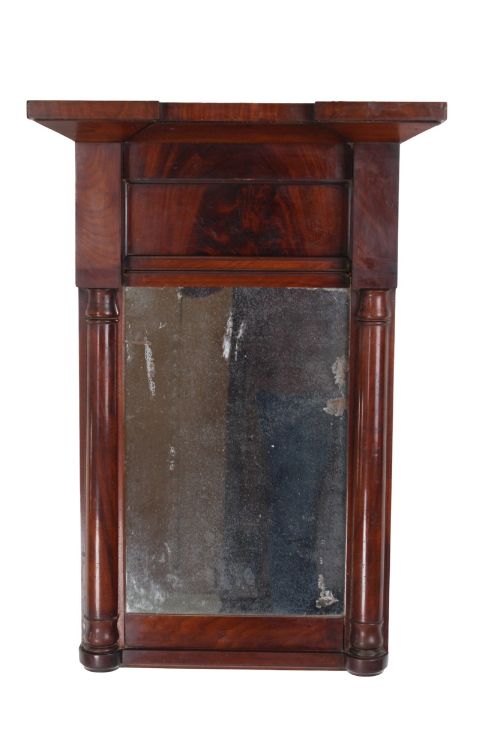


Antique Red Pier Mirror
An antique red pier mirror brings striking colour and architectural presence to a room, catching the light between windows.
Antique Red Pier Mirror
An antique red pier mirror is a vertical looking glass designed to hang on the narrow wall space between windows, often paired with a console table beneath. The pieces available span the nineteenth century, the Regency period, and later revivals, displaying forms influenced by Georgian Chinoiserie and French styles.
Most examples encountered on this page utilise rich painted or lacquered surfaces, including red japanning and flame mahogany veneer. Makers of these works drew upon styles such as French Empire, George I Revival, and English Country traditions to create tall, commanding wall furniture.
Buyers will find both standalone wall mirrors and integrated console table and mirror sets originating from English and continental workshops. These items range from mid nineteenth century dressing mirrors to large French trumeau configurations.
How they were made
Cabinetmakers constructed the frames of these pier mirrors using solid timbers such as mahogany and wood, frequently applying flame mahogany veneer to achieve striking grain patterns. Carved wood and gesso formed the underlying structure for giltwood and painted details.
Surfaces were finished with specialised techniques including lacquer, red japanning, and gilt applications over red grounds. Continental and English artisans incorporated marble tops on associated console tables and utilised traditional silvered glass for the looking plates.
Materials recorded across the inventory include flame mahogany veneer, marble, glass, and giltwood.
What varies in quality
The distinction between ordinary and exceptional mirrors lies in the depth and hand-painted detail of the chinoiserie or japanned decoration. Superior examples display crisp carving in the gesso and wood frames, whereas lesser pieces rely on simpler moulded ornament.
The richness of the red ground and the preservation of the original gilt and lacquer surfaces dictate the visual impact of the piece. Proportion, balance, and the integration of mirror plates within the architectural frame further separate standard items from finer works.
The Antique Red Pier Mirror Glossary
- Pier mirror
- A tall looking glass specifically proportioned to hang on the wall space between two windows. These items often reflect additional light into darker rooms.
- Trumeau mirror
- A decorative wall mirror combined with a painted panel or carved artwork above the glass. French examples frequently incorporate matching console tables.
- Giltwood
- Timber carved and coated with a thin layer of gold leaf or metal powder. This finish catches candlelight and natural illumination.
- Flame mahogany veneer
- Thin slices of mahogany cut from the branch junction to produce a flamelike grain pattern. Cabinetmakers applied this to the primary surfaces for decorative effect.
Antique Red Pier Mirror: Frequently Asked Questions
Where should I hang a pier mirror?
These tall mirrors are traditionally placed on the narrow wall space between two windows, known as the pier. This placement maximises natural light reflection and fills vertical wall areas.
They also sit effectively above console tables in hallways, drawing the eye upward and creating a sense of increased spatial depth in reception rooms.
What is a trumeau mirror?
A trumeau mirror is a distinct architectural form featuring a painted panel, carving, or oil painting set directly above the glass plate. These pieces originated in France.
They were often designed as permanent wall fixtures within panelled rooms, occasionally supplied with a matching console table placed directly beneath.
How do I identify a revival piece?
Revival items, such as George I style or nineteenth-century copies, often utilise construction methods and secondary timbers characteristic of their actual manufacturing date rather than the era they imitate. Examination of the rear boards, fixings, and glass bevelling reveals these operational clues.
Stylistic proportions and the wear patterns on the red paint or lacquer help distinguish nineteenth-century interpretations from earlier eighteenth-century originals.