
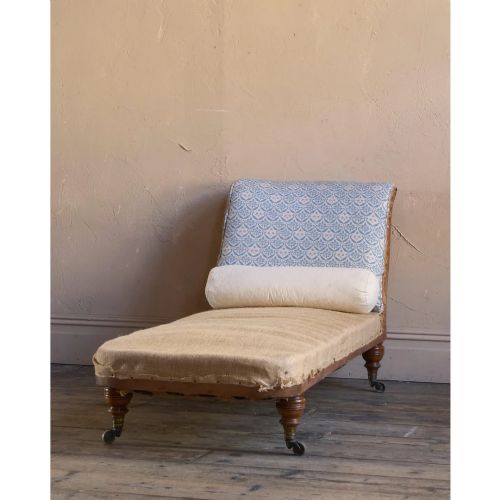
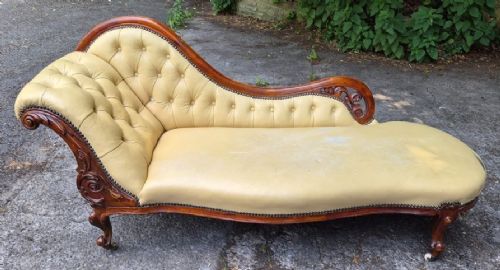
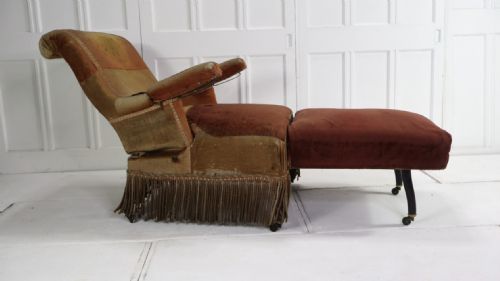
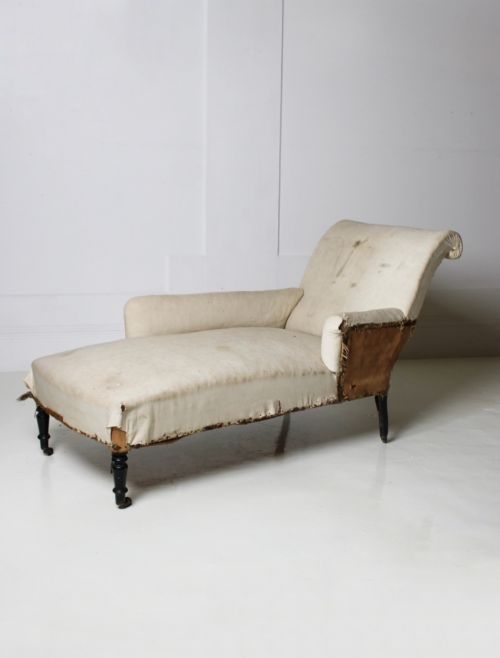
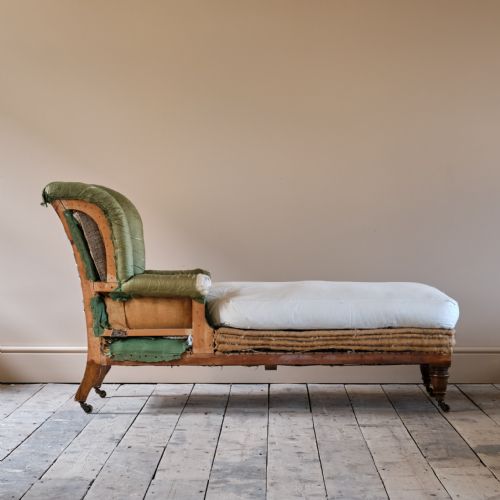
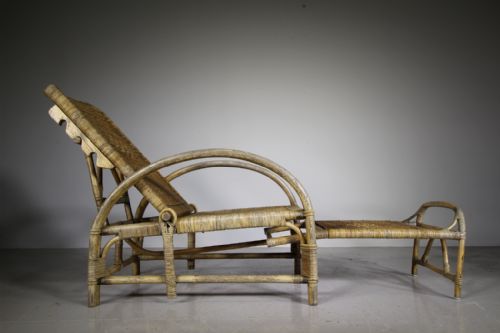


Antique Reclining Daybed
An antique reclining daybed offers a stretch of upholstered comfort, moving easily from upright reading to prone repose.
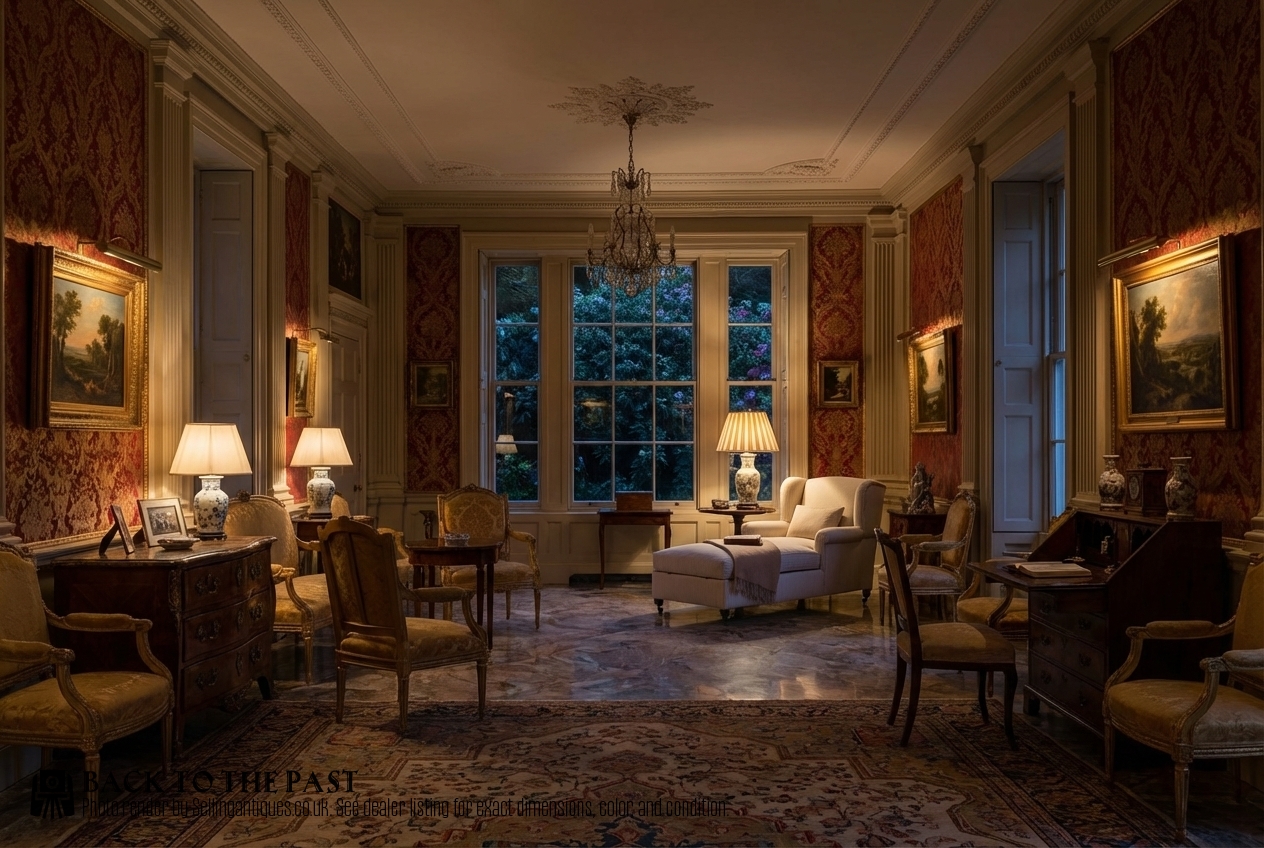
Antique Reclining Daybed
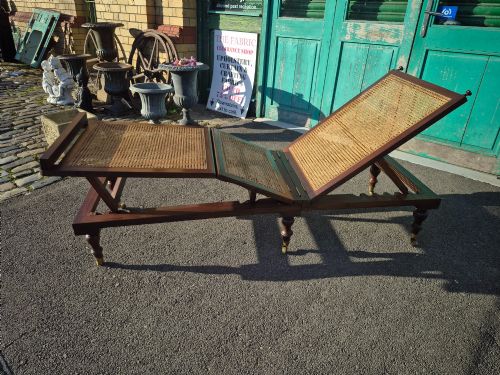
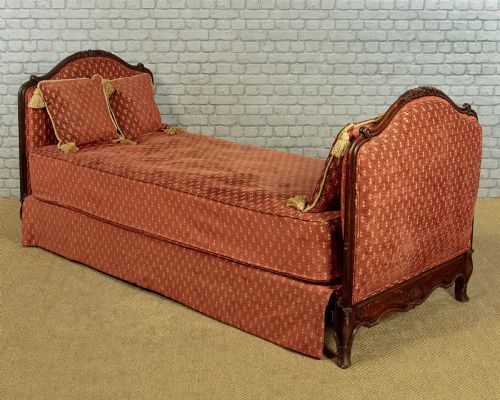
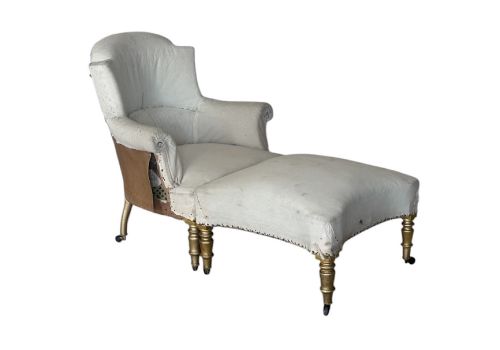
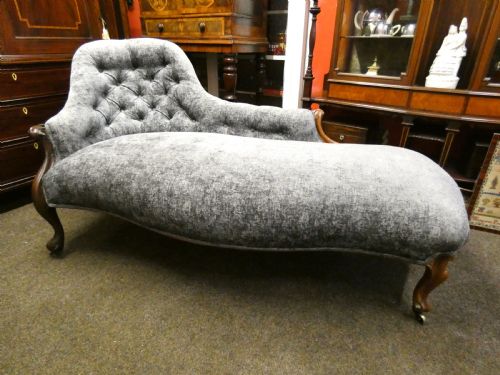
An antique reclining daybed bridges the gap between a seat and a bed, providing a place to lie down during daylight hours. The form appears in various shapes, including chaise longues, duchesse brisées, and campaign styles designed for portability.
Most examples found here date from the nineteenth century into the early twentieth century, spanning the Regency, Victorian, and Edwardian eras. Pieces originate from English workshops, French studios, and colonial contexts, showing diverse regional tastes in lounging furniture.
Makers adapted the frame to different settings, producing substantial country house daybeds alongside folding steamer chairs and wicker garden loungers. These pieces frequently double as settees or couches, reflecting flexible domestic arrangements.
Materials and construction methods
Frames rely on sturdy timbers such as mahogany, walnut, rosewood, and oak, often shaped with carved details, bobbin turnings, or structural bamboo. Brass components appear in castors, folding mechanisms, and campaign mounts that allow adjustments.
Upholstery uses traditional fillings covered in velvet, calico, leather, or standard upholstery fabric, sometimes complemented by cane or rattan panels. Frame stability depends on solid joinery, with turned legs supporting the weight of the reclined sleeper.
Some nineteenth-century daybeds include concealed storage beneath the upholstery for stashing away extra cushions or midnight reading material.
Distinctions in construction and finish
Quality rests in the integrity of the timber frame and the precision of the reclining mechanism, where smooth adjustments distinguish superior pieces. Carved ornamentation, such as double spoonbacks or elaborate mahogany moulding, marks higher workshops.
The survival of original elements, including castors, leather surfaces, and turned legs, elevates a piece above those with replaced components. The depth of the upholstery work and the choice of facing materials like rosewood or fine walnut indicate the original tier of manufacture.
Howard and Sons·Angraves of Leicester·H. Goodall and Sons of Newcastle·Thonet
The Antique Reclining Daybed Glossary
- Chaise Longue
- A long chair for reclining, combining a chair and a footstool into a single piece of furniture.
- Campaign Style
- Portable furniture designed for travel, featuring detachable legs and folding frames.
- Duchesse Brisée
- A multi-part chaise longue split into a chair and one or two footstools.
- Caning
- Woven rattan material used for seats and panels to provide flexible support.
- Bobbin
- Turned woodwork resembling a string of bobbins or spools, popular in nineteenth-century frames.
Antique Reclining Daybed: Frequently Asked Questions
How do I use a daybed?
These pieces serve primarily for daytime lounging, reading, and resting in studies, bedrooms, or drawing rooms.
Their adjustable frames allow the user to sit partially upright or lie flat depending on the model.
Were these made for travel?
Certain examples, particularly campaign styles from the Regency and Victorian periods, were built with detachable legs and folding frames for military or colonial transport.
Other domestic models remained fixed in country houses and urban parlours.
How do I date a daybed?
Dating relies on stylistic clues such as the timber used, leg turnings, and upholstery methods.
Mahogany and rosewood point to earlier nineteenth-century pieces, while oak, wicker, and simpler mechanisms often suggest Edwardian or later production.