



Antique Racehorse Art
Antique racehorse art captures the speed and power of thoroughbred champions through Victorian and Edwardian oil paintings, watercolours and period engravings.
Antique Racehorse Art
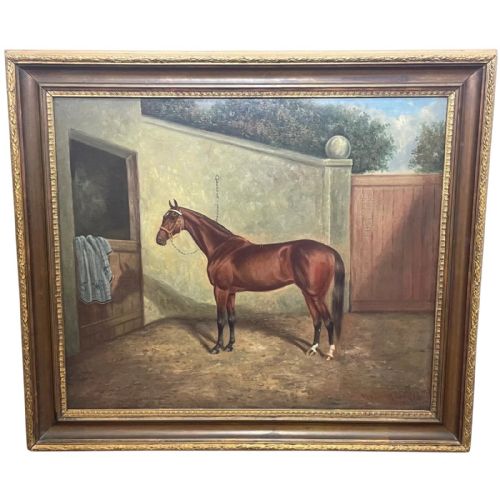
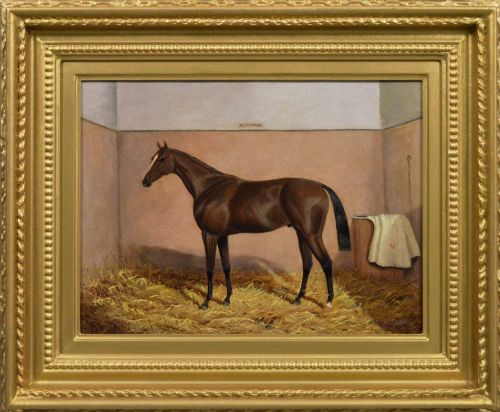
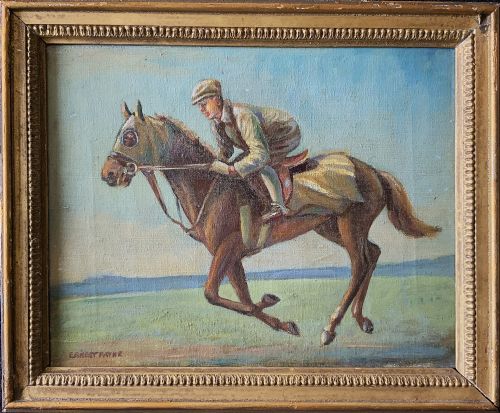
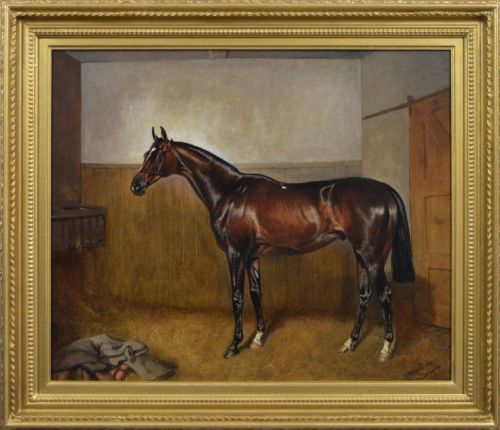
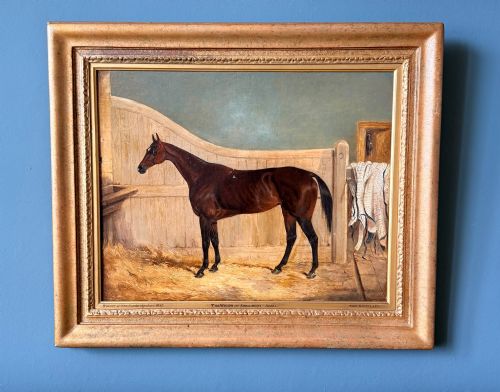
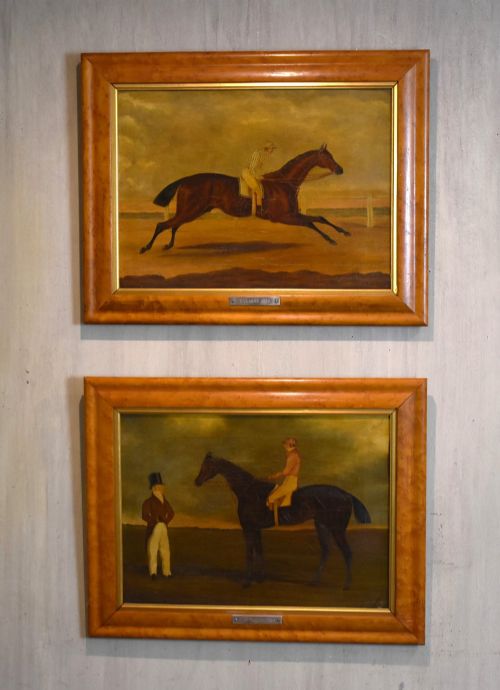
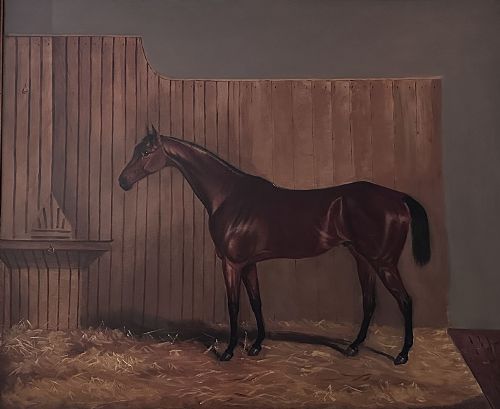
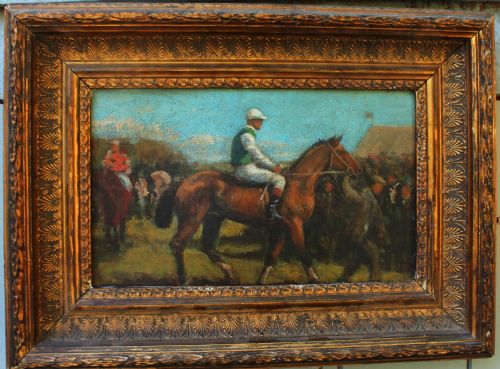
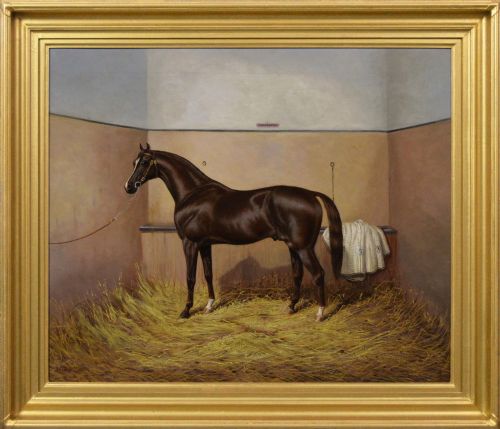
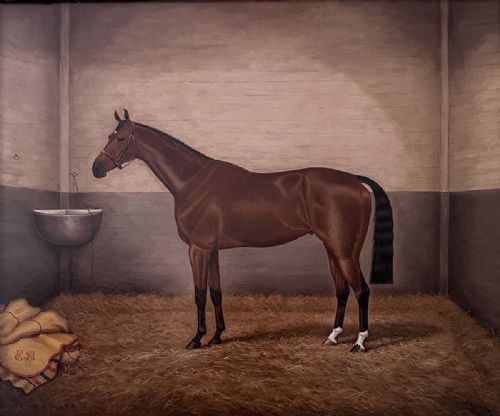
When you search for antique racehorse art, you encounter a specialised genre documenting famous winners, historic courses and notable jockeys from past centuries. The pieces available here primarily take the form of framed oil paintings, paper prints and engravings spanning the Victorian and Edwardian eras. These works range from detailed individual portraits of celebrated thoroughbreds to bustling scenes of race paddocks and trackside action.
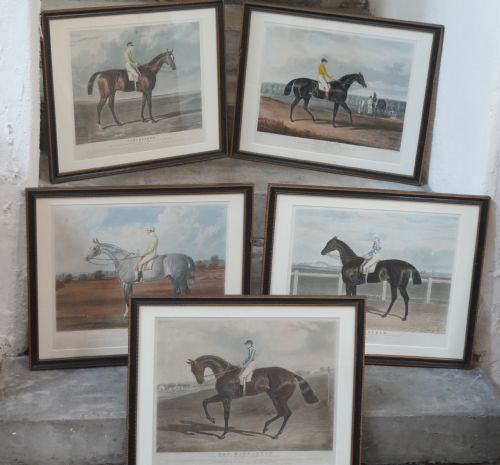
The subjects frequently record specific historical events, such as Epsom Derby winners, Newmarket fixtures and Colombo races, often naming the horse, jockey and owner directly in the title or margin. Alongside unique canvas works by named painters, the selection includes sets of period engravings and photographic prints documenting famous racing stock. This variety allows collectors to focus either on individual equine portraiture or broader sporting scenes from the nineteenth and early twentieth centuries.
Materials and methods
The physical objects combine traditional canvas supports with oil paint, alongside works executed on paper using ink and oil. Painters of the period built up their compositions with oil pigments, applying realistic tones to capture the muscle definition and coat sheen of the animals. Engravings and photographic prints employ ink on paper, frequently preserved behind glass within period wood frames.
Techniques range from direct canvas studies painted on location at the racecourse to studio portraits and reproductive engravings after major artists. Specialised methods such as eglomise appear alongside standard framing, protecting delicate surfaces beneath reverse-painted glass panels.
The periods represented span the Victorian era, the Edwardian period, and the nineteenth and early twentieth centuries.
Assessing quality
Quality in these works rests upon the precision of the animal's anatomy, the sureness of the brushwork and the documentary importance of the subject. Master painters achieve a convincing sense of movement and accurate conformation, whereas lesser pieces rely on stiff posture and formulaic backgrounds.
The presence of a documented historical winner, named jockeys in identifiable colours, and a recorded artist elevate the piece significantly above anonymous studio output. Original period framing and good preservation of the canvas or paper surface also distinguish the finest examples.
Albert Clark·Ernest Payne·John Alfred Wheeler·Thomas Walker Bretland·John Frederick Herring Snr·Abraham Cooper·Samuel Spode·Alfred Wheeler·John Atkinson·Isaac Cullin·Walter Herbert Wheeler·John Parker Davis
The Antique Racehorse Art Glossary
- Aquatint
- A printmaking technique that produces tonal effects resembling watercolour washes. It was frequently utilised in the nineteenth century to reproduce sporting watercolours.
- Eglomise
- A process involving the application of gold or silver leaf and painting to the reverse side of glass. This method appears on decorative reproduction panels.
- Sporting art
- A genre of painting and printmaking dedicated to equestrian subjects, racing, hunting and field sports. Works in this category record specific animals, handlers and events.
- Thoroughbred
- The specific breed of horse developed for racing that dominates the subjects of these portraits. Artists paid close attention to the refined head and powerful hindquarters characteristic of the breed.
Antique Racehorse Art: Frequently Asked Questions
What subjects appear in antique racehorse art?
The works depict named nineteenth and early twentieth century racehorse winners, trackside views, and paddock scenes. Many feature specific jockeys shown in winning colours at famous courses.
Portraits often record the animal's name alongside the jockey and owner, preserving specific turf history from Victorian and Edwardian race meetings.
How do I identify the period of a piece?
Dating relies on costume details worn by the jockeys, framing materials, and inscriptions recording specific race years. Victorian works often display distinct palette choices and brush techniques.
Signatures, artist dates, and publishing information on prints provide direct chronological markers to place the work within the nineteenth or early twentieth century.
Are these pieces original or reproductions?
The selection includes both original hand-painted oil studies on canvas and period prints or engravings produced during the nineteenth and early twentieth centuries.
Descriptions specify the medium, distinguishing unique oil paintings from published prints, engravings and later decorative reproductions.
How should I display these works at home?
Framed oil paintings and prints require stable wall locations away from direct sunlight and excessive moisture to protect canvas and paper. Most items retain their period wood frames, which complement traditional or study interiors.
Ensuring secure wall fixings is essential due to the weight of larger framed oil paintings and glazed engraving sets.