

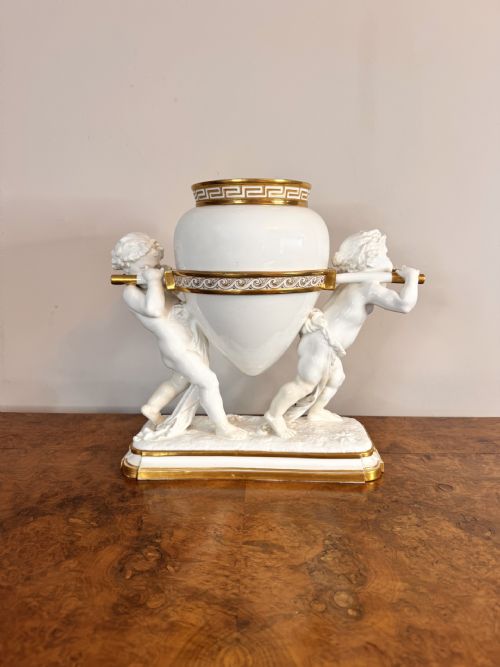


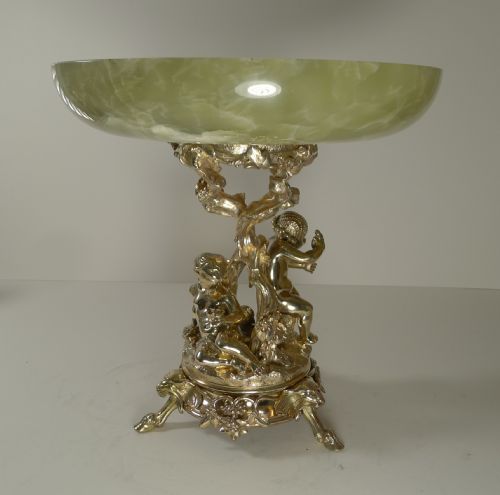


Antique Putto Table Bowl
An antique putto table bowl brings theatrical nineteenth-century charm to a dining room, combining classical figures with functional centrepiece design.
Antique Putto Table Bowl
When you search for an antique putto table bowl, you encounter elaborate table centrepieces and centrepiece bowls populated by cherubs, putti, and winged figures. These decorative vessels sit at the heart of the table, often taking the form of circular basins, shells, or platters supported or accompanied by figural groups.
The pieces listed on this page span the Victorian era and the broader nineteenth century into the early twentieth century, with dates reaching from eighteen sixty through to nineteen twenty. Continental workshops dominate the selection, bringing French, German, and Italian manufacturing traditions directly to your dining room or sideboard.
Stylistically, these items draw heavily upon Rococo Revival, Renaissance Revival, and Napoleon III aesthetics. You will find them described variously as centrepiece vases, jardinieres, and porcelain groups, all unified by the presence of sculpted children or cherubs.
How they were made
Metalwork pieces rely on patinated bronze, gilded bronze, and silver plate, often paired with cut glass or structured as circular platters. Artisans cast these metals to create detailed figural cherubs and supporting frames, sometimes applying gold leaf to enhance the decorative impact.
Ceramic examples utilise porcelain and general ceramic bodies, shaped into intricate figurines and large bowls. Painters applied enamel and hand paint finishes to the porcelain surfaces, bringing colour and lifelike detail to the putti and floral motifs.
Antique Putto Table Bowl Retail Price Guide 2026
Typical asking prices for putto table bowl among the pieces listed under this phrase on Sellingantiques today, from the lower quarter to the upper quarter. They describe what is for sale here now, not the wider market.
Continental workshops dominate the selection, with French and German makers producing the majority of the porcelain and bronze putti groups.
What varies in quality
Material combination and weight separate everyday items from the most ambitious commissions. Heavy patinated or gilded bronze mounts, combined with thick cut glass or fine porcelain bodies bearing maker attribution like Christofle or Schierholz, represent the higher tiers of nineteenth-century production.
Christofle Paris·Plaue Schierholz
The Antique Putto Table Bowl Glossary
- Putto
- A figure of a small child, frequently winged, depicted in classical art. They appear commonly supporting bowls or forming part of figurative groups in nineteenth-centre pieces.
- Centrepiece
- A large decorative object placed in the middle of a dining table. These pieces often take the form of bowls, jardinieres, or elaborate stands intended to command attention.
- Jardiniere
- An ornamental pot or stand designed to hold plants or flowers. In this context, they share forms with serving bowls and table centrepieces.
- Patinated Bronze
- Bronze that has been treated chemically or naturally to produce a rich surface colour. This finish highlights the sculptural details of the cherubs and mounts.
- Napoleon III
- A nineteenth-century French design style noted for its eclectic revival of historical motifs. It borrows heavily from Rococo and Renaissance aesthetics to create opulent decorative objects.
Antique Putto Table Bowl: Frequently Asked Questions
How were these bowls used historically?
Historically, these bowls occupied the centre of grand dining tables during formal meals. They held fruit, flowers, or simply stood alone as sculptural showpieces to impress guests.
Wealthy households utilised them during the Victorian era to demonstrate taste and sophistication through elaborate continental metalwork and porcelain.
How do I style an antique centrepiece bowl today?
You can place a putto table bowl on a large dining table, a heavy sideboard, or a central console table where its sculptural qualities are visible from all angles. Keep the surrounding surface relatively clear to let the intricate bronze or porcelain details stand out.
While they can hold seasonal fruit or dried florals, many collectors prefer to leave them empty to appreciate the figural work of the cherubs and the quality of the glaze or patination.
How can I tell the period of a putto bowl?
Dating relies on examining the materials, manufacturing marks, and stylistic indicators such as Rococo Revival or Napoleon III influences. Pieces from the mid-nineteenth century often display heavier bronze casting, while early twentieth-century examples frequently utilise refined German porcelain.
Maker marks, where present, help pinpoint the exact workshop or factory responsible for the piece, anchoring it firmly within the Victorian period or later.