



Antique Prism Lustres
Antique prism lustres bring sparkling illumination and colour to a mantelpiece, combining glass bodies with hanging crystal prisms.
Antique Prism Lustres
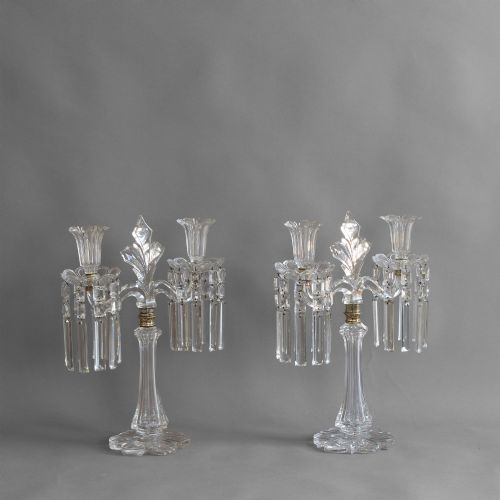
When you search for antique prism lustres, you encounter decorative lighting and mantel garnitures designed to catch and refract candlelight. These pieces typically take the form of mantel lustres, table lustres, and candlesticks fitted with suspended glass drops.
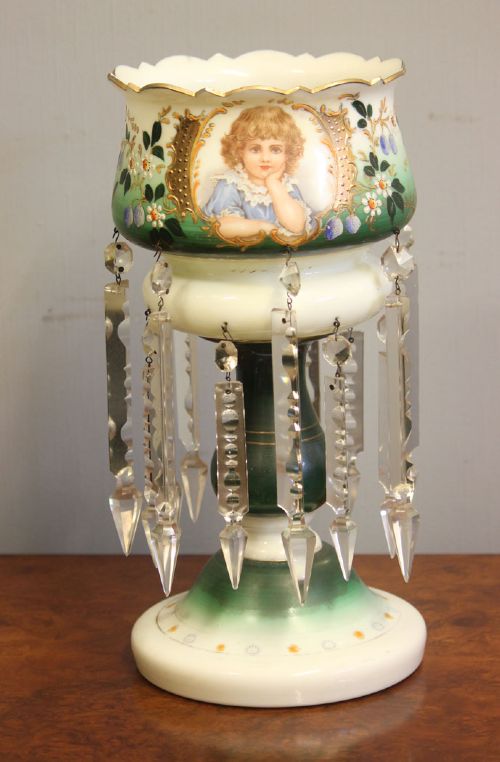
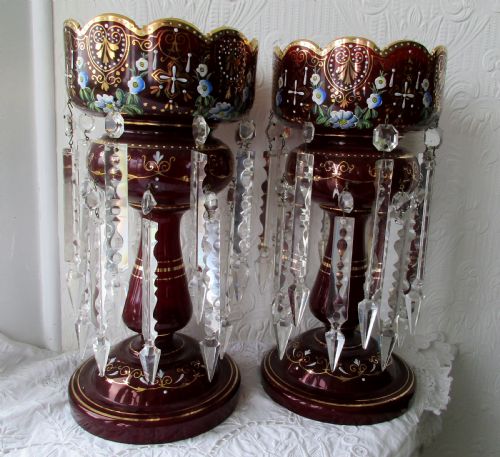
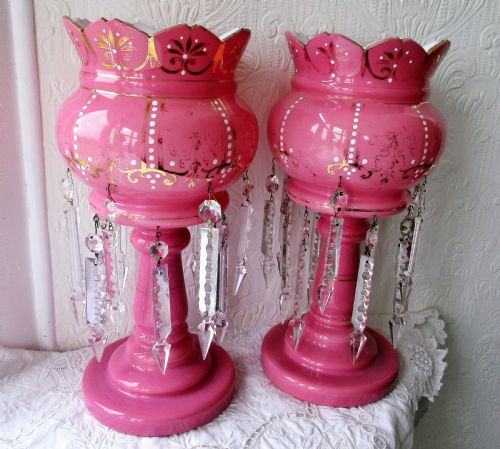
The pieces on this page span from the Regency period through the Victorian era and into the early twentieth century. You will most frequently meet pairs of glass mantel lustres in rich colours such as ruby, green, pink, and cranberry, alongside clear cut-glass examples.
How they were made
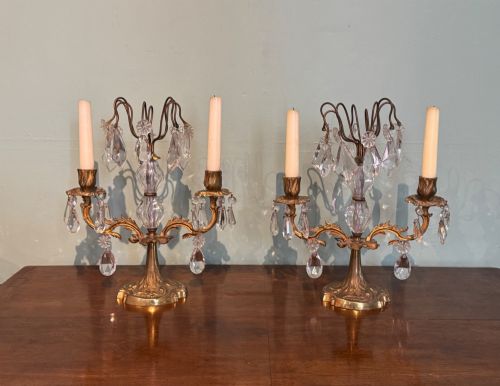
Maker's workshops combined blown or moulded glass bodies with metal components like brass, bronze, and ormolu. Glassmakers utilised techniques such as overlay and flashing to create layered coloured glass.
Cuts were applied by hand to clear and coloured crystal to enhance the refractive properties of the glass. Suspended glass prisms, known as drops, hung from metal or glass rings around the rim to scatter light.
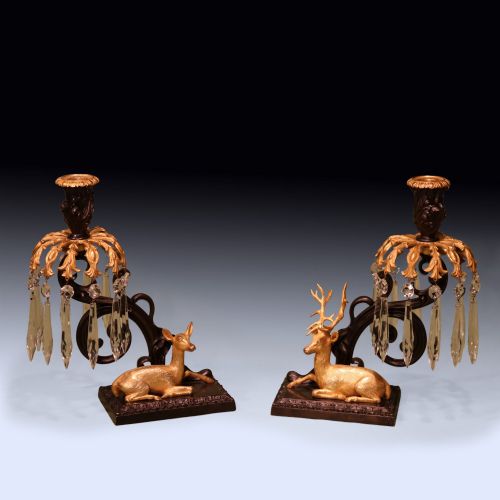
Stag and doe figures occasionally support the candle sockets, turning a simple mantel ornament into a small bronze menagerie.
What varies in quality
The depth of colour in the glass body and the precision of the hand-cut facets on the crystal prisms dictate the overall standard of the piece. Superior examples show crisp cutting and rich, saturated glass hues without cloudiness.
The integration of secondary materials such as gilt bronze, ormolu mounts, or gold leaf ornamentation marks the distinction between standard production and higher workshop output. Complete sets of matching original prisms also influence the desirability of a pair.
The Antique Prism Lustres Glossary
- Lustre
- A decorative tabletop or mantelpiece vase fitted with a circle of hanging glass drops. They were primarily ornamental items designed to sit on mantelpieces and tables.
- Prism
- A cut glass drop suspended from the rim of a lustre to refract light. These glass pendants catch and scatter the illumination from candles or lamps.
- Overlay glass
- A glass-making technique where a layer of coloured glass is fused over a clear or contrasting base layer. Subsequent cutting through the outer layer reveals the contrasting colour beneath.
- Ormolu
- Gilded bronze mounted onto decorative objects and lighting. This technique adds metallic warmth and ornamental detail to the bases and stems.
- Flash glass
- A thin layer of coloured glass applied over a colourless body during blowing. Artisans cut through this thin top layer to create patterns and panels.
Antique Prism Lustres: Frequently Asked Questions
What are antique prism lustres?
Antique prism lustres are ornamental glass or metal vessels designed with hanging crystal drops around the rim. They were placed on mantelpieces and tables to add colour and sparkle to a room.
Most examples date from the nineteenth century and incorporate candle sockets or serve as decorative garnitures alongside clocks and candlesticks.
How were prism lustres used?
These pieces functioned primarily as decorative mantel ornaments rather than as main light sources. The hanging glass prisms caught and multiplied the flickering light from candles placed in the central sockets.
Pairs were typically arranged on either side of a clock or mirror on the mantelpiece, reflecting the ambient light of the room.
What colours do they come in?
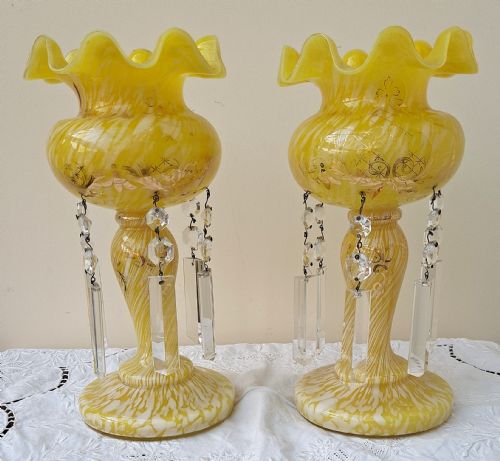
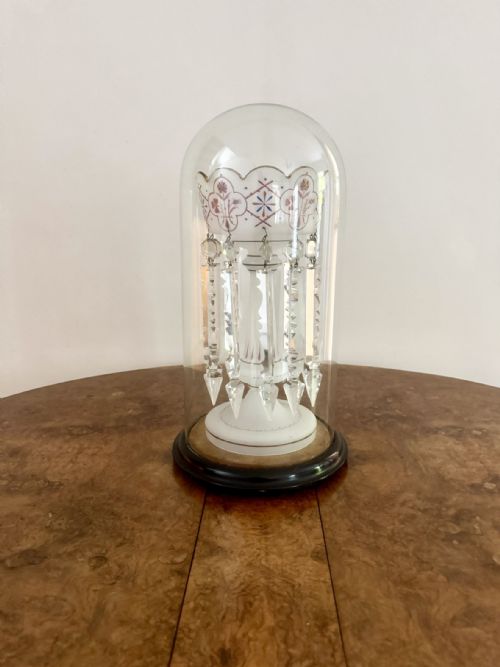
Victorian examples appear in a vibrant palette including ruby, cranberry, green, pink, and yellow glass. Clear cut-glass and opaline glass versions also feature prominently across the inventory.
Coloured pieces often utilise Bohemian flash glass or overlay techniques to achieve rich hues.
How do I date a lustre?
Dating relies on stylistic clues, glass colours, and manufacturing techniques such as hand-cutting and metal mounting. Regency examples often incorporate bronze and ormolu mounts, while Victorian pieces showcase saturated coloured glass.
Early twentieth-century variants include smaller chandeliers and table lamps that incorporate the traditional hanging prisms.