

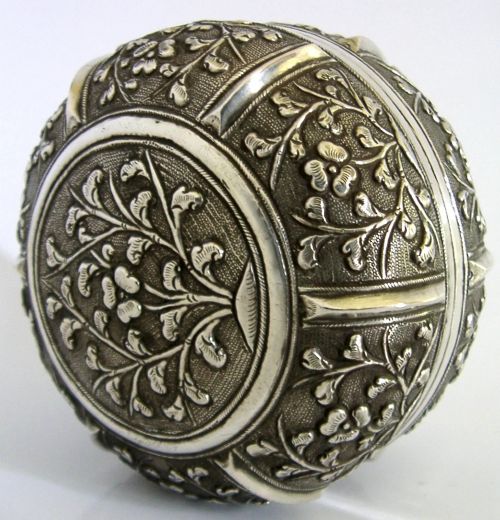


Antique Powder Container
An antique powder container holds cosmetics or propellants, uniting functional vanity items and utilitarian flasks in silver, glass, horn, and porcelain.
Antique Powder Container
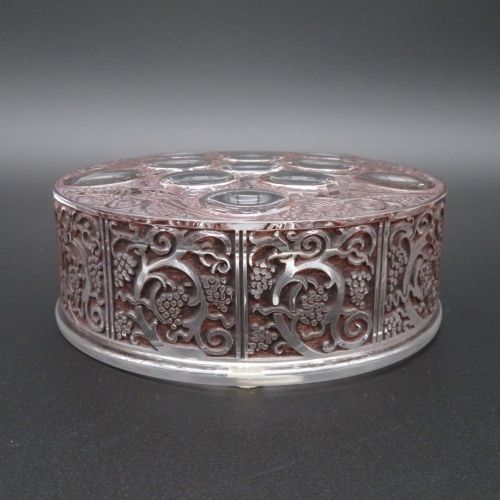
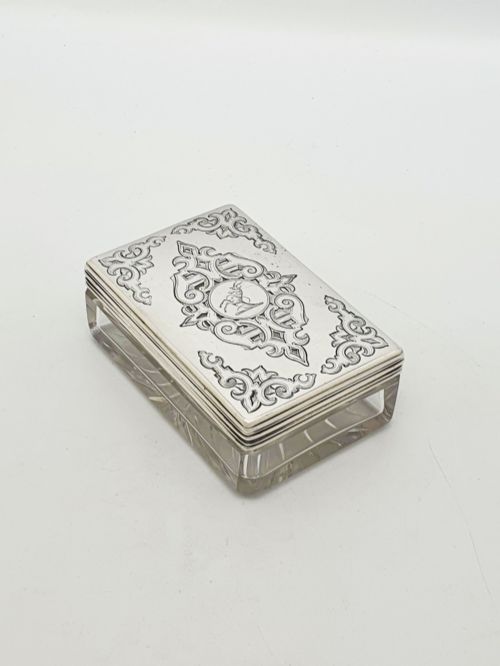
When you search for an antique powder container, you encounter a varied group of receptacles spanning dressing table jars, compacts, vanity boxes, and sporting flasks. These objects serve different domains, bridging the boudoir dressing table and the field or shooting lodge.
The domestic forms include porcelain bowls, enamel patch boxes, and silver-mounted glass jars designed for cosmetics. The utilitarian forms encompass carved horn flasks and brass containers intended for gunpowder and spices.
Pieces from the Georgian, Victorian, and Edwardian eras sit alongside Art Deco ceramics and crystal. This mix reflects changing domestic habits and personal grooming over two centuries.
Materials and construction
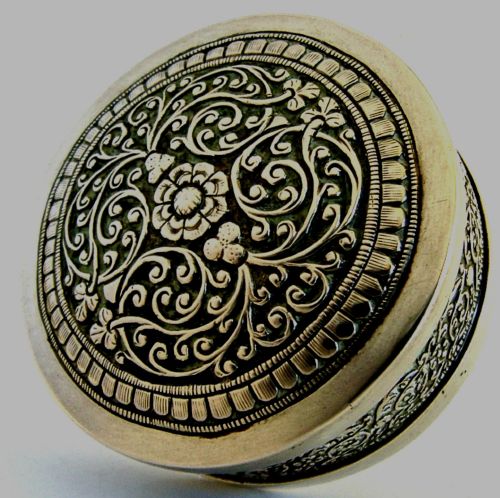
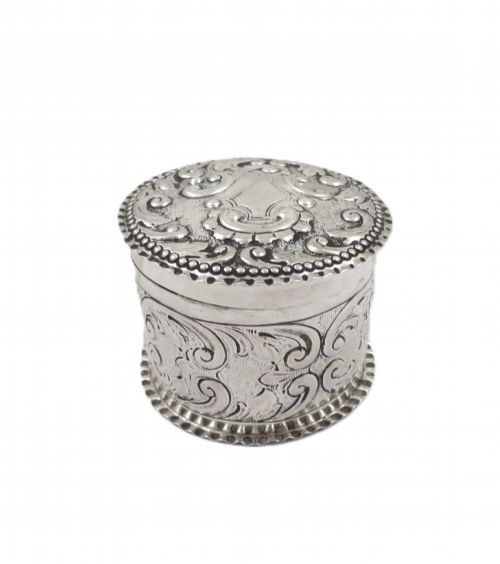
Metals form the structural mounts and bodies of many examples, utilising sterling silver, brass, and solid silver alloys worked through casting, repoussé, and silversmithing. Sterling silver lids often feature Birmingham or Chester hallmarks alongside maker marks.
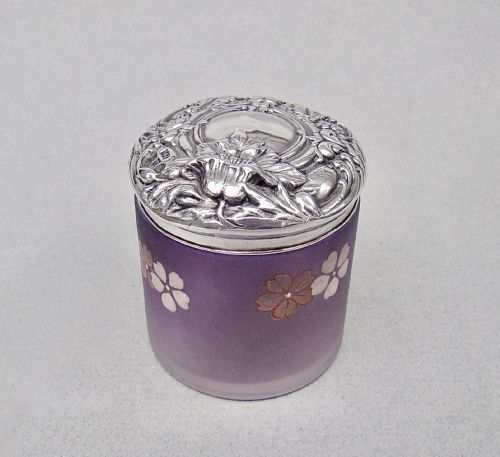
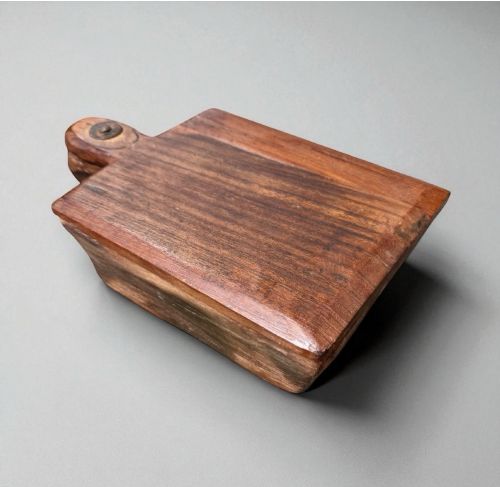
Glass and ceramic components rely on moulding and crystal cutting, producing frosted or clear vessels paired with metal covers. Organic materials such as natural horn, bone, and wood undergo carving and assembly to create durable flasks and boxes.
An eighteenth-century powder pink enamel patch box gently reminds past owners that a tiny piece of court plaster was the ultimate eighteenth-century accessory.
Judging execution and finish
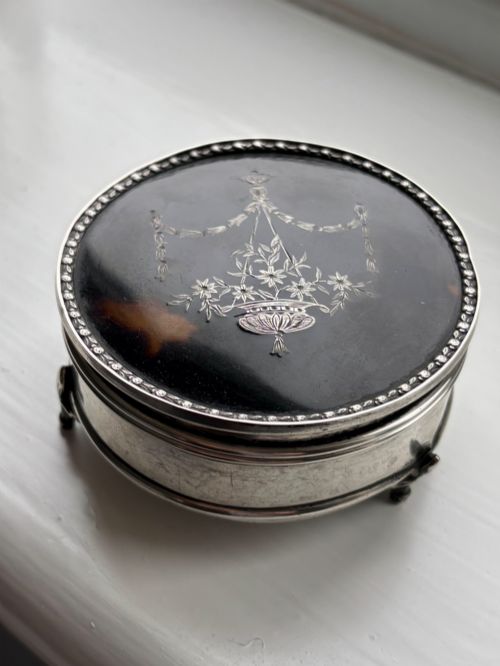
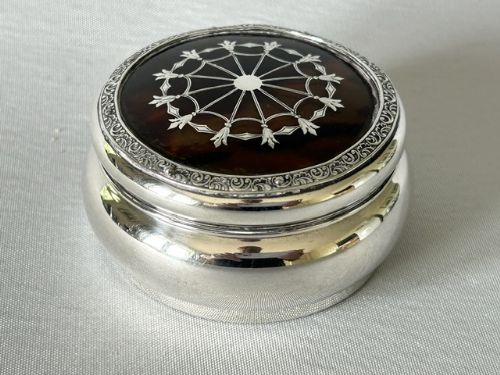
The distinction between standard containers and superior examples lies in the precision of the assembly and the handwork applied to the surface. Fine silver boxes exhibit crisp chasing, tight-fitting hinges, and well-preserved guilloché enamel or pique work.
Ceramic and glass vessels show quality in the clarity of the mould, the depth of the crystal cutting, and the hand-painted details on porcelain figurines. Utilitarian horn and bone pieces depend on the skill of the carver in shaping natural material without splitting.
Ollivant & Botsford·Paul Storr·Asprey & Co·Elkington & Co·Hasset & Harper·Henry Williamson Ltd
The Antique Powder Container Glossary
- Guilloché enamel
- Enamel applied over a machine-turned metal background. This technique creates repeating geometric patterns visible beneath translucent colour.
- Pique work
- Inlays of gold or silver dots and pins into tortoiseshell or ivory. The metal pins form delicate motifs across the surface.
- Patch box
- A small decorative container used for holding cosmetic beauty patches. These Georgian trinkets often feature enamel lids with inscriptions.
- Powder flask
- A receptacle used to hold gunpowder for firearms. They are frequently fashioned from horn, brass, or copper with a measured nozzle.
Antique Powder Container: Frequently Asked Questions
What is the difference between a powder box and a powder flask?
Powder boxes are dressing table accessories designed for cosmetic face powders and sit on vanity surfaces in bedrooms.
Powder flasks are rugged containers made from horn or metal intended to store and dispense gunpowder for firearms.
How do I date a silver powder container?
British silver containers carry hallmarks that include assay office symbols, date letters, and maker marks which pinpoint the exact year of manufacture.
Stylistic cues such as Art Deco geometric lines or Victorian chased florals help confirm the period when hallmarks are absent.
What materials were used for vanity jars?
Vanity jars combine sterling silver mounts and lids with cut crystal, frosted glass, or ceramic bodies.
Some examples incorporate organic materials like tortoiseshell, pique work, or enamel into the lid construction.
How should I clean antique silver and glass?
Sterling silver mounts require gentle cleaning with a specialist cloth to preserve the patina and avoid damaging any applied enamel.
Glass and crystal bodies can be washed in warm soapy water, taking care to keep moisture away from fabric linings or paper labels.