


Antique Pottery Spill Holder
These antique pottery spill holder pieces are charming earthenware vessels designed to hold tapers for lighting fires, offering a glimpse into domestic life.
Antique Pottery Spill Holder
An antique pottery spill holder is typically a ceramic vessel or figurine designed to hold wooden spills for transferring a flame from the hearth. These pieces largely emerge from the Victorian period, alongside examples spanning the Regency era to the early twentieth century.
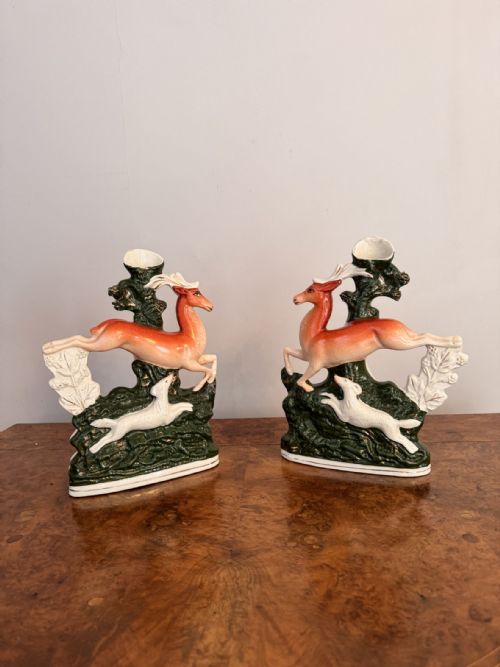
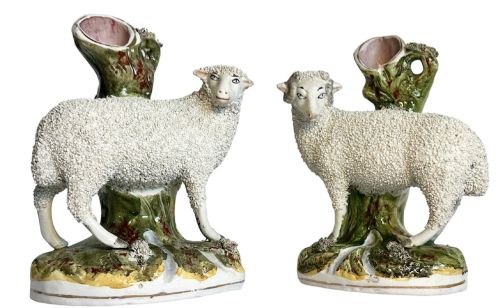
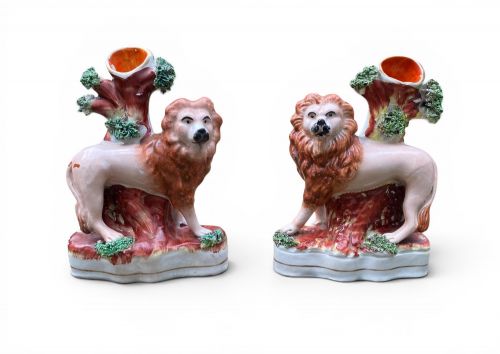
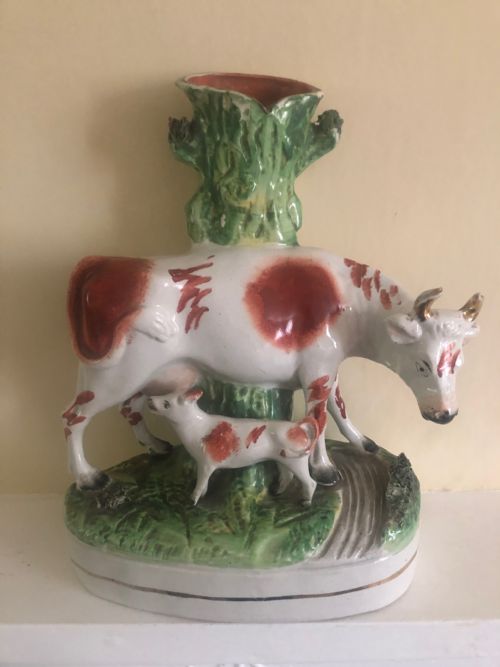
The selection on this page centres heavily on Staffordshire figures, featuring animal pairs such as deer, sheep, lions, swans, dogs, and cows, as well as figural groups like man and woman or Scots harvesters. Collectors encounter both flatback figures and sculptural pairs intended for the mantelpiece.
Makers such as Walton and Ernst Wahliss appear within the broader scope of these earthenware ceramics, incorporating pearlware glazes and art nouveau styling. Buyers predominantly meet nineteenth-century Staffordshire pottery designed for domestic display.
How they were made
The manufacturing process involved moulding ceramic clay before applying coloured enamel paints and protective glazes. Potters fired these pieces to fix the glaze and pigment, resulting in the glossy finish seen on Victorian figures.
Nineteenth-century potters modelled everything from lions to cows as spill holders, ensuring every hearth had an animal watching over the fire.
What varies in quality
The fineness of the hand-painted enamel work determines much of the visual distinction between pieces, with crisp details on faces and flora separating superior examples. Clean application of lead and pearlware glazes without excessive pooling also marks better execution.
Sculptural definition in the moulding of animal forms and figural pairs dictates the artistic merit of the ceramic. Pieces with strong proportions and careful detailing in the pottery body represent the upper tier of production.
Walton·Ernst Wahliss
The Antique Pottery Spill Holder Glossary
- Spill vase
- A hollow ceramic vessel designed to hold slender wooden tapers used for lighting candles and fires. These holders form an integrated part of nineteenth-century mantelpiece decoration.
- Pearlware
- A refined earthenware developed by British potters, featuring a thin glaze that pools with a slight bluish tint. It provides a paler ground than standard creamware.
- Flatback
- A Staffordshire figure modelled primarily for display against a wall, leaving the reverse unglazed or unpainted. This technique allowed larger figures to stand steadily on mantelpieces.
- Earthenware
- Porous ceramic pottery fired at lower temperatures, requiring a glaze to achieve impermeability. Most nineteenth-century Staffordshire figures utilise this material base.
- Lead glaze
- A traditional glassy coating applied to pottery before firing to give a glossy surface and seal the clay body. It enhances the brilliance of underlying enamel paints.
Antique Pottery Spill Holder: Frequently Asked Questions
What is a spill holder?
A spill holder is a hollow ceramic vessel or figural sculpture created to hold wooden tapers. These tapers were used to transfer flames from a hearth fire to candles or lamps.
Most examples date from the nineteenth century and doubled as decorative mantelpiece ornaments when not holding tapers.
How do I date a Staffordshire spill vase?
Dating relies on stylistic clues, glaze types such as pearlware, and manufacturing characteristics. Figures from the Regency period often show different modelling traits compared to later Victorian pieces.
Pottery marks, where present, help narrow down the period of production and occasionally point to specific makers.
Where were these ceramic figures made?
The majority of these pieces originate from the Staffordshire potteries in England, which dominated nineteenth-century ceramic production. Other European makers, such as Ernst Wahliss, contributed distinct art nouveau designs.
Staffordshire potters produced large quantities of animal and figural spill holders for domestic mantelpiece display.
How should I display pottery spill holders?
These ceramic pieces suit mantelpieces, shelves, and cabinets where their painted enamel details can be seen. Flatback figures are particularly suited for placement against walls.
Keeping them away from direct sunlight and handling them carefully helps preserve the painted enamel and glaze.