


Antique Portrait Miniature Style
These antique portrait miniature style pieces capture the intimate scale and painted likenesses of past centuries, prized by collectors for their delicate execution and history.
Antique Portrait Miniature Style
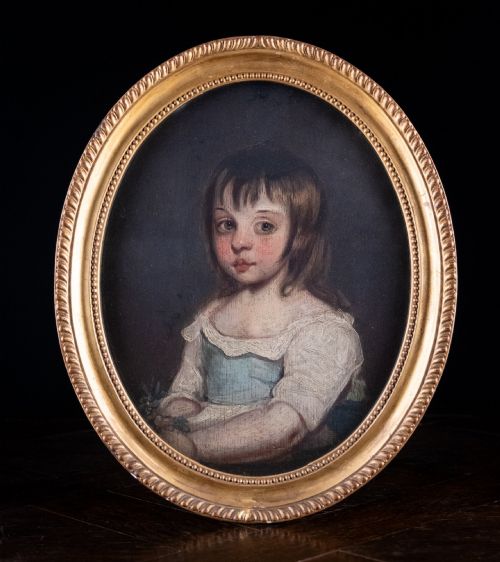
The antique portrait miniature style encompasses small-scale paintings, framed prints, and porcelain plaques originating predominantly from the seventeenth, eighteenth, and nineteenth centuries. Examples range from Regency and Georgian works to Victorian and Edwardian interpretations, reflecting diverse European and international schools.
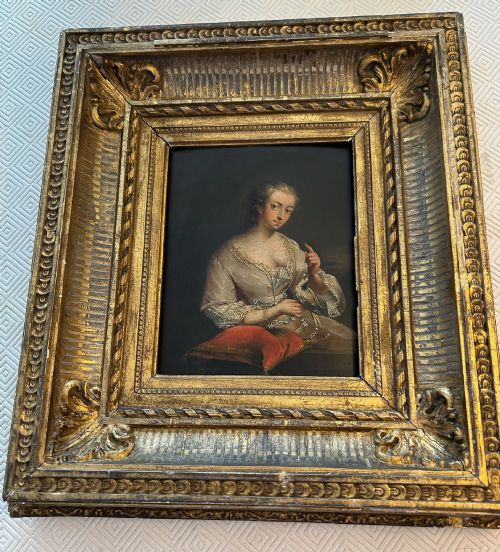
Buyers frequently encounter framed portrait miniatures and painted porcelain plaques alongside watercolour and oil paintings on paper, wood, or glass. Many pieces adopt historical revivals, such as French Rococo and Neoclassical themes, mirroring earlier portrait traditions.
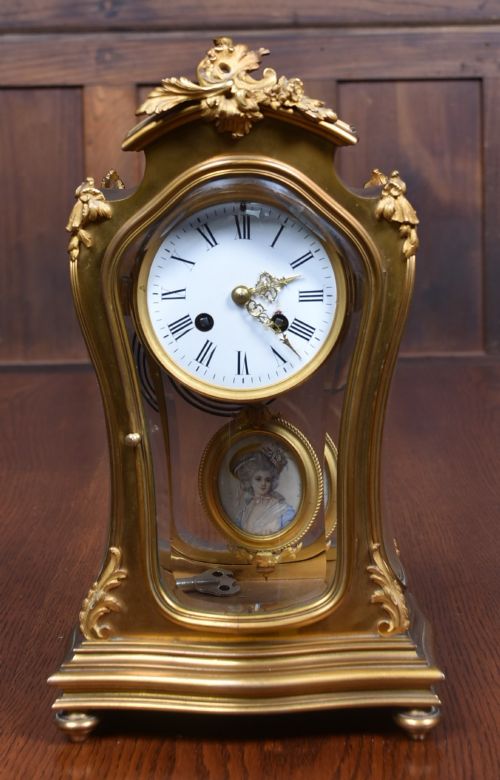
The selection includes specialty items like gold snuff boxes, stick pins, and mantel clocks incorporating signed portrait miniatures. These functional objects integrate painted likenesses into everyday personal and domestic items of the period.
How They Were Made
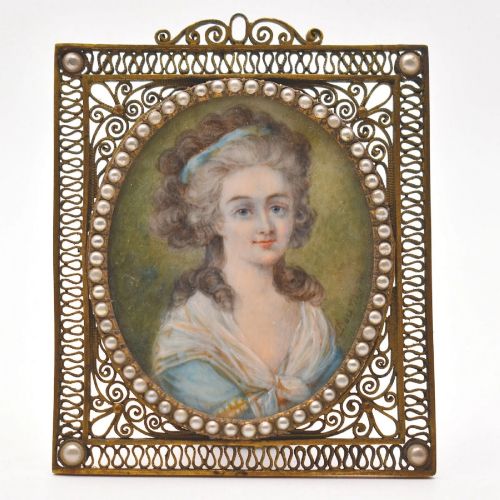
Artists utilised watercolour, oil paint, enamel, and gouache applied to surfaces such as paper, glass, porcelain, and wood. Frames were fashioned from brass, gilt wood, and ormolu, occasionally incorporating seed pearls or pressed white glass paste.
Miniature paintings and porcelain plaques required precise brushwork to capture facial details within a constrained compass. Skilled makers often mounted these works inside protective glass fronts and decorative metal or wooden surrounds.
Materials represented in these listings include glass, paper, wood, brass, watercolour, oil paint, enamel, and gilt wood.
What Varies in Quality
Execution of the painted likeness and the fineness of the brushwork distinguish superior examples from simpler decorative output. The precision in capturing facial expression and costume detail reflects the hand of a more accomplished artist or workshop.
The quality of the housing, whether an ornate gilt frame, an ormolu mount, or a gold snuff box, contributes to the overall distinction of the piece. Preservation of the original glass, enamel, and painted surface remains a key measure of integrity.
William Wood·James Tassie·Louis Leopold Boilly·Jean Baptiste Isabey
The Antique Portrait Miniature Style Glossary
- Portrait miniature
- A small-scale painting depicting a specific person, traditionally created using watercolour on vellum, ivory, or paper.
- Porcelain plaque
- A flat piece of fired porcelain utilised as a stable surface for detailed hand-painted portraiture.
- Ormolu
- Gilded bronze or brass applied as decorative mounts on frames, clocks, and luxury boxes.
- Gilt wood
- Wood treated with gold leaf or gold paint to create a reflective, ornate frame finish.
- Glass paste
- Vitreous material moulded to imitate gemstones or cameos, seen in pressed frames and jewellery.
Antique Portrait Miniature Style: Frequently Asked Questions
What is an antique portrait miniature style piece?
These works are small-scale paintings and decorative items that emulate historical portraiture traditions from the seventeenth to the early twentieth centuries.
They are encountered as framed artworks, painted porcelain plaques, and set into functional objects like boxes and clocks.
How were these miniature portraits displayed?
Many miniatures were designed to be framed and hung on walls or kept on desks within protective glass cases.
Others were incorporated into personal accessories, such as gold stick pins, snuff boxes, and mantel clocks.
What materials are typical for these pieces?
Makers utilised watercolour, oil paint, enamel, and gouache on surfaces including paper, wood, glass, and porcelain.
Frames and mounts commonly feature brass, gilt wood, ormolu, and occasionally seed pearls or glass paste.
How do I identify the period of a miniature?
Dating relies on the costume and hairstyle depicted in the portrait, combined with the materials and style of the frame.
Stylistic cues such as Regency, Georgian, or Victorian aesthetics provide further context for when the piece was produced.