




Antique Portfolio Holder
An antique portfolio holder keeps large papers and prints safe while bringing period timber and brass into a study.
Antique Portfolio Holder
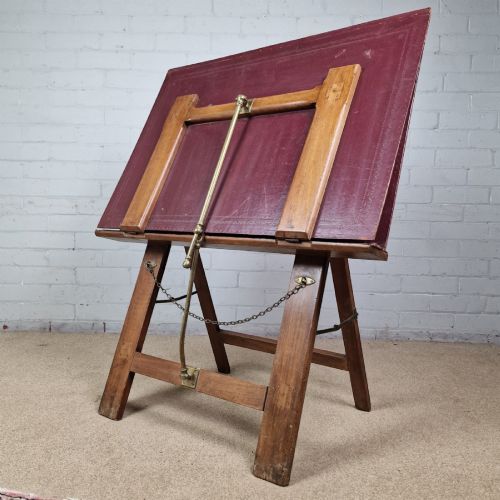
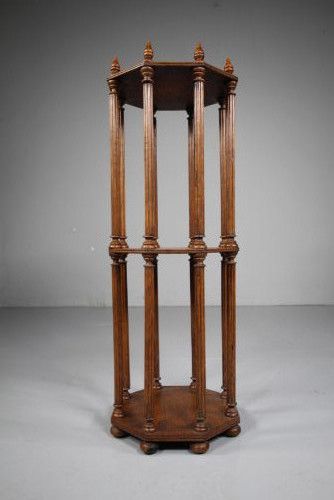
An antique portfolio holder serves to store loose papers, prints, drawings, and maps in a library, studio, or drawing room. The pieces found here take the form of folio stands, music stands, magazine racks, scroll stands, music canterburys, and correspondence cases.
The selection ranges from grand Regency examples down to Victorian and Edwardian iterations. Mahogany and walnut dominate the offerings, often complemented by brass fittings and leather details.
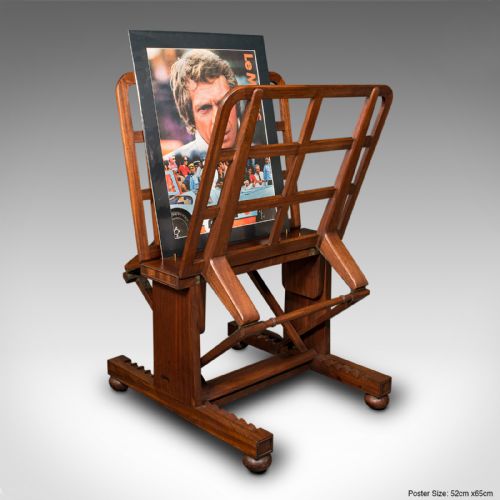
Buyers will encounter specialised pieces such as architect picture racks and adjustable artist stands alongside domestic music canterburys and correspondence cases. These objects reflect the nineteenth-century need to organise sheet music, letters, and large illustrative works.
Construction and Materials
Cabinetmakers utilised solid timbers such as mahogany, oak, walnut, and rosewood to build these stands and canterburys. Marquetry inlay and carved wood ornamentation appear on specific Victorian and Black Forest pieces, adding texture to the structural grain.
Some Black Forest stands arrive carved with woodland creatures, watching over your sheet music with unblinking wooden intensity.
Evaluating Quality
The calibre of a piece rests on the selection of timber and the precision of its joinery. Finer examples display carefully figured mahogany or walnut, balanced proportions, and integrated adjustable mechanisms that operate with smooth resistance.
Decorative treatment distinguishes standard items from superior works. Carved wood details, marquetry inlay, and attribution to known workshops elevate an object from a simple utility to a distinguished piece of period furniture.
Gillows of Lancaster·W & J Milne
The Antique Portfolio Holder Glossary
- Folio stand
- A piece of furniture designed to hold large sheets of paper, prints, or portfolios upright or at a slant. These stands often feature adjustable frames.
- Canterbury
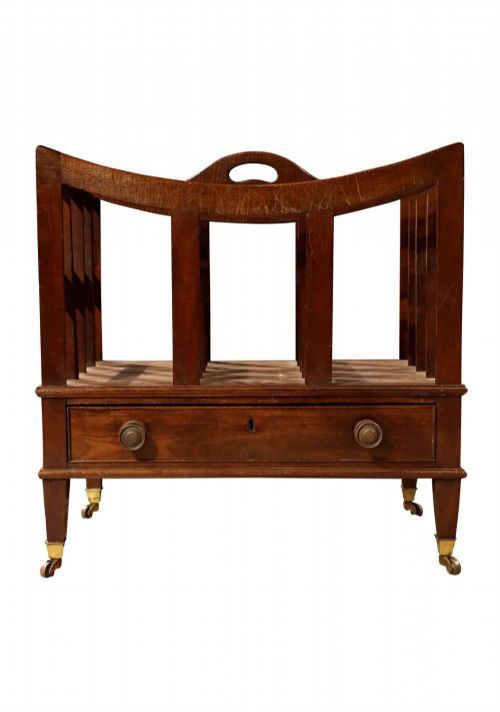
- A low stand with partitions used originally for holding sheet music or books. Some variants incorporate drawers at the base.
- Marquetry
- The art of applying pieces of veneer to a structure to form decorative patterns. This technique appears on specific Victorian walnut pieces.
- Scroll stand
- A form of rack designed to hold rolled maps, plans, or documents upright. These are typically fashioned from oak or mahogany.
- Correspondence case
- A portable or desk-top box designed to hold writing paper, envelopes, and letters. Scottish examples in leather are known.
Antique Portfolio Holder: Frequently Asked Questions
What is a folio stand used for?
A folio stand holds large prints, drawings, maps, and unbound books in an easily accessible manner. They allow owners to display art or keep working papers organised in a library or studio.
Historically, artists, architects, and collectors relied on these stands to protect oversized paper items from bending or tearing while keeping them close at hand.
How do I date an antique folio stand?
Dating relies on identifying the prevailing timber choices, construction techniques, and stylistic markers of periods like the Regency or Victorian eras. Regency pieces often exhibit clean classical lines in mahogany or rosewood, while later Victorian examples may show heavier carving or walnut veneers.
Examining the fixings, such as brass screws and castors, also helps establish the approximate decade of manufacture alongside any maker stamps.
Can these stands hold modern art portfolios?
Many antique folio stands feature adjustable frames or generous dimensions that accommodate standard modern art paper sizes and portfolios. Adjustable Regency and Victorian racks offer flexibility for varying widths and depths.
Buyers should check the internal width and depth of the specific stand to ensure compatibility with their particular storage requirements.
What is the difference between a stand and a canterbury?
A folio stand is typically an open frame or rack designed specifically for large flat sheets and portfolios, often with an adjustable reading or display angle. A canterbury is a partitioned stand traditionally used for upright storage of sheet music, books, or magazines, frequently featuring low legs and sometimes a small drawer.
Both serve paper storage functions but cater to different formats and domestic spaces.