

Antique Plate Holders
These antique plate holders and related tabletop metalware bring Georgian and Victorian utility to the modern dining room.
Antique Plate Holders
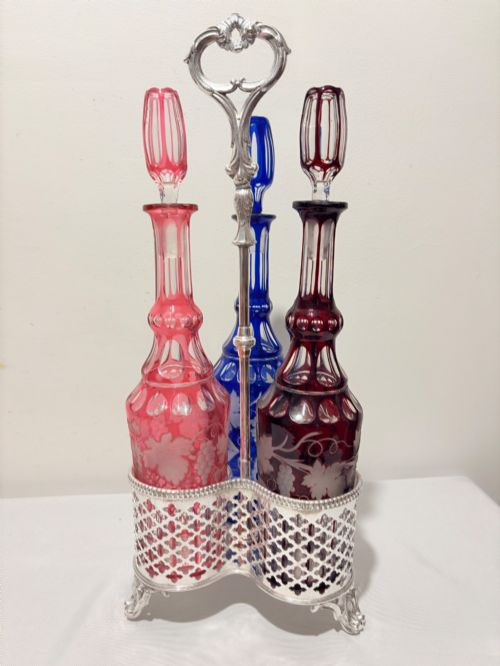
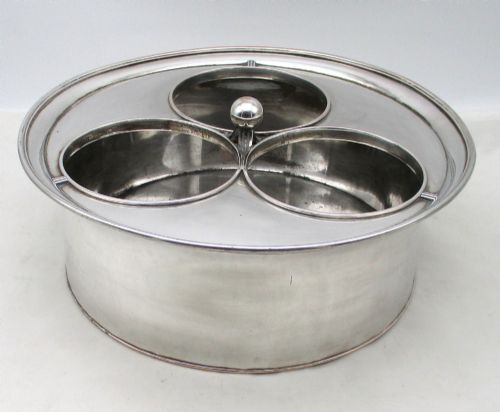
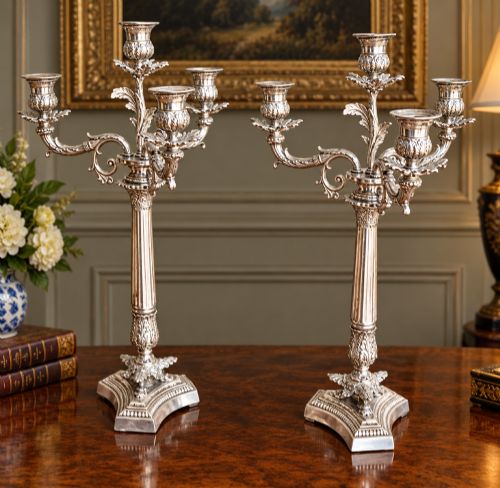
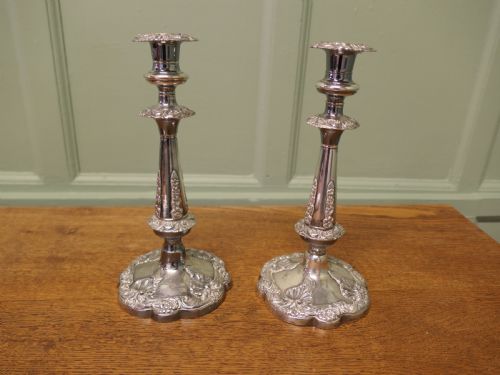
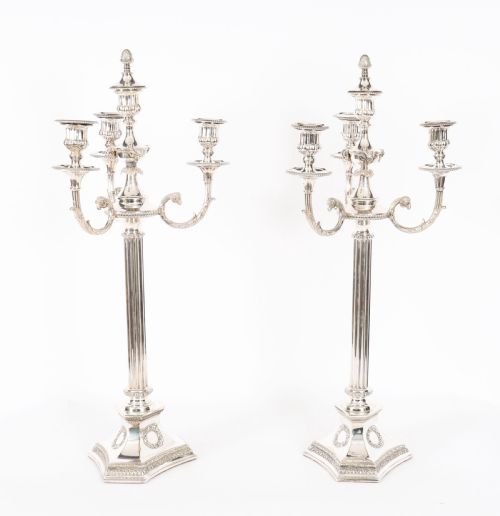
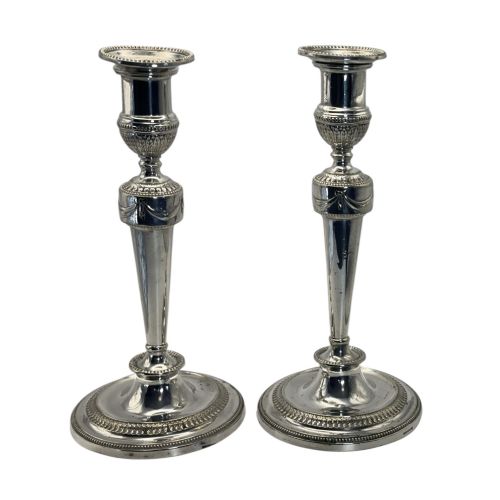
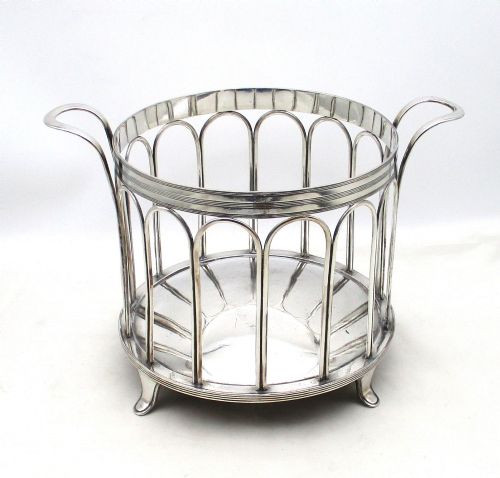
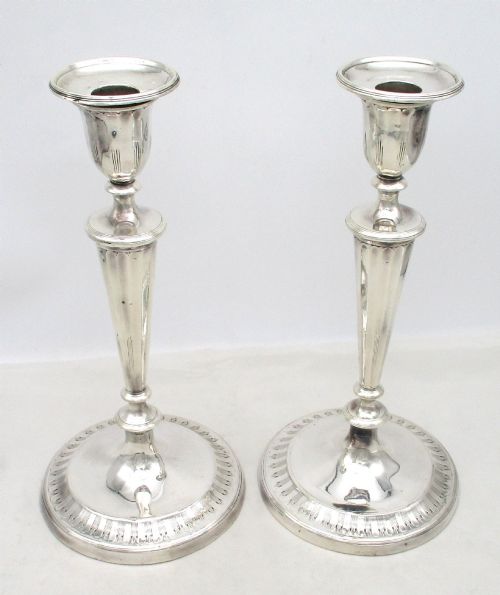
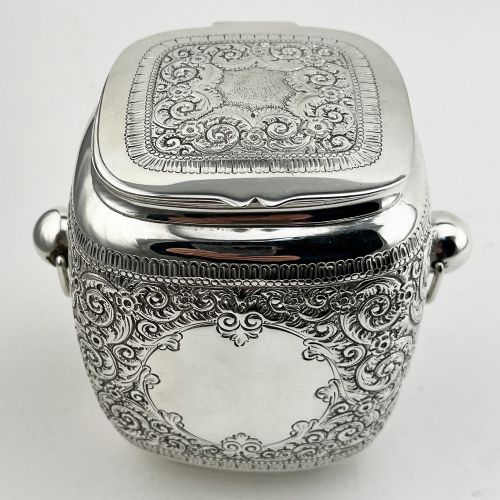
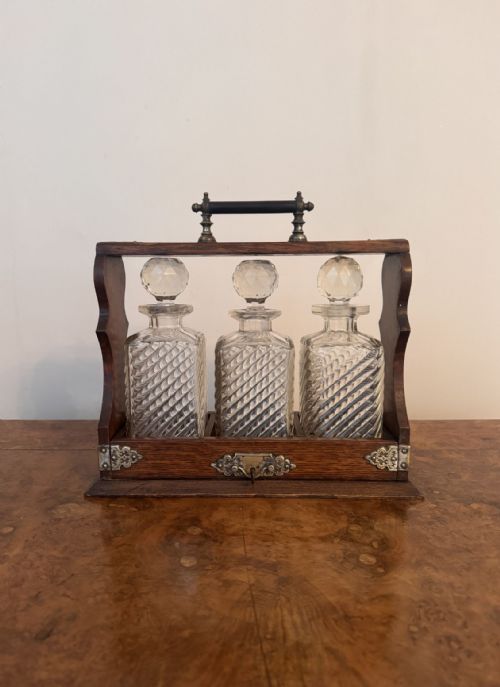
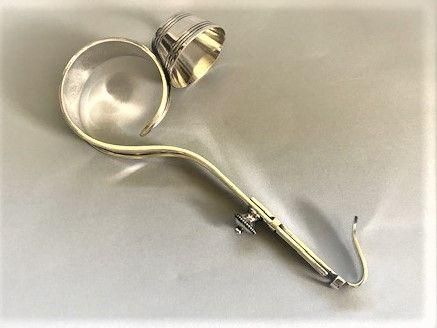
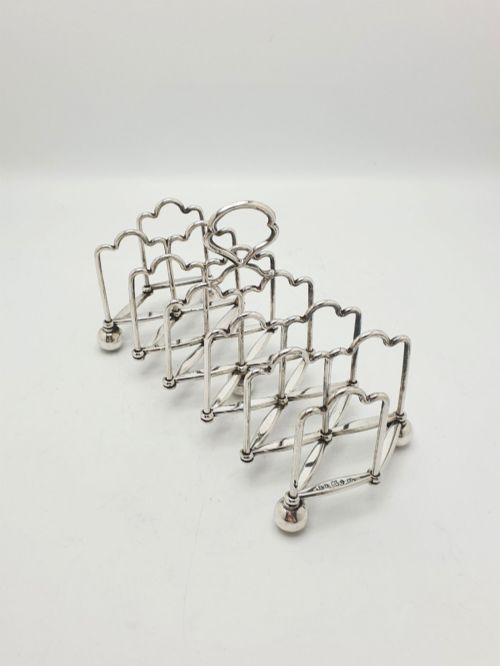
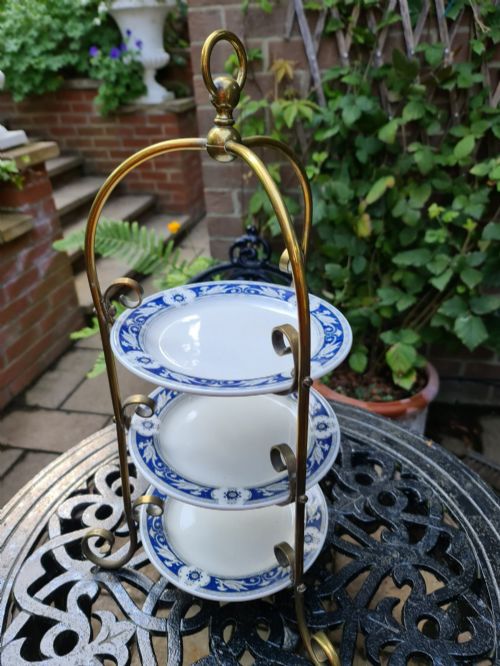
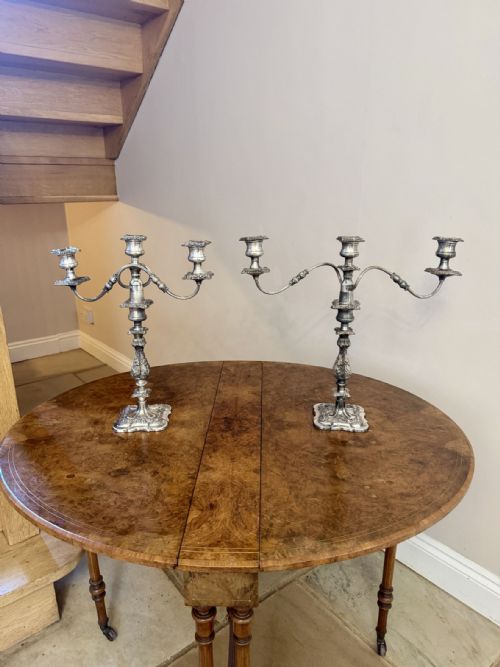
When searching for antique plate holders, buyers encounter a diverse selection of 19th-century and Edwardian dining accessories designed to hold bottles, wine coolers, and candle fixtures. The pieces appearing on this page span from George III Old Sheffield plate to late Victorian silver-plated candelabras and Edwardian bottle holders.
Candlesticks, wine coasters, and bottle stands form the core of the items available, reflecting the formal dining habits of the Victorian and Edwardian eras. Makers utilised silver plate, electroplated nickel silver, and copper to create functional objects that also served as decorative centrepieces on dining tables.
How they were made
Early items rely on Old Sheffield plate, a technique fusing a thin sheet of silver to a thicker copper base, visible along cut edges where the base metal shows. Later 19th-century and Edwardian pieces utilise electroplated nickel silver, applying a chemical coating of silver over a durable alloy substrate.
Detailing often involves cast mounts soldered to rolled sheet bodies, combined with embossed or engraved decoration characteristic of Victorian and Edwardian workshop output.
What varies in quality
The standard of manufacture depends on the weight of the metal base and the thickness of the applied silver coating, which dictates how well the piece survives decades of polishing. Heavier gauge silver plate and substantial copper cores indicate superior construction compared to lighter, purely decorative items.
The crispness of chased or embossed ornamentation, the integrity of soldered joints, and the prominence of maker marks from established workshops separate ordinary production wares from exceptional examples.
Mappin & Webb·Martin Hall & Co·Elkington·Walker & Hall·Hawksworth Eyre·Garrard & Co·Matthew Boulton·WMF·Mabie Todd & Co·Brook & Son
The Antique Plate Holders Glossary
- Old Sheffield plate
- An early method of fusing silver to a copper core before the invention of electroplating. This technique produces a distinctive warm tone and shows copper peeking through high points.
- Electroplated nickel silver
- A process introduced in the 19th century where silver is electrically bonded to a nickel brass base. This method replaced Old Sheffield plate for many mass-produced items.
- Candelabra
- A branched candlestick holding multiple lights on a central stem. These function as significant decorative items for dining tables.
- Wine coaster
- A small tray or stand with a raised rim, often lined with wood or felt, designed to hold a wine bottle on the table. They protect polished timber surfaces from moisture and spills.
Antique Plate Holders: Frequently Asked Questions
What is Old Sheffield plate?
Old Sheffield plate is an early material made by fusing a thin layer of silver onto a copper ingot before rolling them into sheets together. This technique predates electroplating and creates a distinct layered appearance.
Items made this way often reveal a faint reddish copper line along exposed edges or worn high points. Collectors prize this material for its historic manufacturing method.
How do I clean silver plate?
Silver plate requires gentle cleaning with a specialised non-abrasive polish to protect the thin outer layer of silver. Aggressive scrubbing will wear through the plating and expose the base metal beneath.
Store items in dry environments and handle them carefully to maintain the protective finish on antique surfaces.
How can I date these items?
Dating relies on stylistic clues, manufacturing techniques, and maker marks stamped into the metal base. Georgian pieces often show Old Sheffield plate construction, while Victorian and Edwardian items frequently utilise electroplating.
Registrations marks and specific company stamps help narrow the production period to a particular decade.
Were bottle holders used daily?
Dining accessories such as wine coasters and bottle holders were standard fixtures in middle- and upper-class homes during formal meals. They kept bottles stable on the table and caught drips from the bottle base.
These functional objects transitioned from dining rooms to sideboards as dining rituals evolved over the 19th century.