



Antique Pink and Gold Porcelain
Antique pink and gold porcelain delivers rich rose grounds and heavy gilding across clocks, vases, and teacups that bring vibrant colour to a room.
Antique Pink and Gold Porcelain
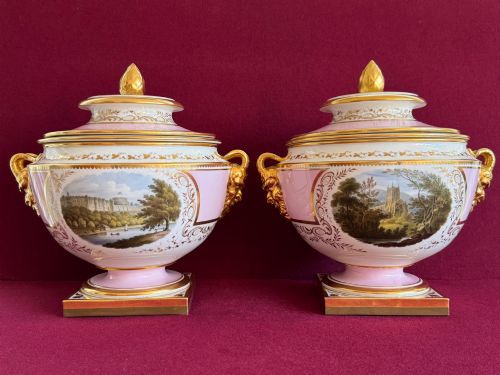
These pieces encompass decorative items and tableware created primarily during the eighteenth and nineteenth centuries, featuring distinct rose pink colouring combined with heavy gilding. The selection ranges from Regency ice pails and Chamberlain Worcester pastille burners to Victorian mantel clocks and Edwardian Royal Worcester pieces.
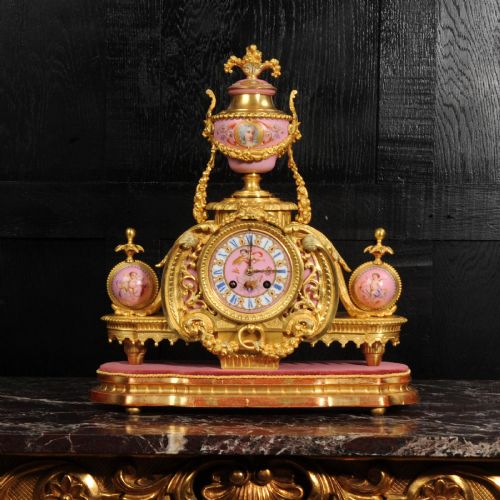
Buyers will most frequently encounter nineteenth century items, particularly Victorian tablewares and French or English mantel clocks set with handpainted porcelain panels. Forms vary from practical teacups and saucers to decorative ewers, chargers, and garniture vases.
Origins span notable English factories such as Worcester, Chelsea, and Spode alongside continental makers from France, Austria, and Russia. Each piece demonstrates the enduring popularity of pairing a blush pink ground with shining gold leaf or gilt bronze mounts.
Distinctions in quality
Quality rests upon the precision of the handpainted decoration, seen in the fine detail of pink cabbage roses or historical scenes rather than mass-produced transfers. Superior examples display crisp brushwork and master signatures that elevate standard decorative wares into works of fine art.
The integration between the ceramic body and its metal mounts dictates the calibre of clocks, lamps, and garnitures. Heavy, well-chased gilt bronze mounts paired with cleanly potted porcelain indicate superior atelier production.
Antique Pink and Gold Porcelain Retail Price Guide 2026
Typical asking prices for pink and gold porcelain among the pieces listed under this phrase on Sellingantiques today, from the lower quarter to the upper quarter. They describe what is for sale here now, not the wider market.
Listings feature 19th Century, Regency, and Victorian periods utilising porcelain, enamel, gold leaf, and ormolu across clocks, vases, and teacups.
Flight Barr And Barr·Achille Brocot·Japy Freres·Chamberlain Worcester·Royal Worcester·Mintons
The Antique Pink and Gold Porcelain Glossary
- Gilding
- The application of gold leaf or powdered gold to the surface of porcelain. It provides the characteristic metallic brilliance that defines these pieces.
- Ormolu
- Finely ground and high-purity gold applied in a mercury amalgam to bronze mounts. This technique creates a rich yellow metallic finish alongside the pink porcelain.
- Pastille burner
- A small ceramic vessel designed to burn scented pastilles, often pierced at the top for fragrance release. These decorative objects frequently feature detailed painting.
- Garniture
- A set of three or more matching vases or decorative objects designed to sit together on a mantelpiece. They represent a coordinated decorative scheme.
- Demitasse
- A small cup used to serve Turkish coffee or espresso after a meal. These miniature cups often match larger tea sets in pink and gold colourways.
Antique Pink and Gold Porcelain: Frequently Asked Questions
Were these items meant for display?
Many items, such as mantel clocks, garniture vases, and decorative chargers, served purely ornamental functions in nineteenth century parlours. Their rich pink and gold colour schemes were designed to catch the candlelight.
Other forms, like teacups and ice pails, had practical uses during formal dining and entertaining. Their survival in good condition suggests careful handling by past owners.
How do I date a piece?
Examine the base for factory marks, painted ciphers, and impressed numbers that correspond to known operational periods. Stylistic indicators, such as Regency shapes or Victorian floral painting, also help narrow the timeline.
Compare the mounting techniques and gilding styles with documented examples from the same era. Professional attribution often relies on these combined physical clues.
Can I use antique cups for tea?
Using antique cups is possible, but exercise caution due to the age of the porcelain and delicate handle attachments. Hand washing is essential to preserve the gold leaf and enamel painting.
Thermal shock from boiling water can crack old ceramic bodies, so warm the cup gently first. Many collectors prefer to keep delicate teacups and saucers for display only.