

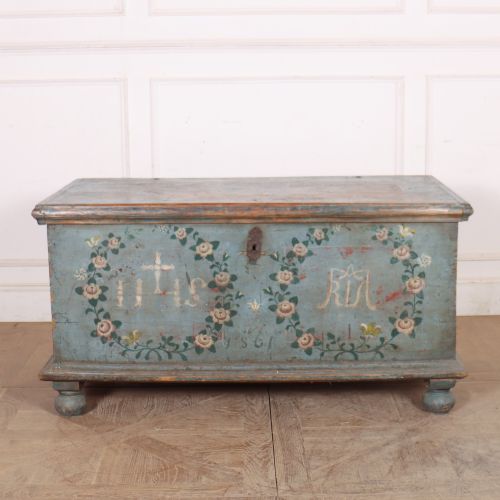


Antique Pine Marriage Box
An antique pine marriage box brings robust country utility and vibrant regional artistry straight into a modern interior.
Antique Pine Marriage Box
When you search for an antique pine marriage box, you encounter heavy wooden chests constructed to hold domestic linens and dowries for rural households. The examples gathered here span the eighteenth and nineteenth centuries, originating predominantly from Scandinavian, Hungarian, and Alpine regions.
Most pieces on this page take the form of substantial coffers, blanket chests, or dome-top trunks built to endure generations of use. European folk art and Scandinavian country traditions dominate the aesthetic, frequently displaying spirited painted surfaces rather than plain wood.
Mule chests and shaped boxes on stands also appear within the selection, offering varied storage capacities while retaining the characteristic vernacular charm. These storage pieces served central functions in historic homes, acting as both secure containers and primary decorative furniture.
Materials and Construction
Carpenters relied on sturdy pine as the foundational timber for these boxes, shaping thick boards to withstand heavy domestic demands. Wrought iron hardware, including strap hinges and robust latches, reinforces the lids and corners of many chests.
Makers applied pigment paint and mineral pigment directly to the wood to create striking floral and geometric surface decoration. Leather elements occasionally appear in fastenings or hinges, complementing the ironwork and wooden structure.
Folk artisans utilised hand-painting techniques to adorn the pine surfaces with traditional regional motifs, turning utilitarian containers into vibrant works of art. The combination of simple carpentry and expressive pigment paint defines the physical character of every piece.
Antique Pine Marriage Box Retail Price Guide 2026
Typical asking prices for pine marriage box among the pieces listed under this phrase on Sellingantiques today, from the lower quarter to the upper quarter. They describe what is for sale here now, not the wider market.
Pine and wrought iron construction dominates the selection, accompanied by applied pigment paint reflecting 18th-century and 19th-century European folk art traditions.
Evaluating Quality and Character
The distinction between ordinary utility items and exceptional examples lies in the survival and execution of the original painted surface. Pieces bearing well-preserved regional folk art or early floral ornamentation command greater appreciation among collectors than later repainted variants.
Structural integrity of the pine boards and the retention of authentic wrought iron hinges contribute significantly to a piece's standing. Finer chests display harmonious proportions and confident brushwork that reflect the distinct cultural traditions of their specific European origin.
The Antique Pine Marriage Box Glossary
- Marriage chest
- A large storage box commissioned or decorated to celebrate a wedding, often inscribed with initials, dates, or symbols of union. These pieces formed a crucial part of a bride's dowry in rural European communities.
- Coffer
- A heavy wooden box with a hinged lid, traditionally used for safekeeping valuables and textiles. Unlike standard chests, coffers often feature more robust construction designed for transport or security.
- Dome top
- A rounded lid configuration constructed to shed water and increase internal storage volume. This specific profile frequently appears on nineteenth-century Scandinavian trunks.
- Folk art
- Artistic work produced within a traditional culture by self-taught or local artisans, adhering to regional styles rather than academic canons. The painted decoration on these pine boxes exemplifies this vernacular tradition.
- Mule chest
- A traditional storage chest featuring one or more drawers built into the base beneath the main compartment. This form bridges the evolution between the simple coffer and the modern chest of drawers.
Antique Pine Marriage Box: Frequently Asked Questions
What were marriage boxes used for?
These boxes stored household linens, garments, and valuable items that a bride brought into her new home. They served as primary storage furniture in rural European dwellings.
Families often commissioned or decorated them to mark a wedding, incorporating dates or initials into the design.
Where do most of these chests come from?
The pieces originate primarily from Scandinavian countries, Hungary, and the Alpine region. Each area developed distinct regional painting styles and construction methods.
Swedish and Hungarian examples make up a significant portion of the available folk art tradition.
How do I care for a painted pine chest?
Keep the box away from direct sunlight and severe humidity fluctuations to protect the historic pigment paint. Dust gently with a dry cloth and avoid harsh chemical cleaners.
Allow the aged timber and original surface finish to breathe naturally without applying modern varnishes.
How can I tell the age of a pine coffer?
Examine the construction methods, tool marks on the pine boards, and the type of iron hardware used for hinges and locks. Hand-forged wrought iron and traditional joinery point towards eighteenth or nineteenth-century origins.
Painted dates, inscriptions, or well-documented regional folk art styles also help narrow down the period.