








Antique Percussion Handguns
These antique percussion handguns offer a direct tactile link to mid-nineteenth-century military and civilian defence.
Antique Percussion Handguns
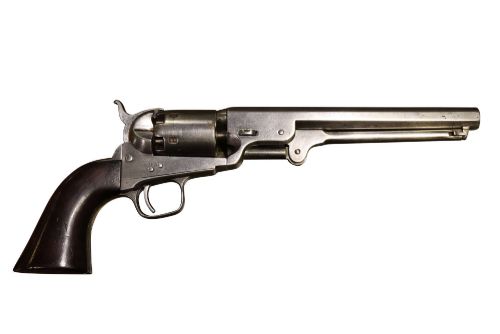
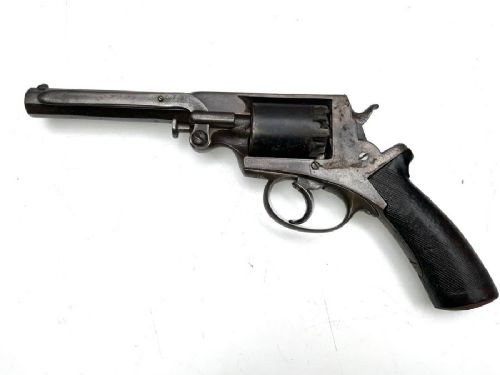
When you examine antique percussion handguns, you encounter firearms developed after the flintlock ignition system was superseded in the nineteenth century. These pieces span civilian pocket pistols, heavy military belt weapons, and multi-shot revolvers from the 1850s and 1860s.
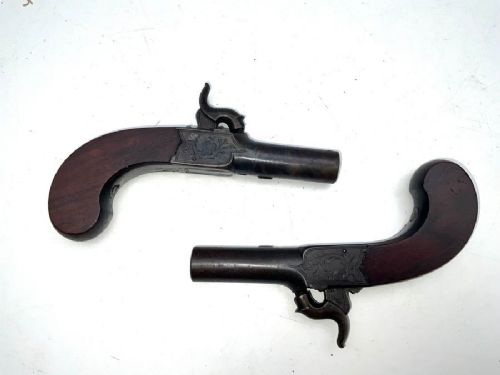
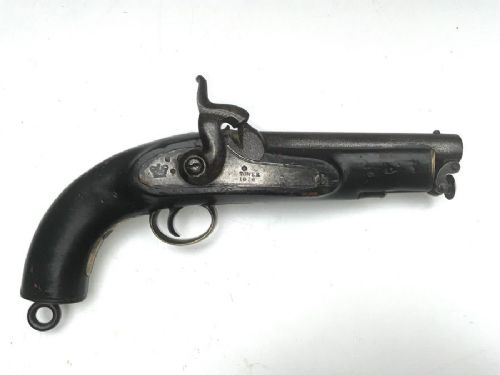
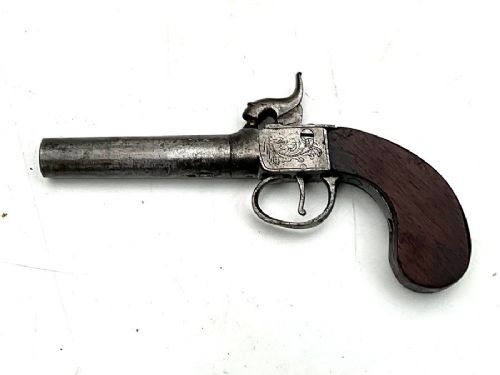
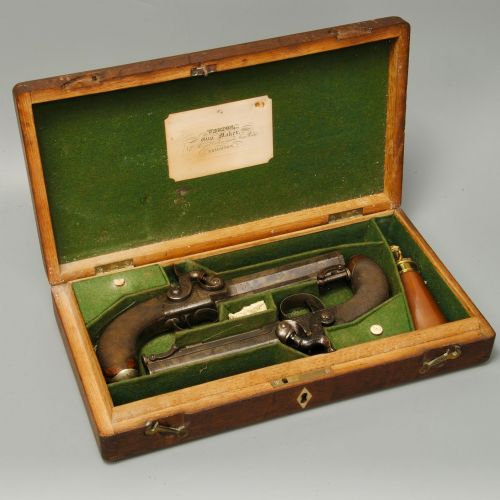
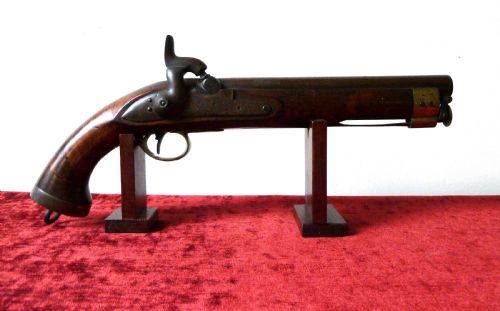
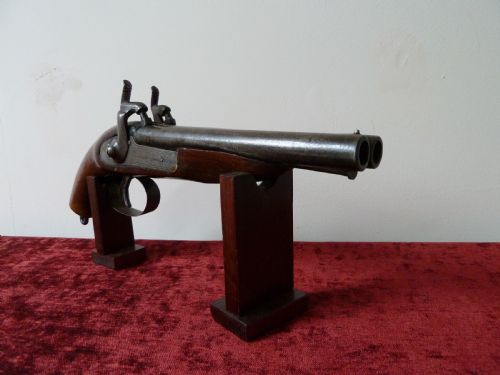
The items seen here include British military models stamped by Tower, American martial revolvers from the Civil War period, and specialised duelling or boxlock pocket pistols. Many survive as matching pairs or within their original fitted wooden boxes with contemporary accessories.
Origins range from London makers and provincial English workshops to continental European centres like Liège and overseas military contractors. The dominant formats reflect the practical demands of officers, travellers, and domestic defenders during the Victorian era.
How they were made
Makers built these handguns using forged steel for barrels and actions, paired with stocks shaped from dense domestic hardwoods like walnut, mahogany, and oak. Metal components often received surface finishing such as bluing, case hardening, or formal engraving.
Fitted cases lined the interior with velvet to cushion the firearm alongside powder flasks, bullet moulds, and cleaning rods. Brass components served for trigger guards, butt caps, and ramrod pipes, offering contrast to the dark iron and polished wood.
Antique Percussion Handguns Retail Price Guide 2026
Typical asking prices for percussion handguns among the pieces listed under this phrase on Sellingantiques today, from the lower quarter to the upper quarter. They describe what is for sale here now, not the wider market.
Some pocket pistols hide their folding triggers until the hammer is cocked, ready to surprise anyone unaware of the mechanism.
What varies in quality
The standard of execution ranges from utilitarian government issue arms produced in volume for military contracts to bespoke pairs finished by named London gunmakers. Superior examples demonstrate crisp checkering on the grips, fine scroll engraving on the metalwork, and precise mechanical tolerances.
Completeness heavily influences the standing of a piece, particularly the presence of a matching numbered case, original loading tools, and intact interior accessories. The clarity of maker signatures and government inspection stamps also marks the distinction between standard production and high-grade workshop output.
Colt·Deane Adams And Deane·Auguste Francotte·Mortimer·Tower·A W Spires
The Antique Percussion Handguns Glossary
- Percussion cap
- A small copper or brass detonating cup placed on the nipple of a firearm to ignite the gunpowder charge when struck by the hammer.
- Smoothbore
- A barrel lacking internal rifling, designed to fire lead balls or shot without imparting spin.
- Boxlock
- A pistol design where the frame and breech are forged as a single piece, typically placing the hammer on top or concealed within the action.
- Captive ramrod
- A reloading rod permanently attached to the pistol barrel by a hinge or swivel so it cannot be lost in the field.
- Martial issue
- Equipment specifically procured and stamped for official military or naval service rather than private civilian purchase.
Antique Percussion Handguns: Frequently Asked Questions
How do percussion handguns work?
When the trigger is pulled, the hammer falls sharply onto a small copper percussion cap seated on the nipple. The resulting spark travels through a flash channel to ignite the main gunpowder charge inside the barrel.
This percussion system replaced the earlier flintlock mechanism, offering much greater reliability in wet weather and damp field conditions.
Are these pistols safe to fire?
These antique firearms are collected, displayed, and studied as historical artefacts rather than modern shooting implements. Age, metallurgy, and the degradation of original components mean they should not be loaded or fired with live ammunition.
Consult a professional gunsmith specialising in antique arms if you require a formal assessment of mechanical integrity.
How do I store and display them?
Keep the metal components lightly oiled with a suitable museum-grade preservative to prevent corrosion from ambient moisture. Store them in stable environmental conditions away from direct sunlight and extreme temperature fluctuations.
If housed in an original fitted case, ensure the velvet lining remains clean and free from dust accumulation.
What is the difference between a pocket pistol and a belt pistol?
Pocket pistols are compact, often featuring shorter barrels and concealed triggers designed to be easily carried in a coat or waistcoat pocket for personal protection. Belt pistols are larger, heavier weapons equipped with belt hooks or sturdy holsters for open carriage by officers or travellers.
Belt pistols generally offered greater stopping power and longer sighting planes for field use.