


Antique Pebble Brooch
An antique pebble brooch brings the rich tradition of Victorian Scottish Revival jewellery into modern wear through hardstones set in silver.
Antique Pebble Brooch
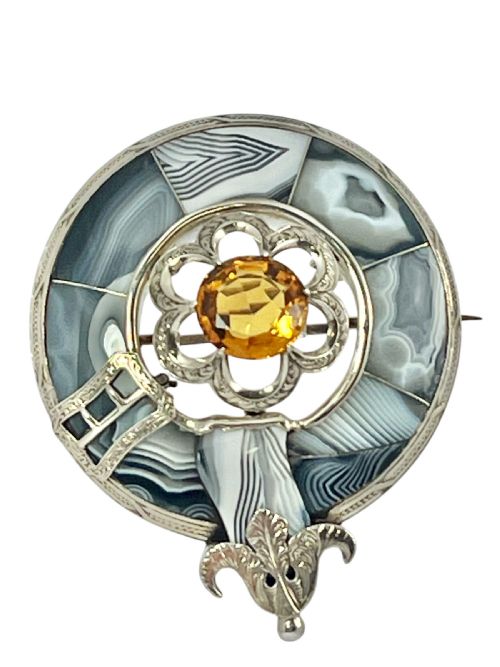
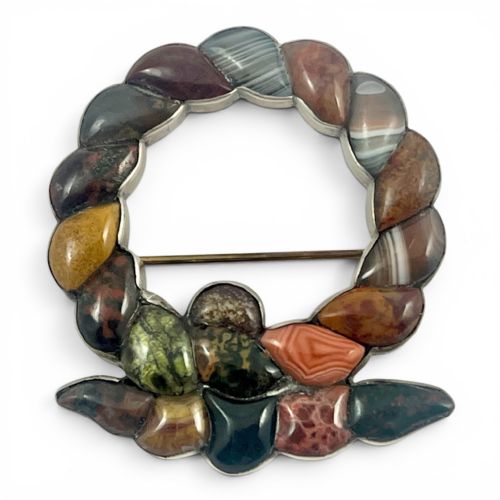
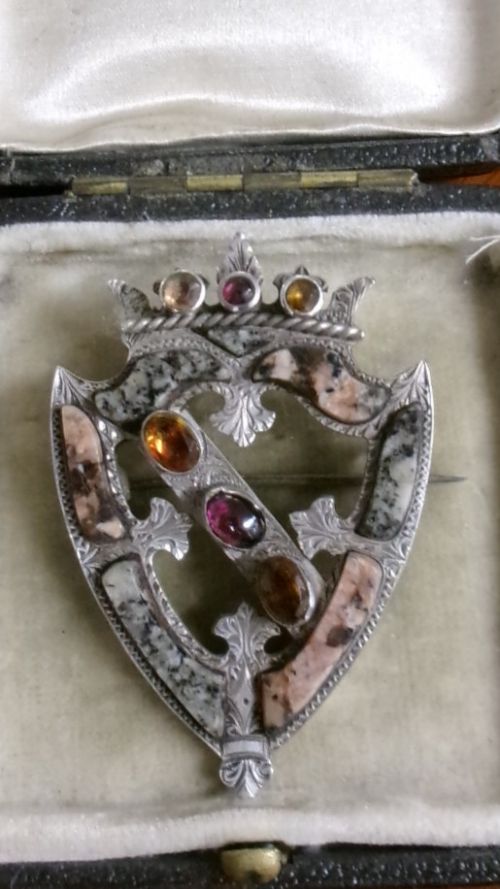
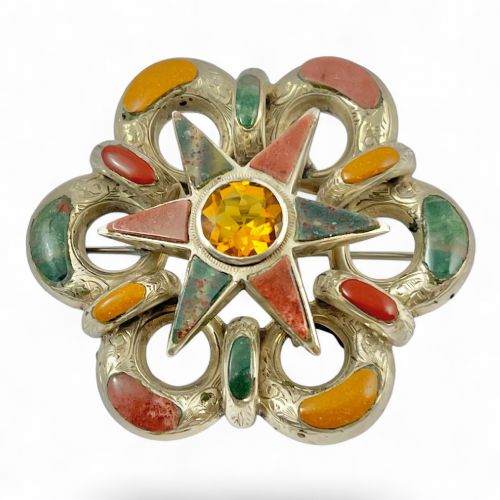
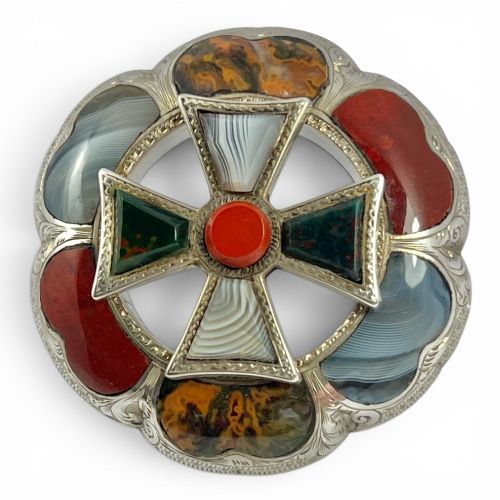
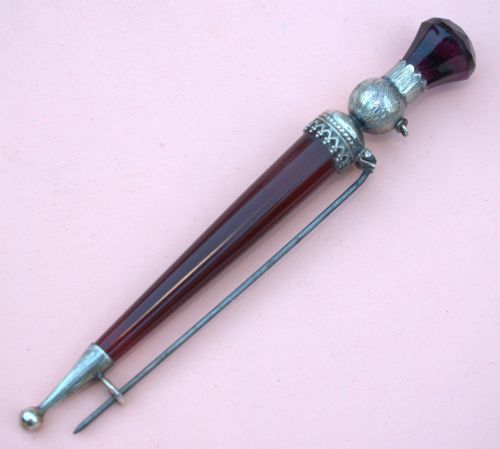
An antique pebble brooch is a piece of jewellery shaped from native hardstones and mounted in silver, most frequently encountered in Victorian Scottish Revival designs from the nineteenth century. These ornaments take varied forms such as shields, dirks, broadswords, bows, and padlocks, reflecting a distinct regional aesthetic popularised during the Victorian era. The stones themselves are gathered from Scottish rivers and hills, then cut and polished to reveal natural banding and colours.
Buyers searching for an antique pebble brooch typically find pieces featuring banded agate, jasper, bloodstone, and montrose agate, often accented with citrine. The settings range from simple silver frames to elaborate braided plaid brooches and kilt pins bearing regional provenance such as Inverness. Many survive alongside matching items like bracelets or earrings, forming complete suites from the mid to late nineteenth century.
Factors that define quality
Quality rests upon the selection and cutting of the stones, where high-grade examples display sharply defined natural banding and rich colour saturation within the agate or jasper. Superior pieces also exhibit intricate silverwork, such as finely chased basket hilts or complex braided designs rather than plain bezels.
The precision of the stone-setting and the clarity of any accompanying citrine further distinguish finer examples. Provincial Scottish pieces with documented towns of origin or complex forms like dirks and broadswords demonstrate greater technical ambition.
The Antique Pebble Brooch Glossary
- Agate
- A variety of chalcedony displaying distinct natural bands of colour. It forms the primary hardstone found in Scottish Revival jewellery.
- Jasper
- An opaque, microcrystalline variety of quartz yielding earthy reds, greens, and browns. It appears frequently alongside agate in Victorian plaid brooches.
- Citrine
- A yellow variety of quartz utilised as a central gemstone in silver pebble brooches. It provides a bright foil to darker hardstones.
- Dirk
- A traditional Scottish dagger, rendered here in miniature silver and stone as a kilt pin or brooch. These mimic Highland weaponry.
- Plaid brooch
- A large circular fastening designed to secure heavy wool garments. These pieces utilise substantial quantities of silver and multi-coloured stones.
Antique Pebble Brooch: Frequently Asked Questions
How do I wear an antique pebble brooch?
These pieces function traditionally on heavy wool coats, scarves, or knitwear where the substantial weight of the silver and stones finds adequate support. Securing them through thick cloth prevents the pin from sagging.
Modern wearers also pin them to lapels or use them to fasten shawls, treating the historic kilt pins and brooches as statement accessories.
Are these brooches genuinely Scottish?
Many examples originate from Scottish provincial makers working during the Victorian era, influenced by the nineteenth-century fashion for Highland themes.
The use of local stones such as Montrose agate and motifs like broadswords and dirks links them directly to this regional tradition.
How do I date an antique pebble brooch?
Dating relies upon stylistic markers from the Victorian period, particularly the popularity of Scottish Revival designs between the eighteen-fifties and nineteen-hundreds.
Specific forms like dated kilt pins and hallmarks from provincial centres help narrow the production decade.