


Antique Pearl Lavalier
An antique pearl lavalier combines delicate drop pendant work with the soft lustre of period pearls, offering a graceful focal point for the neckline.
Antique Pearl Lavalier
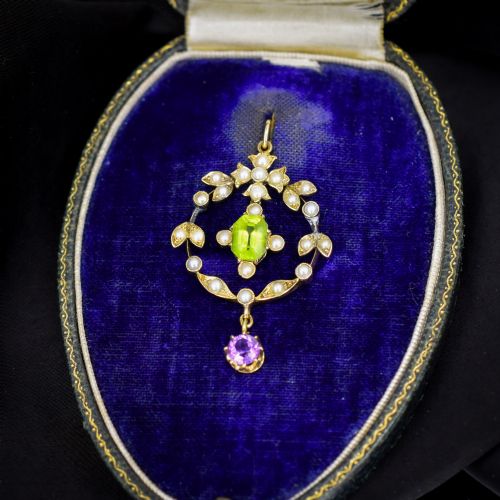
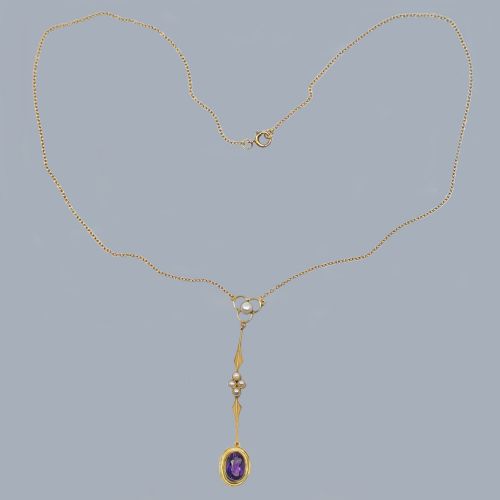
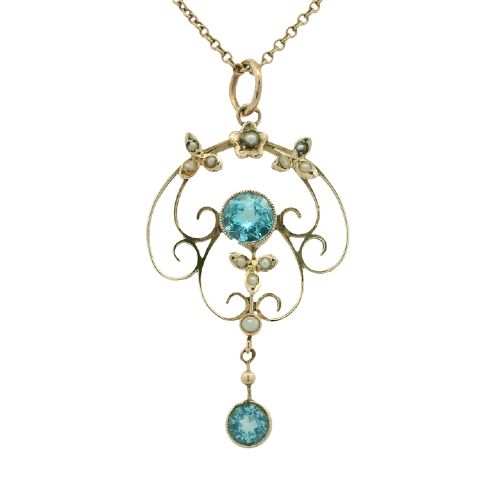
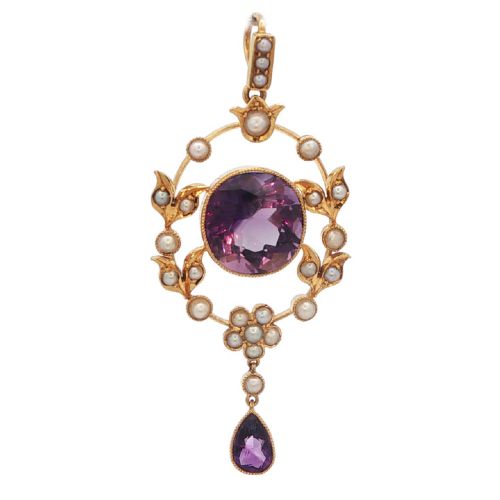
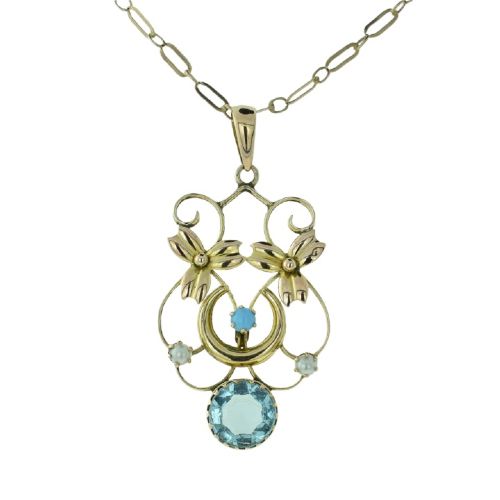
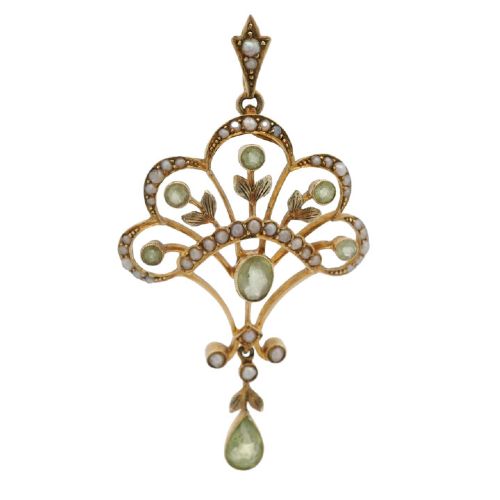
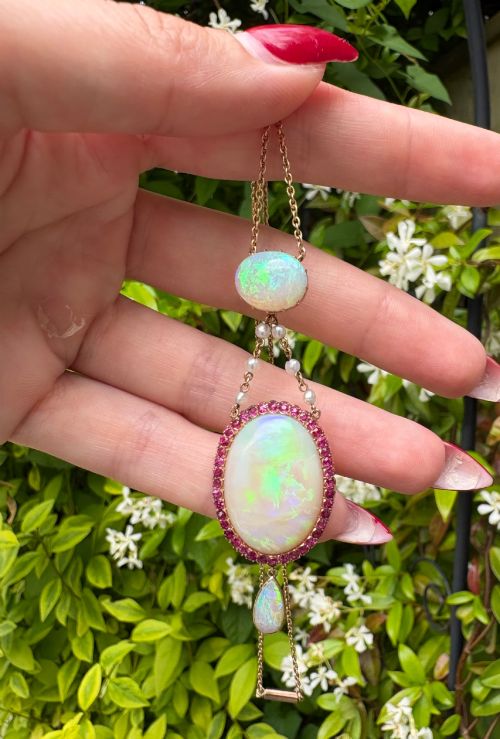
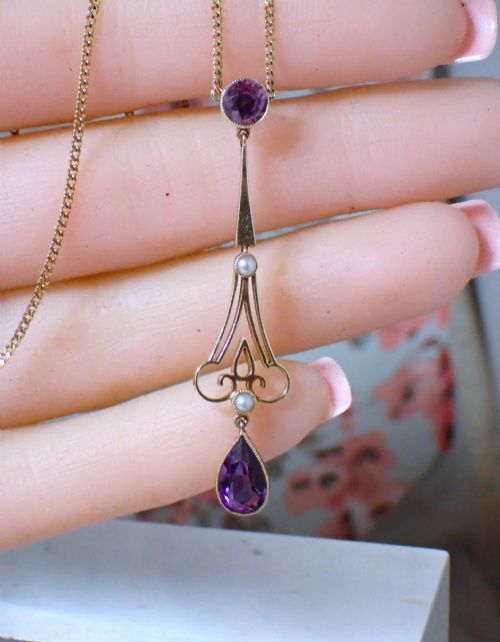
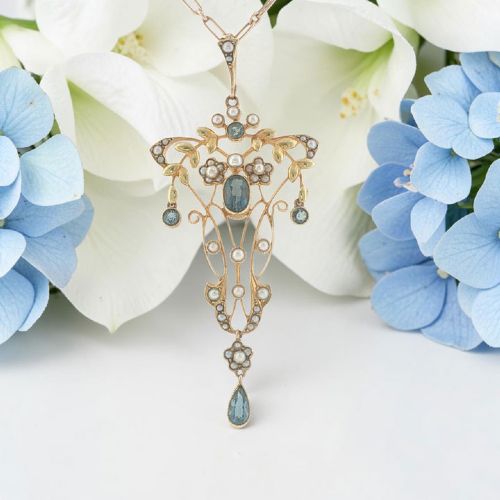
An antique pearl lavalier is a pendant necklace featuring a central gemstone suspended below a main motif, accompanied by natural or seed pearls. These pieces frequently appear in Edwardian and Art Nouveau styles, where flowing, organic lines dominate the design.
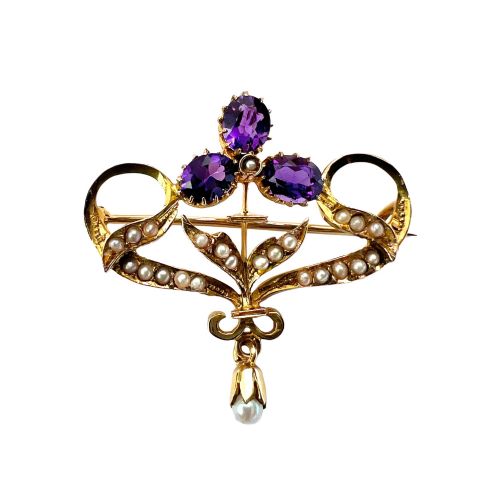
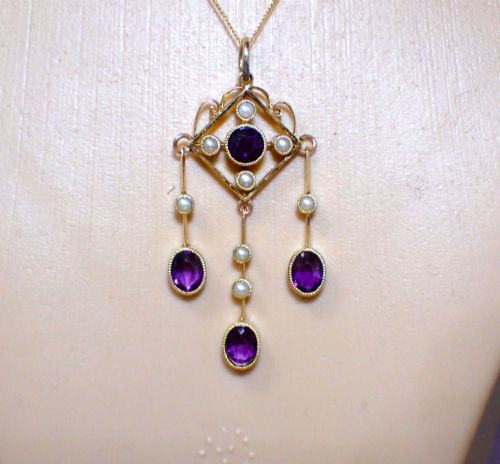
The most common versions on this page combine yellow gold with purple amethysts, green peridots, or pale blue aquamarines, often accented by tiny seed pearls. Pendant drops range from simple swaying stones to intricate foliate clusters that hang on fine link chains.
Materials and construction methods
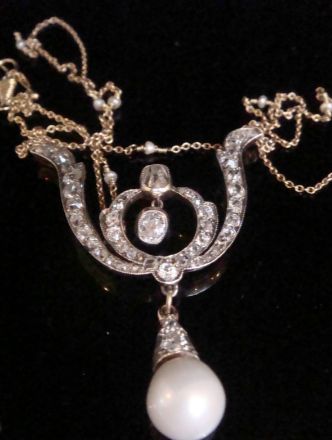
Goldsmiths worked primarily in 9ct and 15ct yellow or rose gold, occasionally mounting diamonds and pearls in platinum or silver settings. Gemstones were hand-cut and securely bezel-set or claw-set into delicate wirework frames.
Seed pearls were typically threaded on fine silk or secured with minute peg settings within floral and geometric motifs. Many pendants also double as brooches, incorporating a hinged pin and safety catch behind the main drop.
Listings span the Victorian, Edwardian, and Art Deco eras, executed in 9ct and 15ct gold with amethysts, peridots, and aquamarines.
Quality factors in period drops
Quality rests upon the delicacy of the metalwork and the matching of the pearls. Superior examples display intricate wire scrollwork without excess solder, alongside evenly matched pearls with a deep, uniform orient.
The choice of accompanying gemstones also dictates standard, with cleanly faceted amethysts, peridots, and aquamarines showing vibrant colour saturation. Original settings and matching period chains distinguish the finer survivors.
S. Blanckensee & Son·Murrle Bennett·Hamilton & Co
The Antique Pearl Lavalier Glossary
- Lavalier
- A pendant necklace featuring a dangling drop suspended below the main setting. This style gained widespread popularity during the Edwardian era.
- Seed pearl
- A very small, naturally formed or cultured pearl, often unperforated or half-drilled for mounting on pins. Jewellers used them in tight clusters to frame larger gemstones.
- Art Nouveau
- A design movement spanning the late nineteenth and early twentieth centuries characterised by sinuous, asymmetrical lines inspired by natural plant forms.
- Suffragette jewellery
- Pieces incorporating amethyst, peridot, and pearl, whose green, white, and violet stones symbolised the women's suffrage movement. These colour combinations appear frequently in Edwardian pendants.
- Foliate
- Ornamentation modelled on leaves, vines, and foliage. This motif is common in the pierced gold mounts of this period.
Antique Pearl Lavalier: Frequently Asked Questions
How do I wear a lavalier?
These pendants sit low on the collarbone, making them well-suited to V-neck or scoop-neck garments where the dangling drop can hang freely.
Pair them with simple period-appropriate chains or lightweight modern equivalents that match the metal tone of the pendant.
Are these pieces fragile?
The fine gold wirework and delicate seed pearls require careful handling during wear and storage. Avoid exposing old pearl settings to water, perfumes, or harsh ultrasonic cleaners.
Store them flat in a dedicated jewellery box to prevent the fine chains from tangling or kinking.
How can I date a pendant?
Stylistic markers such as flowing whiplash lines point towards Art Nouveau manufacture around nineteen hundred, while symmetrical garland motifs suggest the Edwardian decade.
Hallmarks stamped on the reverse or the bale provide official assay office stamps and metal purities to confirm the era.
What is a conversion piece?
Many pendant necklaces of this era were originally manufactured to function as both brooches and pendants. A small hinged pin and a hidden loop on the reverse indicate this dual purpose.
Collectors appreciate these versatile mounts as a standard manufacturing practice of the period rather than a later alteration.