



Antique Pastoral Print
An antique pastoral print brings the quiet rhythm of rural life into a room through engraved or painted scenes of shepherds, herds and fields.
Antique Pastoral Print
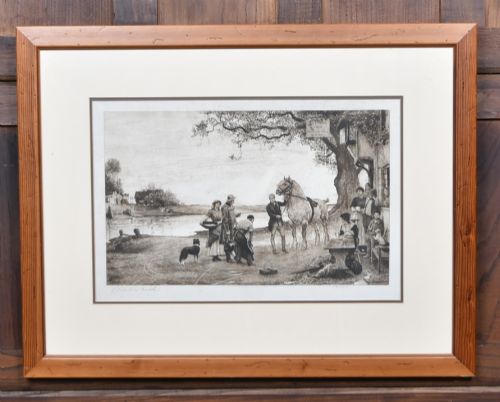
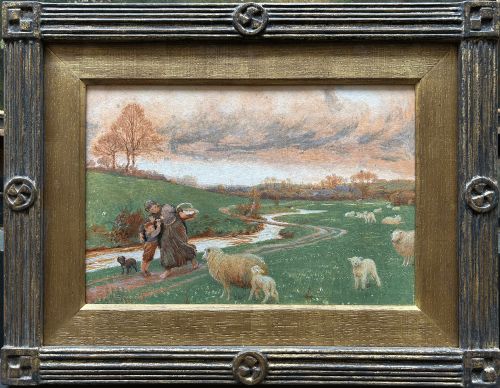
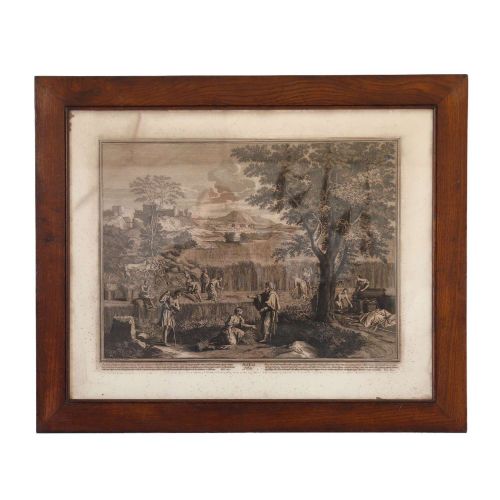
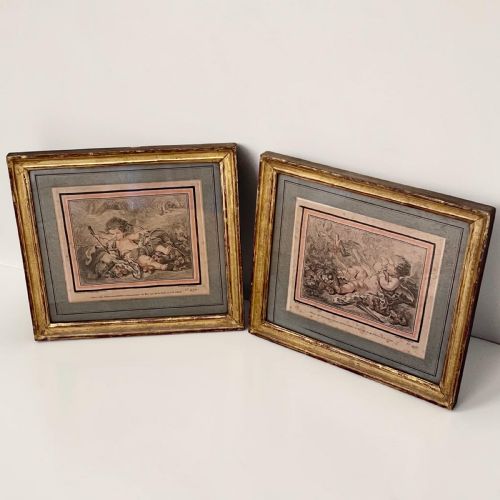
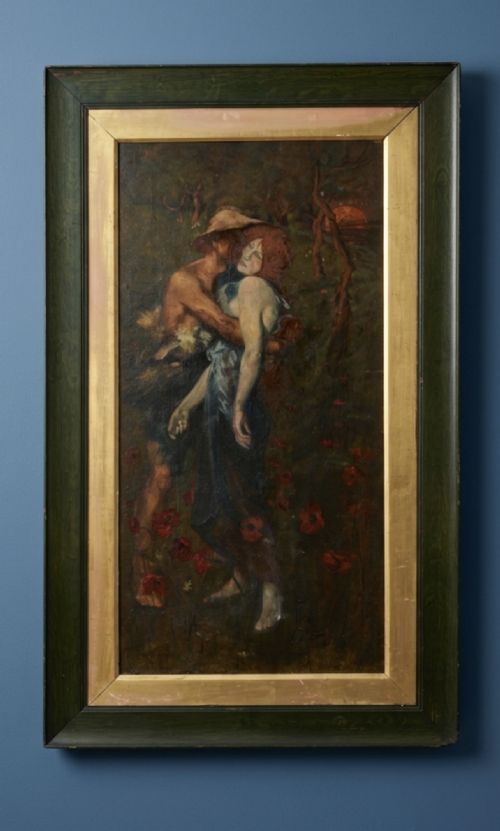
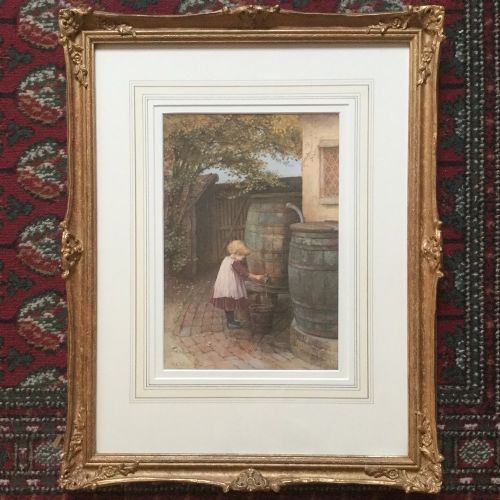
An antique pastoral print depicts scenes of rural life, farming, herding and idyllic country landscapes captured across various historical periods. The examples found here range from Georgian reverse glass prints to Victorian etchings and watercolours depicting shepherds, cowmen and rustic figures.
Buyers seeking an antique pastoral print will encounter framed works on paper, glass prints and transfer-printed pottery bearing similar rural imagery. These pieces span the eighteenth, nineteenth and early twentieth centuries, reflecting changing tastes in agrarian subject matter.
Materials and techniques
Makers produced these works using paper, glass, earthenware and wood, applying ink, glaze, gold leaf and gesso. Engraving, etching, mezzotint and hand-colouring created the visual depth on paper and glass panels.
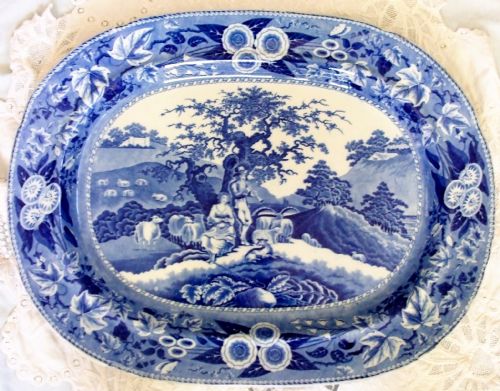
Pottery items utilised transfer-printing techniques to apply blue and white pastoral motifs onto earthenware plates, platters and jugs. Wood frames often incorporated gesso and gilt finishes to house the prints and paintings securely.
Several cows and a solitary pig make steady appearances across these pastoral fields.
Quality variations
Quality rests upon the clarity of the impression, the precision of the hand-colouring and the preservation of the delicate glass or paper surface. Earlier impressions from the eighteenth and early nineteenth centuries display sharper detail in the engraved lines.
The integrity of the original frame, the richness of the blue and white ceramic transfer and the subtlety of watercolour pigment separation distinguish finer examples from standard decorative pieces.
David Bates·Robert W Macbeth·Frederick Walker·Demarteau·Charles Edward Wilson·Henry William Banbury·James William Booth·Heathcote·A Winter Shaw·Joseph Kirkpatrick·Herbert Royle·Henry Birtles·Brameld and Co·George Morland·I R Smith
The Antique Pastoral Print Glossary
- Reverse glass print
- An image painted or transferred directly onto the back of a glass panel to be viewed from the front. This technique produced glossy surfaces popular during the Georgian period.
- Mezzotint
- A printmaking process of the intaglio family where the plate is roughened to achieve rich tonal gradations. It allows for soft transitions between light and dark areas in rural scenes.
- Transferware
- Earthenware decorated by applying a printed design from an engraved copper plate via tissue paper. Blue and white pastoral patterns were widely produced using this method.
- Etching
- A method where lines are bitten into a metal plate with acid to hold the printing ink. Artists used this technique to render fine details in landscape foliage and rustic figures.
Antique Pastoral Print: Frequently Asked Questions
What periods do these prints cover?
The inventory spans the eighteenth century through to the early twentieth century, encompassing Georgian, Regency and Victorian eras.
Different decades brought distinct printmaking techniques, ranging from early reverse glass works to later coloured etchings and watercolours.
How do I care for antique glass prints?
Reverse glass prints require careful placement away from direct sunlight to prevent the pigments and backing from fading.
Cleaning should involve only a dry, soft cloth, avoiding any moisture near the edges where the paint meets the glass.
What is the difference between an etching and a mezzotint?
An etching relies on acid-bitten lines into a metal plate to create defined outlines and cross-hatching in a pastoral scene.
A mezzotint works from dark to light by roughening the entire plate, producing soft tonal shadows rather than stark lines.
Are ceramic platters considered prints?
Blue and white pottery items use a transfer-printing method derived from copper plate engraving techniques applied to paper.
Potteries adapted these graphic pastoral plates and jugs to carry the same rural imagery found on framed wall art.