


Antique Pastoral Embroidered Art
Antique pastoral embroidered art brings the idyllic scenes of country life straight to the wall in silk and wool.
Antique Pastoral Embroidered Art
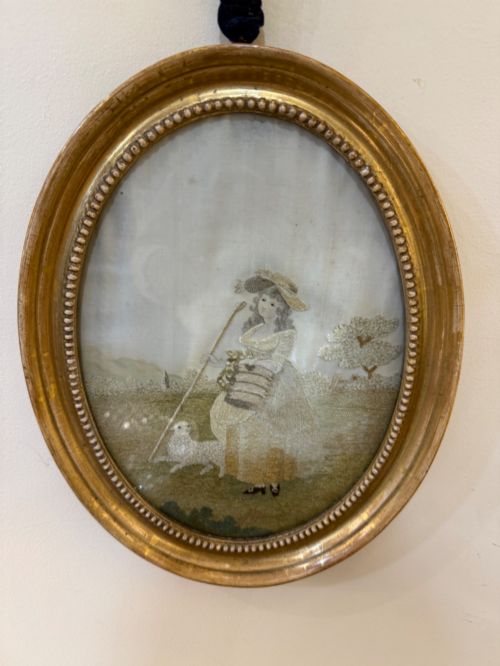
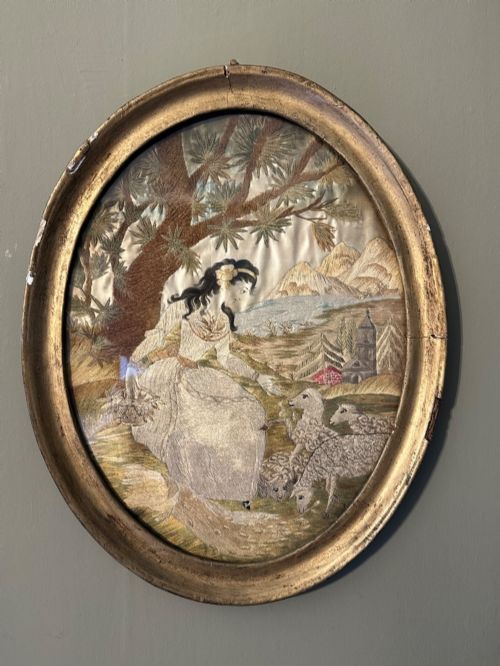
Antique pastoral embroidered art comprises framed needlework pictures and textile panels depicting rural life, shepherds, and garden scenes. These works capture idyllic countryside narratives through careful stitchery on fine fabric backings.
Examples on this page span the eighteenth century, the Regency period, and the Victorian era. Pieces originate from British, French, Italian, and continental workshops, showing varied regional interpretations of pastoral themes.
Common forms include oval woolwork pictures of girls in gardens and framed silk farming scenes. Such works served as decorative wall art in period interiors, often preserved behind specialised glass.
How they were made
Maker execution relies on silk and wool threads worked onto linen or fabric grounds. Stitchers utilised varied needlework techniques to create texture and depth in foliage, clothing, and landscape elements.
Finished embroideries were housed in period surrounds including giltwood frames, wooden mouldings, and verre églomisé glass panels. Gilding and gold leaf often enriched the exterior presentation of these textile artworks.
Early stitchers occasionally incorporated real human hair into pastoral embroidery to render the fine texture of sheep fleece.
What varies in quality
The refinement of the stitchwork dictates the sophistication of the textile art, separating simple craft projects from accomplished needlework pictures. Subtle shading in silk and wool threads creates lifelike dimension in figures and foliage.
The choice of housing influences the overall integrity of the piece, with original giltwood or verre églomisé frames offering greater period authenticity than later replacements. The preservation of the underlying fabric ground directly affects visual clarity.
The Antique Pastoral Embroidered Art Glossary
- Silk work
- Embroidery executed primarily with silk threads. This technique yields a lustrous finish capable of capturing fine facial details and delicate light effects.
- Crewel work
- Embroidery utilising traditional wool yarn on linen or cotton twill. It frequently appears in early nineteenth-century domestic textile pieces.
- Verre églomisé
- A cold decoration technique involving the application of gold or silver leaf to glass, then scratching a design into the metal. It provides a decorative border for framed pictures.
- Giltwood
- Wood that has been treated with gold leaf or gilt preparation. This material forms ornate frames suited to period wall art.
Antique Pastoral Embroidered Art: Frequently Asked Questions
How were these embroideries displayed?
Period needlework pictures were designed specifically for interior wall display as framed art.
They typically hung in parlours and drawing rooms within wooden, giltwood, or verre églomisé frames.
How do I date a needlework picture?
Dating relies upon stylistic markers, frame types, and material choices associated with periods like the eighteenth century or Regency era.
Needlework techniques and subject matter also shift between Georgian and Victorian conventions.
What materials make up these artworks?
The primary mediums involve silk, wool, and linen combined in various stitchwork compositions.
Frames incorporate wood, gold leaf, and specialised glass to protect the delicate textile panels.