
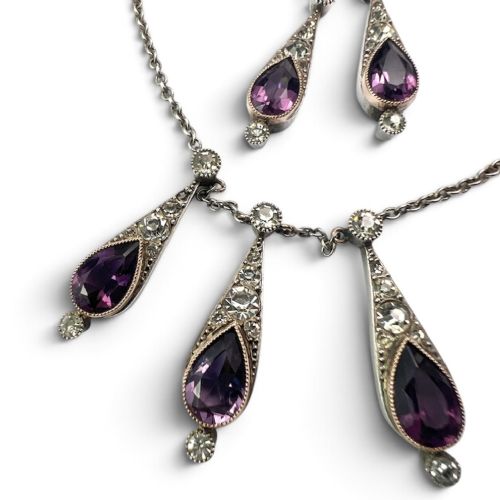
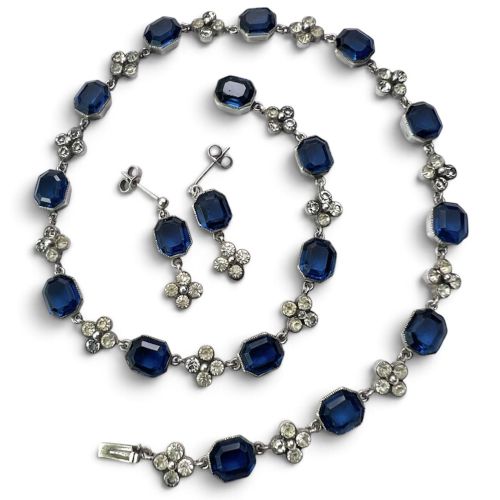
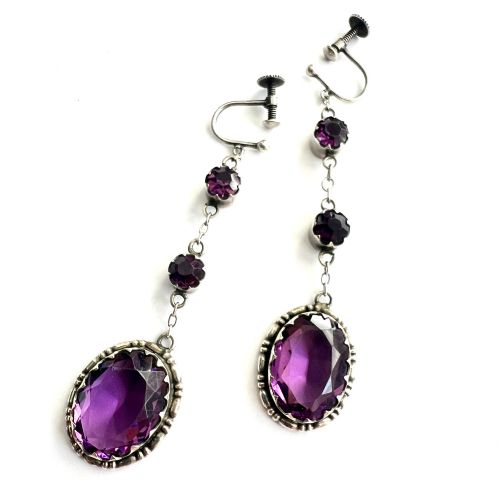
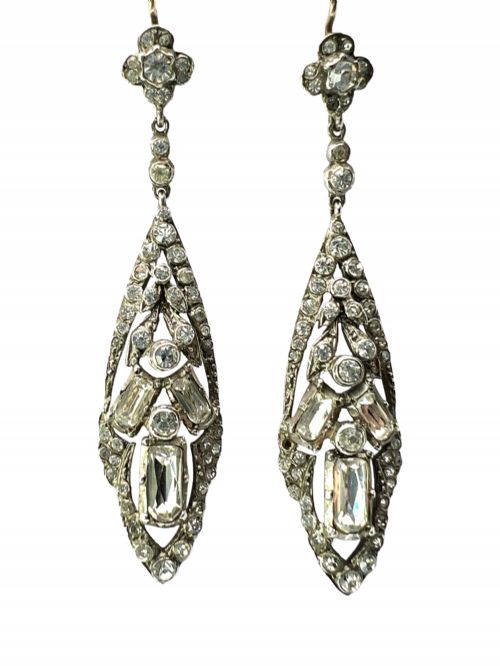


Antique Paste Earrings
Antique paste earrings bring genuine eighteenth and nineteenth-century brilliance to the lobe through hand-cut lead glass mounted in silver and gold.
Antique Paste Earrings
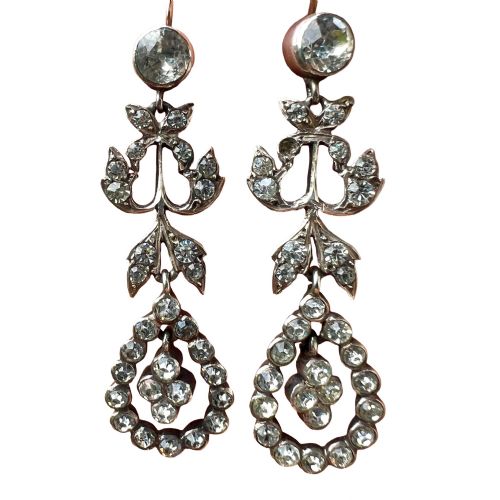
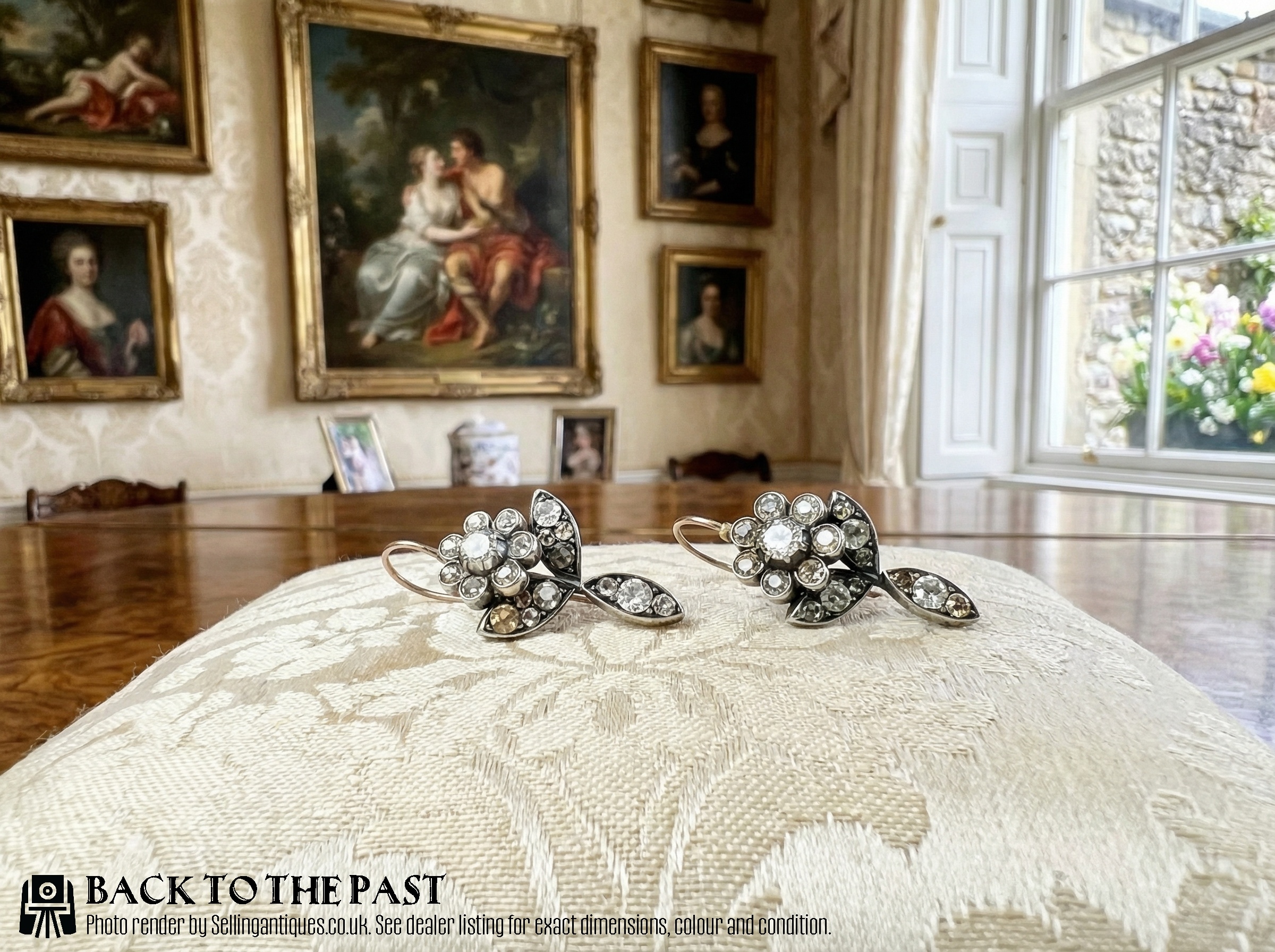
Antique paste earrings are historical items of jewellery designed to imitate precious gemstones using brilliant glass. When you search for antique paste earrings, you encounter items spanning the Georgian, Victorian, and Art Deco periods.
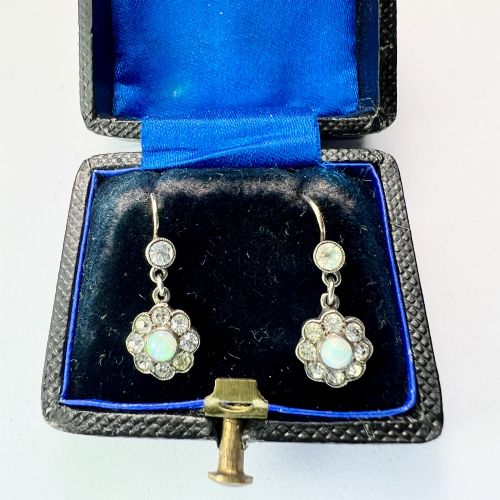
The pieces on this page appear in various forms, from simple screwbacks and delicate drop earrings to elaborate chandelier and tassel designs. You are most likely to meet silver and gold settings holding coloured or clear stones that mimic diamonds, garnets, and amethysts.
Makers utilised screwback, hook, and dormeuse fastenings depending on the decade of manufacture. Many items survive as part of matching demi-parures alongside necklaces and brooches.
How they were made
Craftsmen shaped paste glass by hand to mirror the facets of genuine gems, often applying coloured foils to the backs of stones to intensify their hue. This foiling technique gave early pieces a deep, internal glow.
Silver and gold formed the primary structural metals for the mounts. Jewellers frequently combined silver settings with gold wire or backing, a traditional method that prevented tarnishing against clothing while providing strong support for the glass stones.
Settings relied on close collet mounts or open-backed claws to secure the glass. Artisans added fine wirework, enamel, and natural elements like opals, pearls, and coral to enhance the overall design.
Common fastener types found across the inventory include traditional hook wires, screwbacks, and hinged dormeuse mechanisms.
What varies in quality
The crispness of the hand-cutting on the paste glass separates standard examples from exceptional items. Sharper facets capture and reflect light much closer to genuine gemstones.
The integrity and survival of the backing foil determine the vibrancy of coloured stones. Undamaged foil preserves the intended depth of colour, whereas moisture damage alters the tone.
The complexity of the metalwork influences the character of the piece. Fine granulation, intricate silver-topped gold wirework, and well-preserved screwback mechanisms denote superior construction.
Knoll & Pregizer
The Antique Paste Earrings Glossary
- Paste
- A heavy, high-refractive lead glass hand-cut to imitate diamonds and coloured gemstones. It formed the centrepiece of fine jewellery across multiple centuries.
- Collet
- A narrow metal band or collar that wraps around the edge of a paste stone to secure it in place. This mounting style is typical of Georgian and Victorian metalwork.
- Dormeuse
- A type of secure-fitting sleeping earring featuring a hinged wire closure. They gained popularity during the nineteenth century across France and Britain.
- Demi-parure
- A matched set of jewellery consisting of earrings paired with a matching brooch, pendant, or ring. These coordinated suites were popular accessories for formal wear.
- Black dot paste
- A specific eighteenth-century Georgian technique where a small dark spot was painted on the back of a clear paste stone to mimic the culet of a real diamond.
Antique Paste Earrings: Frequently Asked Questions
How do I care for antique paste earrings?
Keep antique paste earrings away from water and ultrasonic cleaning liquids because moisture damages the fragile foils hidden behind the glass. Clean them gently with a dry microfiber cloth.
Store each pair separately in a lined box to prevent the metal and glass from scratching against other items in your collection.
Can antique paste earrings be worn daily?
These historical pieces require gentle handling due to their age and delicate construction. Reserve them for occasional wear rather than daily use to protect the old mounts and fastenings.
Take care when putting them on or removing them, particularly with screwback mechanisms and antique wire hooks, to avoid putting strain on the joints.
How can I tell Georgian paste from Victorian paste?
Georgian paste earrings often feature closed-backed collet settings with foil linings and occasional black dot inclusions to imitate deep mine-cut diamonds. The gold used in this era frequently has a high, warm rose hue.
Victorian pieces show greater variety, incorporating pinchbeck, silver-topped gold, and varied stone cuts like cushion or baguette shapes. Fastenings also evolved during the Victorian age to include screwback fittings.
What does silver-topped gold mean?
Silver-topped gold is a traditional manufacturing technique where a thin layer of silver is soldered over a gold backing. Jewellers used this method because silver provided a bright, white surface that complemented white stones without darkening.
The underlying gold offered structural strength and prevented the metal from staining clothing or skin with tarnish.