


Antique Glass Drop Earrings
Antique glass drop earrings are bright, historically varied jewels that bring historical sparkle to the ear.
Antique Glass Drop Earrings
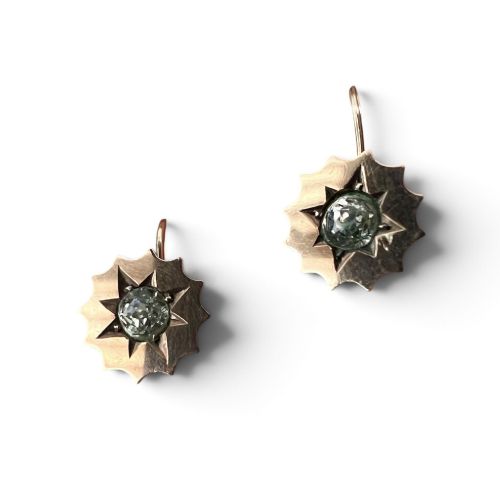
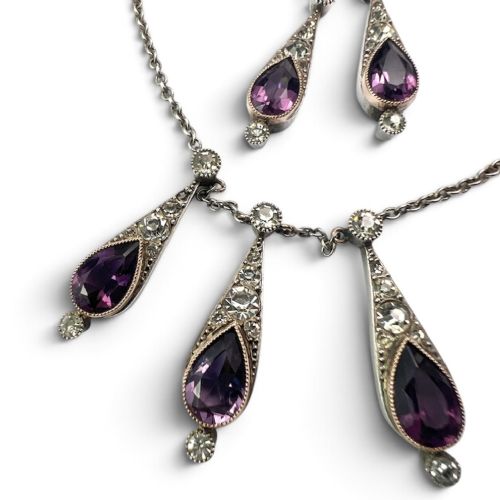
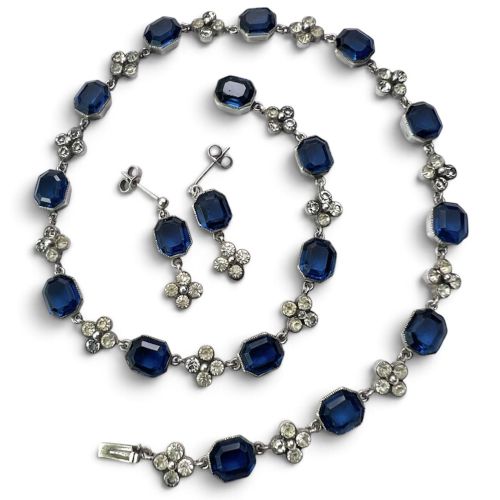
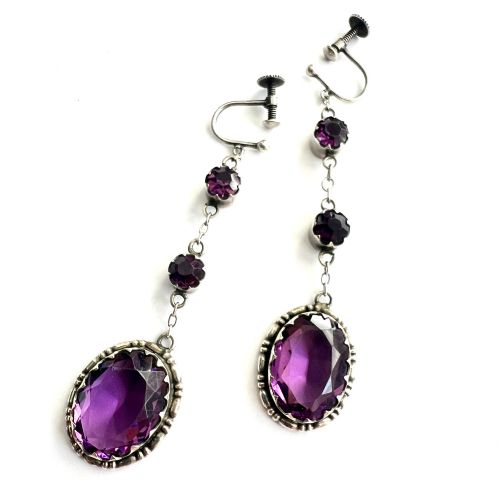
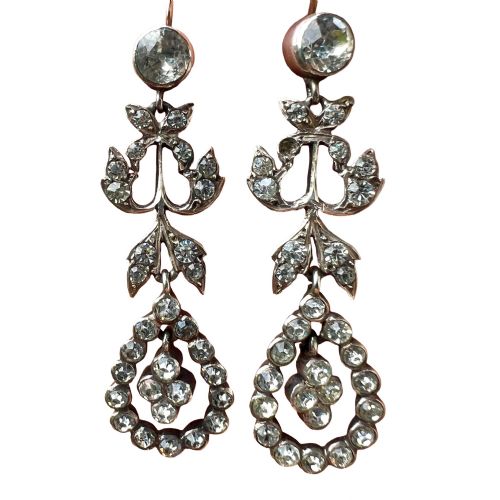
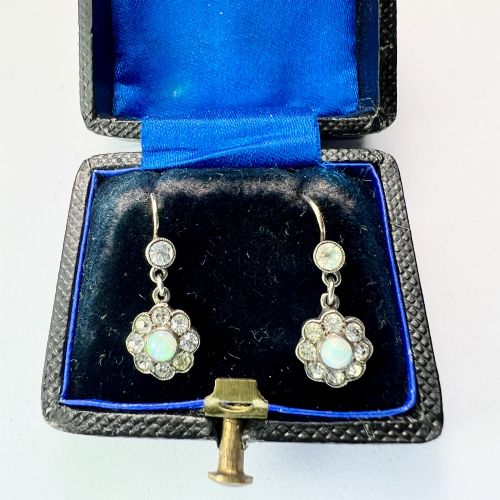
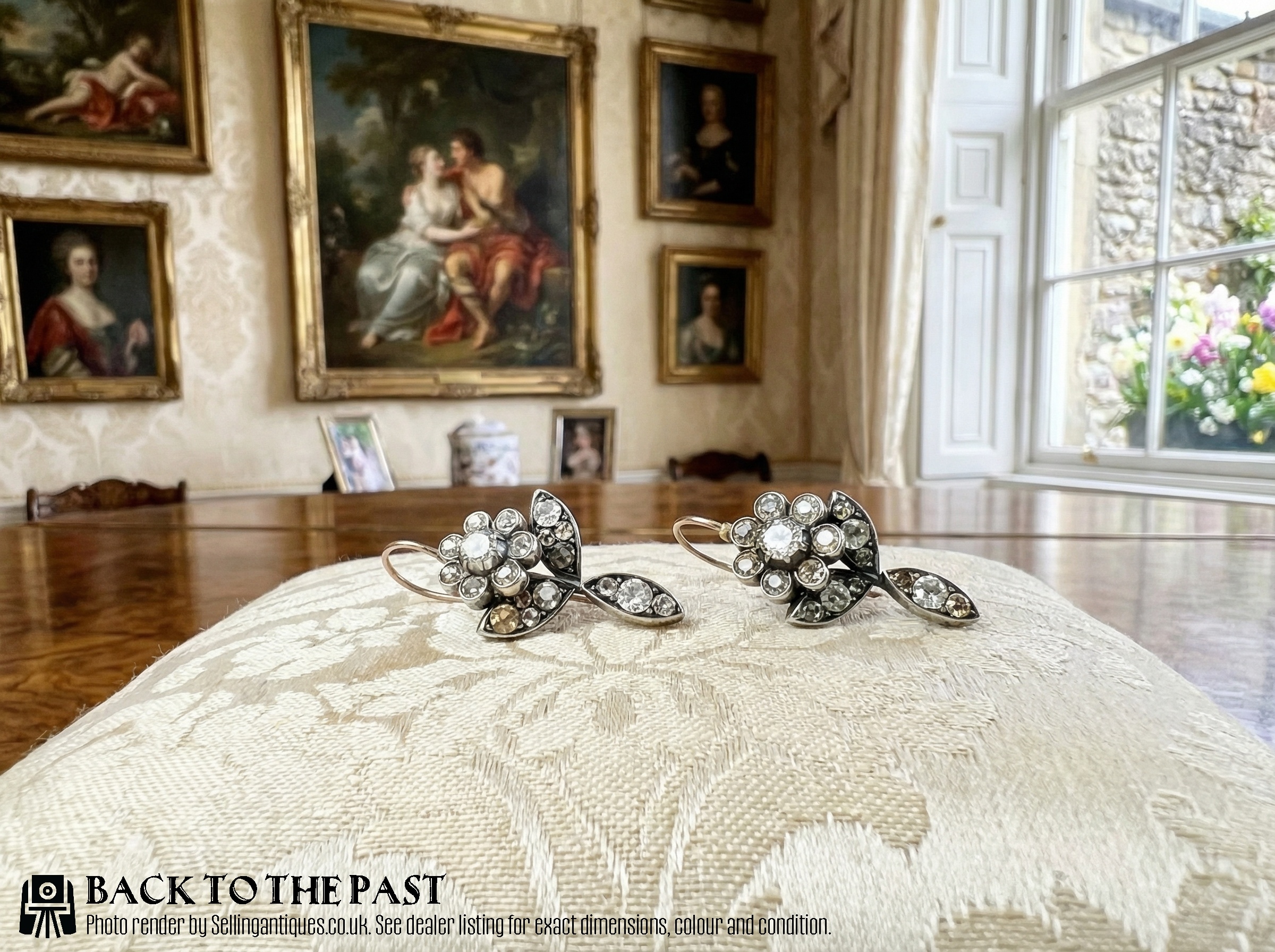
When you search for antique glass drop earrings, you encounter items spanning the Georgian, Victorian, Edwardian, and Art Deco periods, alongside mid-twentieth-century designs. The pieces range from simple hinge-back drops to complex chandelier forms, sometimes paired in demi-parures with matching necklaces or brooches.
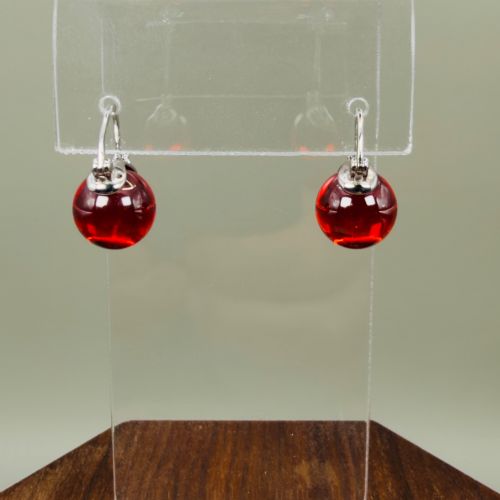
You are most likely to meet silver and gold settings holding glass paste, amethyst paste, sapphire paste, or synthetic ruby beads. The selection includes specific historical motifs, such as Italian micro mosaic doves, black dot paste flower designs, and geometric Art Deco shapes.
How they were made
Makers shaped silver and gold into secure mountings to hold delicate glass paste components and gemstones. Techniques included foil-backing paste stones to enhance light reflection and constructing hinged backs or screwbacks for fastening.
Craftsmen integrated intricate details like micro mosaic tesserae and faceted glass imitation diamonds into structured metal frameworks. Pieces often utilised mixed metals, combining gold and silver elements within a single pair of earrings.
One pair preserves the memory of an Italian holiday through tiny glass mosaic doves nestled in fifteen and eighteen carat yellow gold.
What varies in quality
The distinction between standard examples and superior pieces rests on the precision of the metalwork and the depth of colour in the glass paste. Finer items display meticulous stone-setting and complex multi-drop configurations.
Quality also depends on the preservation of the original fastenings, such as hinge backs and screwbacks, and whether the stones retain their original foil backings without discolouration.
Knoll and Pregizer·James Walker
The Antique Glass Drop Earrings Glossary
- Paste
- Hand-cut glass used to imitate gemstones. It reflects light differently than natural stones and forms the primary decorative element in many historic drop earrings.
- Demi parure
- A matched set of jewellery consisting of two or three pieces, commonly earrings paired with a brooch or necklace. They were designed to be worn together for formal occasions.
- Chandelier drop
- An elaborate earring design featuring multiple tiers of dangling elements that cascade downwards. This style gained favour in the nineteenth century for evening wear.
- Screwback
- A mechanical fastening utilising a threaded post and screw mechanism to secure the earring to an unpierced earlobe. This mechanism became widespread during the Victorian and Edwardian eras.
- Micro mosaic
- Tiny coloured glass tiles assembled to create pictorial miniature scenes. Italian examples often depicted birds, architectural ruins, or floral motifs.
Antique Glass Drop Earrings: Frequently Asked Questions
How do I date antique drop earrings?
Dating relies on identifying the metal types, gemstone cuts, fastening mechanisms, and overall stylistic motifs. For example, screwback mechanisms and foil-backed cushion cuts often point to Victorian origins, while geometric lines indicate Art Deco periods.
Comparing the construction methods with documented historical periods helps establish a reliable timeline. Box presentation and maker marks, when present, provide additional chronological clues.
Were these earrings meant for pierced ears?
Historical drop earrings accommodated both pierced and unpierced ears depending on the decade of manufacture. Earlier pieces typically featured wires or posts, while later Victorian and Edwardian examples introduced screwback fasteners.
Adapting findings to suit different earlobe types was a common practice among period jewellers. This flexibility allows many nineteenth and twentieth-century pairs to remain wearable today.
How should I care for glass paste earrings?
Glass paste and foil-backed stones require gentle handling to prevent moisture damage and surface scratching. Cleaning should be done with a dry cloth rather than liquid immersion, which can ruin the foil behind the stones.
Storing them individually in lined boxes protects the delicate drops and metal settings from impact. Keeping them away from direct sunlight preserves the original colour of the paste.