


Antique Parlor Armchairs
Antique parlor armchairs bring refined comfort to a reception room, spanning Victorian and Edwardian periods in mahogany, walnut, and velvet.
Antique Parlor Armchairs
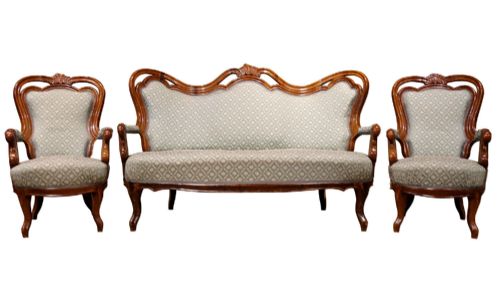
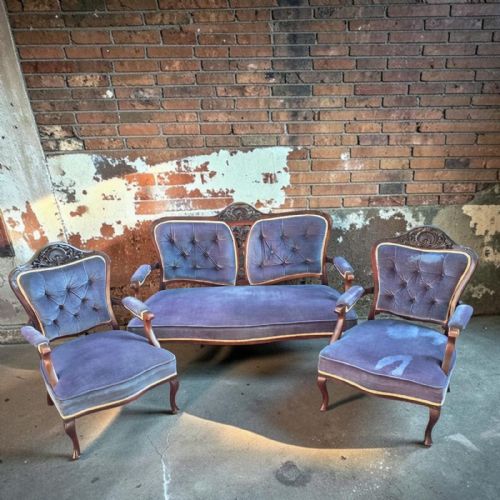
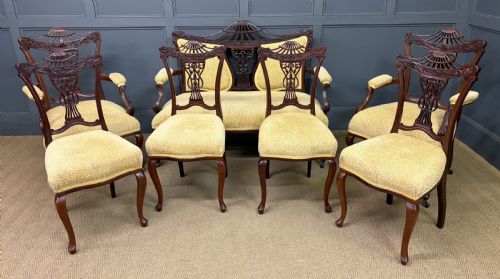
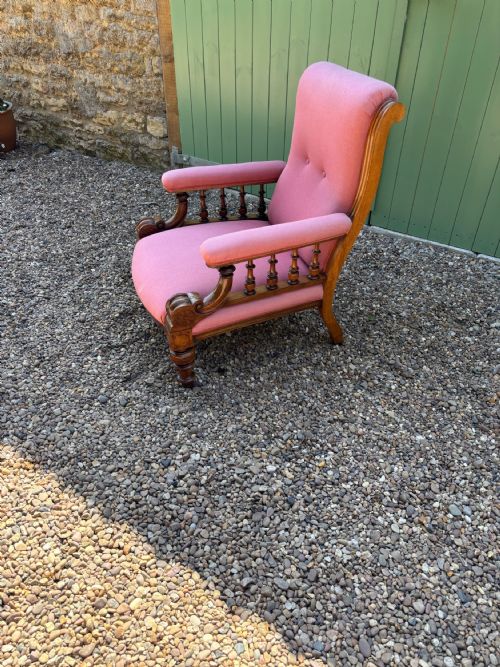
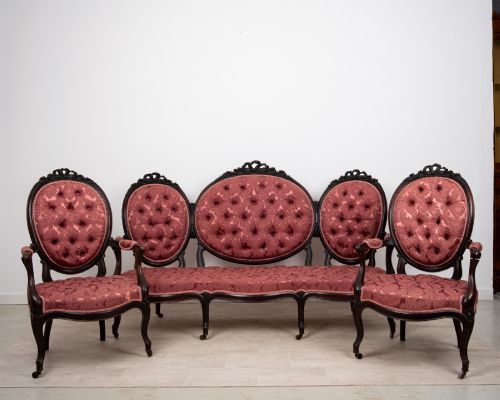
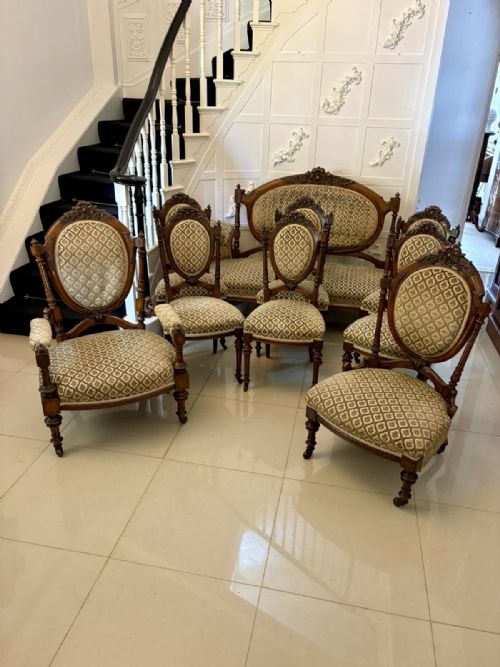
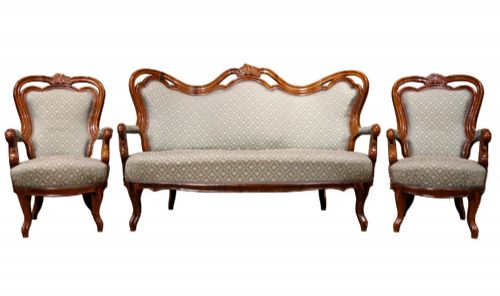
These pieces are seating designed for formal entertaining and relaxation, appearing primarily in Victorian and Edwardian iterations. Buyers find individual armchairs alongside larger salon and parlour suites comprising matching settees and chairs. The forms range from library chairs and musician's chairs to carved walnut ladies and gentlemen's pairs.
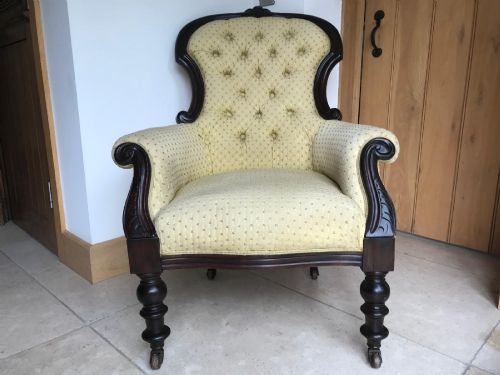
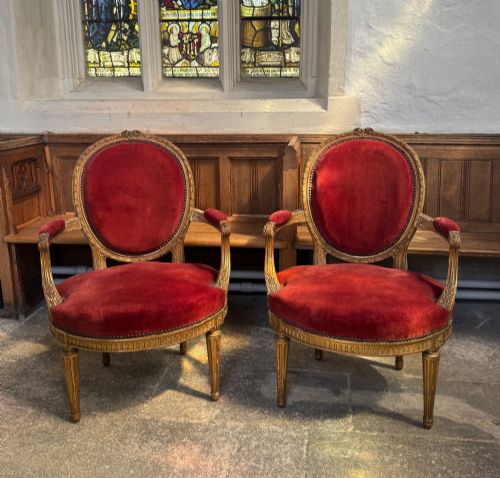
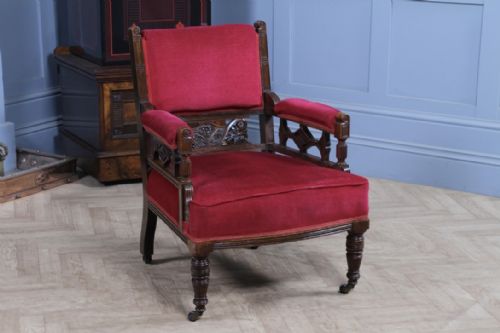
Most examples originate from the nineteenth and early twentieth centuries, displaying stylistic influences from Rococo Revival to Louis XVI and Art Nouveau. Mahogany and walnut provide the primary timber frames, often paired with elaborate carved showwood details. Upholstery fabrics vary from deep buttoned designs to patterned textiles and velvet.
How they were made
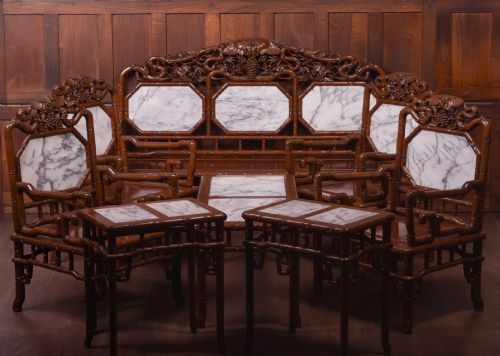
Craftsmen utilised solid timbers such as mahogany, walnut, rosewood, and giltwood to construct the structural frames of these seats. Skilled hands carved intricate ornamentation directly into the showwood, creating cabriole legs and elaborate crest rails. Brass components sometimes reinforced joints or provided decorative accents on specific frames.
Makers upholstered the seating using traditional webbing, springs, and stuffing covered in velvet, fabric, or specialised upholstery material. Deep buttoning techniques secured the padding while adding visual depth to the backrests. Inlaid decorative elements in contrasting woods appeared on later Edwardian pieces.
Listings feature walnut, mahogany, rosewood, and giltwood frames paired with velvet, fabric, and deep buttoned upholstery across Victorian and Edwardian periods.
What varies in quality
The sophistication of the timber carving dictates the distinction between standard production and exhibition quality pieces. Crisp, deep relief work on walnut or mahogany frames indicates superior artisan skill compared to shallow, mechanical moulding. The selection of finely grained timbers and matched veneer sections further separates exceptional seating.
The integrity of the frame construction and the preservation of original showwood surfaces define the upper tier of survivals. Pieces that retain their original upholstery styling, such as deep buttoned velvet or delicate textile coverings, demonstrate superior historical intactness. Comprehensive matching within multi-piece salon suites elevates the standing of the entire ensemble.
Jenks and Wood·Jas James Shoolbred·Baumann
The Antique Parlor Armchairs Glossary
- Showwood
- Timber framing left exposed around the upholstered portions of a chair. This decorative wood displays the carving and grain quality chosen by the maker.
- Cabriole leg
- A furniture leg that curves outward at the knee and tapers inward toward the foot. This classic shape appears frequently on Victorian mahogany and walnut frames.
- Salon suite
- A coordinated grouping of seating furniture intended for a drawing room or parlour. These sets typically include a settee accompanied by matching armchairs and side chairs.
- Bergere
- An enclosed upholstered armchair with wooden framing around the sides and back. These French-inspired seats offer deep, comfortable proportions.
- Deep buttoning
- An upholstery technique where buttons are pulled tight through the padding to create a diamond pattern. This method secures internal stuffing while providing distinctive surface texture.
Antique Parlor Armchairs: Frequently Asked Questions
What is a parlor armchair?
A parlor armchair is a decorative seat designed for formal entertaining rooms in nineteenth and early twentieth-century homes. These chairs prioritised aesthetic appeal alongside comfort.
They often formed part of larger salon suites that included matching settees and side chairs. Craftsmen utilised fine timbers like mahogany and walnut to frame these reception room seats.
How do I date an antique armchair?
Dating relies on examining the timber species, framing style, and upholstery techniques used in construction. Victorian examples frequently feature heavy carved mahogany or walnut with deep buttoned padding.
Edwardian pieces often introduce lighter inlaid timbers or distinct stylistic revivals. Comparing the form to documented cabinetmaker work helps narrow the decade of manufacture.
How were salon suites used?
Salon suites furnished the principal reception rooms where guests were received and entertained. The matching chairs and settees provided cohesive seating arrangements for conversation and musical performances.
Individual armchairs within these suites often designated specific seating for ladies or gentlemen. Musician's variants featured specialised designs to accommodate performers.
Can I use these chairs daily?
These antique seats function well in modern interiors when placed with consideration for their age. Their sturdy hardwood frames provide enduring structural support.
Placing them away from direct sunlight protects delicate velvet or textile upholstery. Professional conservation ensures the internal webbing and springs remain stable for regular use.