


Antique Painted Silhouette Portrait
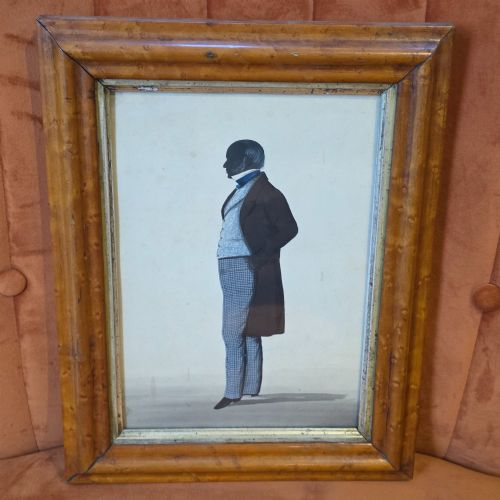
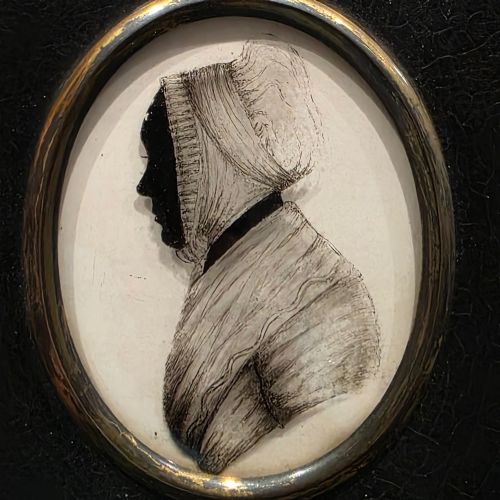
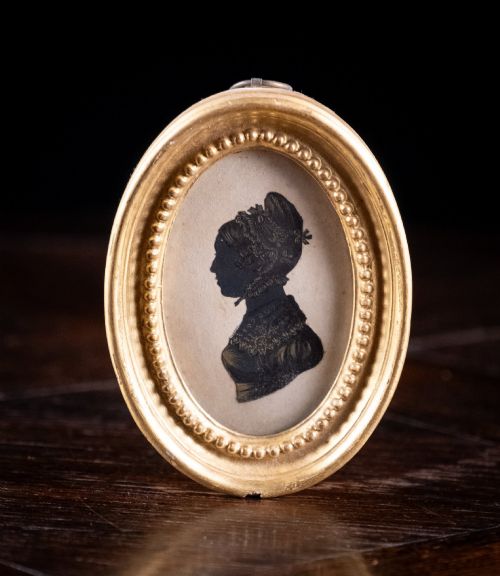
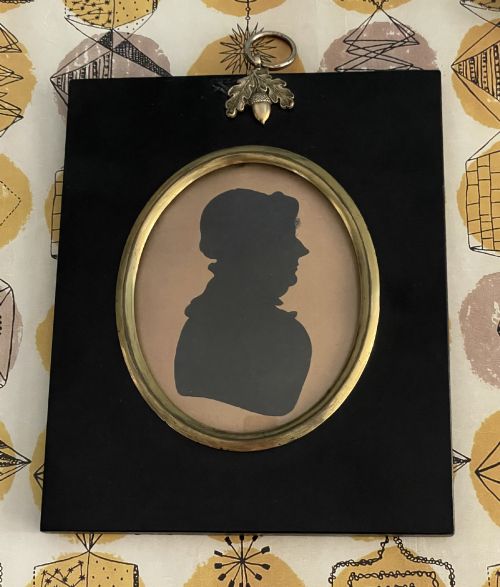
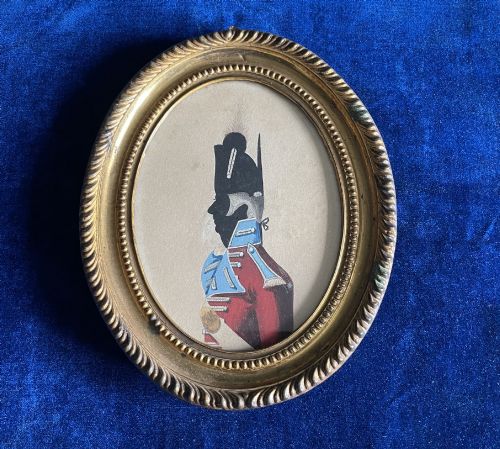
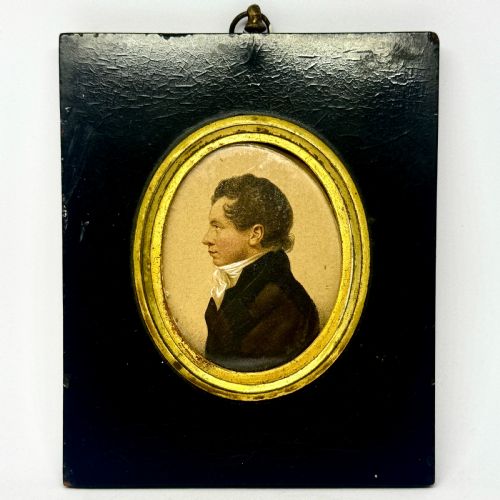
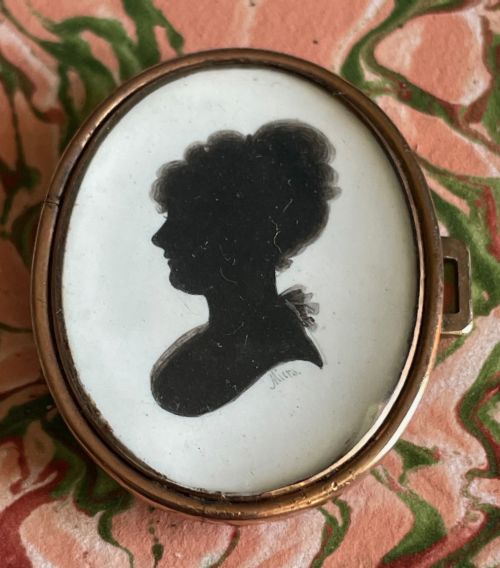
An antique painted silhouette portrait captures a Georgian or Regency sitter in crisp monochrome profile, rendered with exquisite handwork on glass or plaster.
Antique Painted Silhouette Portrait
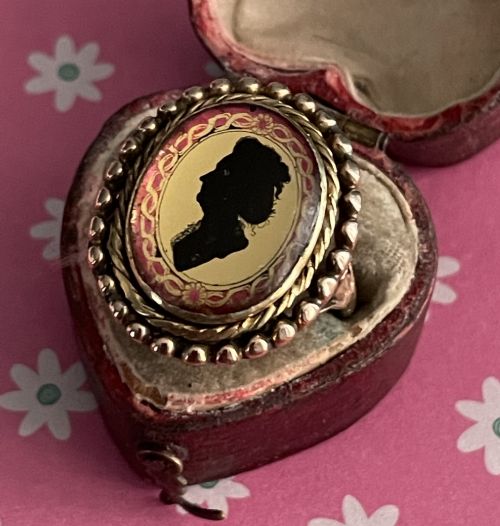
An antique painted silhouette portrait brings face-to-face encounters with Georgian and Regency subjects, captured in profile before the widespread adoption of photography. These pieces appear as miniature wall art, framed pictures, or wearable jewellery pieces such as rings and pendants. Most examples meet the buyer as reverse paintings on glass or delicate works upon paper and plaster.
The format ranges from intimate bust portraits to full-length studies of gentlemen, ladies, children, and family groups. The 18th century and 19th century periods provide the core of these works, spanning the Regency and Victorian eras. Subjects often carry handwritten identifications or provenance on the reverse, linking specific sitters to historic households.
How they were made
Makers applied dense black pigment, ink, and watercolour directly onto glass, plaster, or paper to achieve the sharp profile. Many Regency examples utilise reverse painting on glass, known as verre églomisé, where delicate gold leaf highlights enhance the collars, bonnets, and dress details.
Finished works found their enclosure in turned wood frames such as rosewood and maple, or protective brass mounts and miniature jewellery settings. The precision of the brushwork required steady hands, often working at a miniature scale to define the hair, lace, and facial contours without mechanical aids.
One listed family silhouette captures children alongside their faithful dog, immortalised in profile around 1800.
What varies in quality
The treatment of surrounding elements, such as delicate gilded embellishments or original frames in rosewood and brass, elevates a piece. Signed works by noted practitioners command attention through documented authorship and superior preservation of the fragile glass or paper substrates.
John Miers·J. Deacon·John Smith of Edinburgh·James Gillespie
The Antique Painted Silhouette Portrait Glossary
- Verre églomisé
- A process of cold painting and gilding on the reverse side of glass. This technique protects the delicate pigment from dust and handling while adding reflective depth.
- Plaster
- A fine composite material used as a base for moulded profile plaques. Artists such as John Miers utilised plaster grounds to create sharp, tactile relief portraits.
- Profile
- A side-on view of the sitter's face. This exact outline was the defining characteristic of silhouette art before the invention of the photographic camera.
- Miniature portrait
- A small-scale painting designed for intimate viewing or wearable jewellery settings. These pieces condense the detail of a full-sized canvas into inches of space.
Antique Painted Silhouette Portrait: Frequently Asked Questions
How do I date a silhouette portrait?
Dating relies heavily on the costume, framing materials, and hairstyles depicted in the profile. Regency pieces often feature high-waisted dresses and delicate gold leaf highlights, while Victorian examples show heavier frames and distinct attire.
Handwritten notes on the reverse or signatures from known practitioners like John Miers also help anchor the piece to a specific decade between the 18th century and the 19th century.
How were silhouette portraits displayed?
Original display methods depended on the scale and format of the artwork. Many were mounted in rosewood or maple frames to hang tightly in clusters upon parlour walls. Nook-sized portrait miniatures and jewellery pieces such as rings and pendants allowed owners to carry likenesses of family members close to them.
What is verre eglomise?
Verre églomisé is a historic technique involving painting and applying gold leaf to the reverse side of a glass panel. When viewed from the front, the design appears protected behind a glossy, reflective surface. This method was frequently utilised by Regency silhouettists to add brilliant metallic highlights to collars and bonnets.