


Antique Painted Rocking Horse
An antique painted rocking horse brings the tactile charm of nineteenth and early twentieth-century playrooms straight into a modern interior.
Antique Painted Rocking Horse
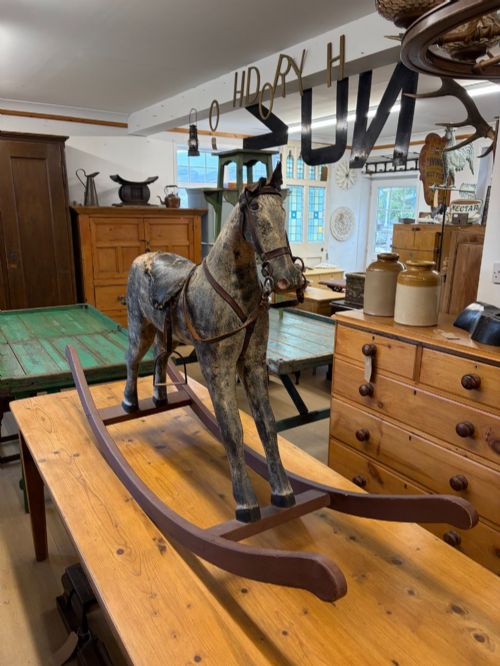
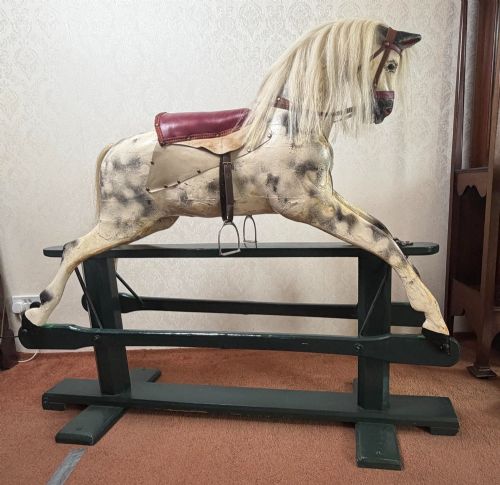
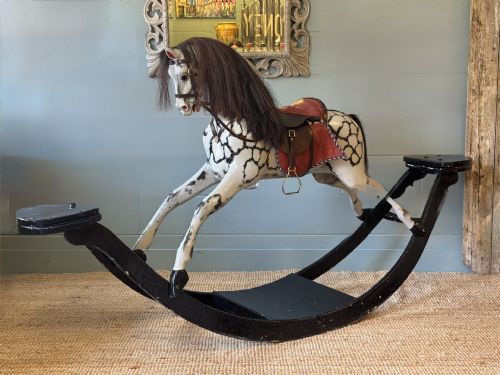
An antique painted rocking horse is a substantial wooden sculpture designed for childhood play, surviving from periods including the Victorian era, the nineteenth century, and the early twentieth century. These pieces appear as full-bodied toys mounted on bow rockers or safety stands, often retaining layers of historic painted decoration.
The versions most commonly met on this page span from the late nineteenth century through to the 1940s, encompassing standard playroom favourites alongside striking folk art interpretations. Makers such as G & J Lines, F.H. Ayres, Lines Bros, and Collinsons populate the heritage of these listings.
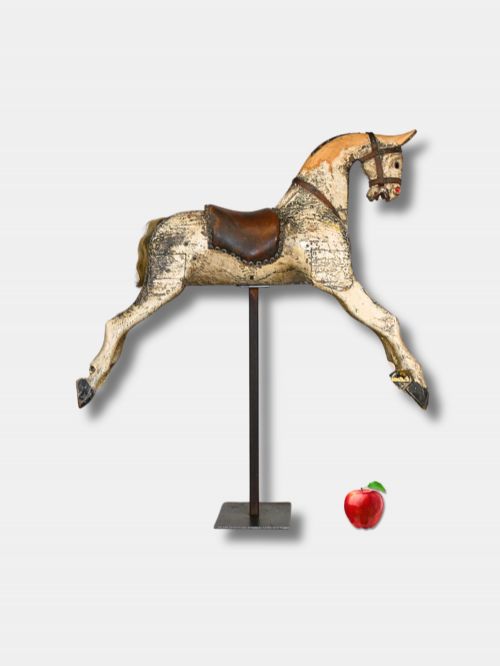
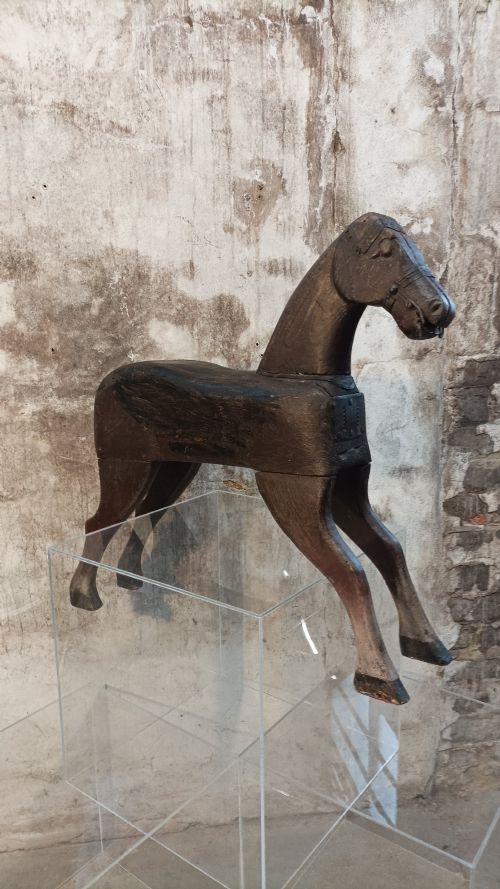
Forms range from large carved pine horses on original bow rockers to more naive, primitive wooden sculptures originating from English, Spanish, and American workshops. Buyers select these objects for their strong decorative presence and tangible connection to historical craftsmanship.
Materials and construction methods
Makers constructed these figures using carved wood and pine, shaping sturdy bodies to withstand generations of energetic use. Iron brackets, metal components, and glass eyes added structural integrity and lifelike detail to the carved forms.
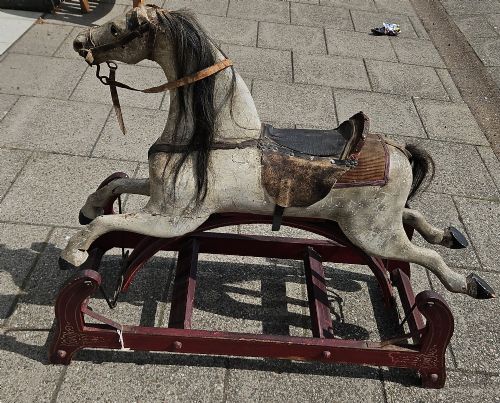
Finished surfaces relied upon lead paint, applied directly to the wood, sometimes finished with dappled markings or simple folk art brushwork. Tack details incorporated genuine leather and horsehair for manes and tails, completing the traditional construction.
Listings feature items spanning the Victorian era through the 1940s, constructed primarily from wood, pine, leather, horsehair, and iron.
Distinguishing quality across examples
The distinction between standard examples and superior pieces rests heavily upon the survival of original painted surfaces and untouched structural elements. Horses retaining their authentic nineteenth-century dapple work or early folk art finishes command greater interest than those subjected to modern repainting.
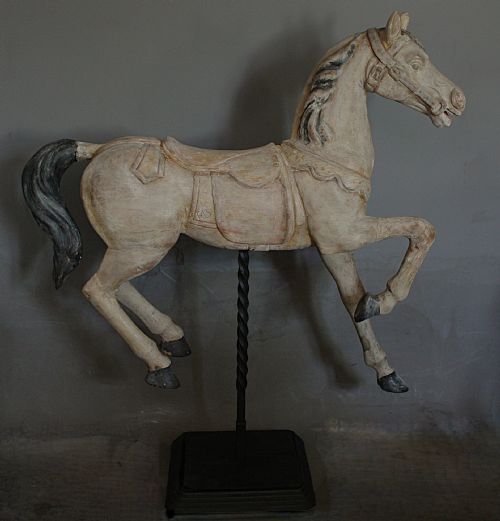
Carving depth and anatomical expression also determine the tier of an example, with master-carved heads and limbs from established London makers exhibiting far greater sculptural nuance than simpler, naive provincial output.
G & J Lines of London·F.H. Ayres·Lines Bros Sportiboy·Collinsons
The Antique Painted Rocking Horse Glossary
- Bow rockers
- Curved wooden rails attached to the feet of a rocking horse, allowing the toy to sway back and forth across the floor.
- Original paint
- The historic, untouched layer of decorative surface pigment applied during the manufacture of the piece.
- Folk art
- Style of decorative creation produced by self-taught or provincial artisans, prioritising expressive character over academic precision.
- Safety stand
- A rigid wooden frame holding the rocking horse above the ground on swinging iron arms, preventing the horse from tipping over during use.
- Dappled
- Painted surface decoration featuring small spots or patches applied over a lighter base coat to mimic the coat of a grey horse.
Antique Painted Rocking Horse: Frequently Asked Questions
Are these rocking horses safe for children to ride?
While originally built for play, most surviving examples are now treated as decorative sculptures or collector's items. The aged wood, historic iron fixings, and delicate horsehair tack require careful preservation rather than heavy daily use.
Buyers usually place these pieces in living rooms or nurseries as static decorative objects. Any structural movement should be gentle to protect the original joints and painted surfaces.
What is the difference between standard and folk art rocking horses?
Standard Victorian and Edwardian rocking horses from commercial makers aim for realistic equine proportions and detailed dappled finishes. Folk art and naive examples showcase a simpler, more expressive interpretation carved by regional or independent makers.
Folk art pieces often display charming asymmetries and unconventional paint applications rather than factory-standard symmetry. Both styles hold distinct appeal depending on whether a buyer prefers refined craftsmanship or rustic character.
How should I care for original paint on wood?
Preserving original paint requires keeping the horse away from direct sunlight and fluctuating humidity levels to prevent flaking or fading. Dusting should be done gently with a soft, dry cloth without applying modern chemical polishes or cleaning agents.
Maintaining a stable indoor climate protects both the timber substrate and the historic surface pigments. Consulting a specialist conservator is recommended if structural or surface stabilisation becomes necessary.