

Antique Padded Footrest
An antique padded footrest brings quiet comfort to a room, offering a low perch for tired feet shaped by generations of domestic life.
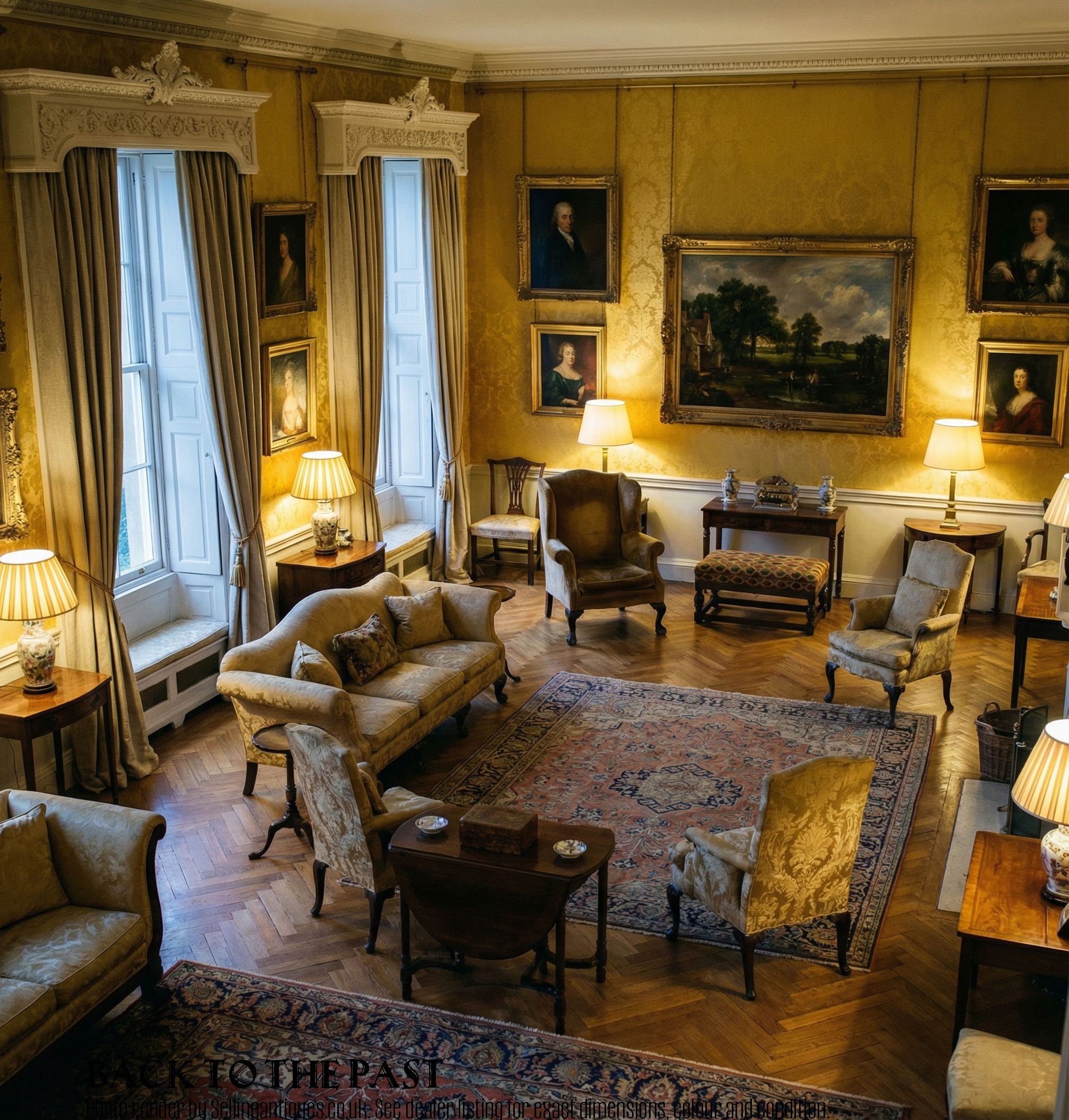
Antique Padded Footrest
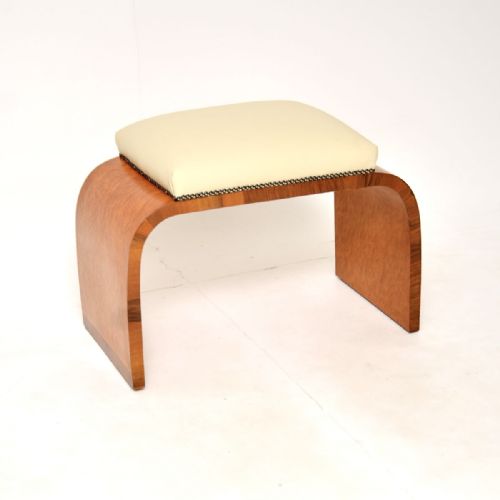
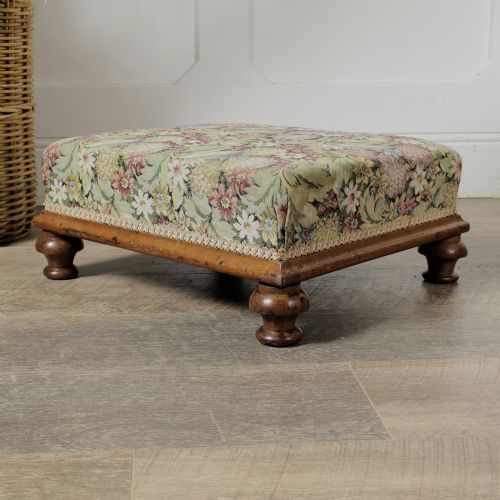
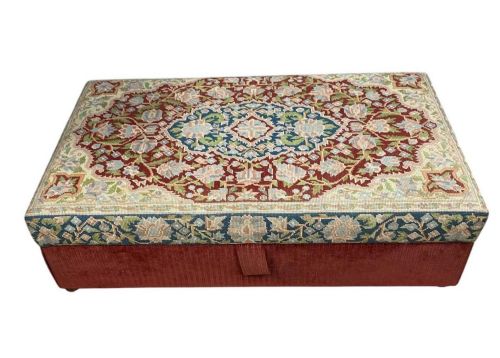
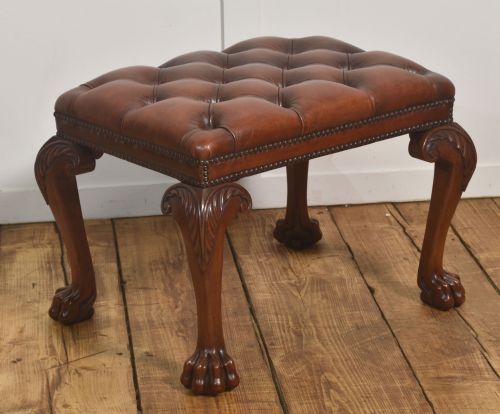
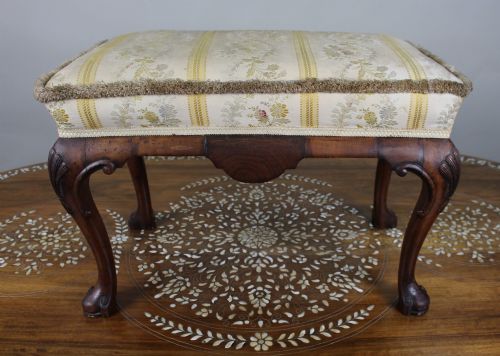
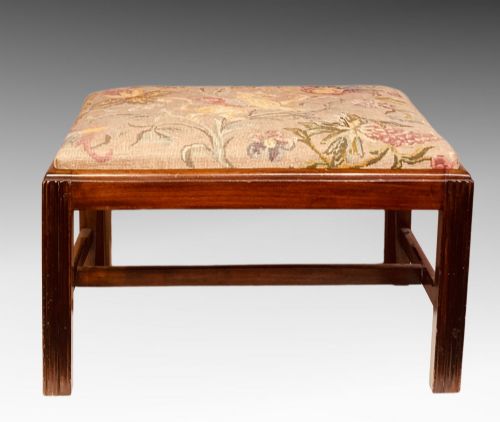
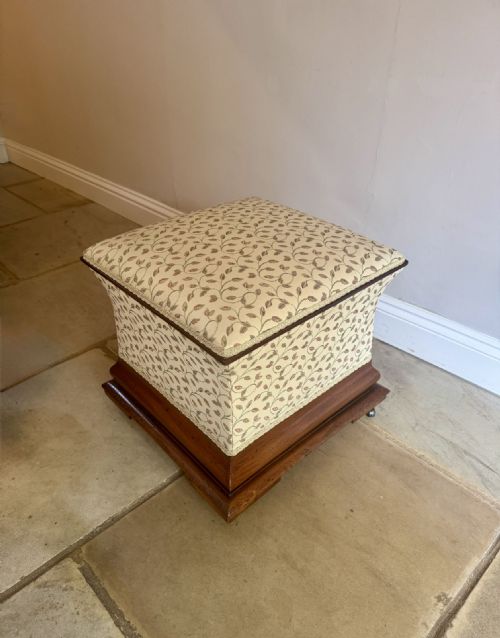
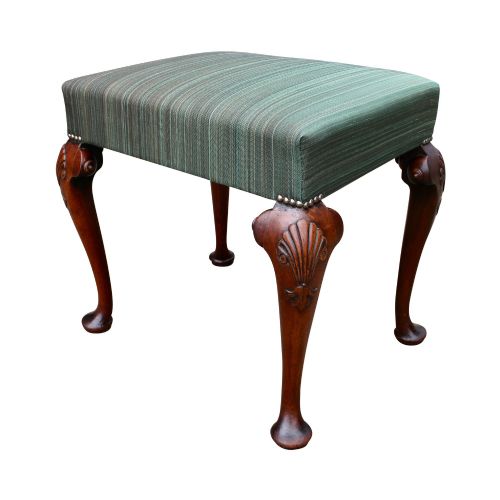
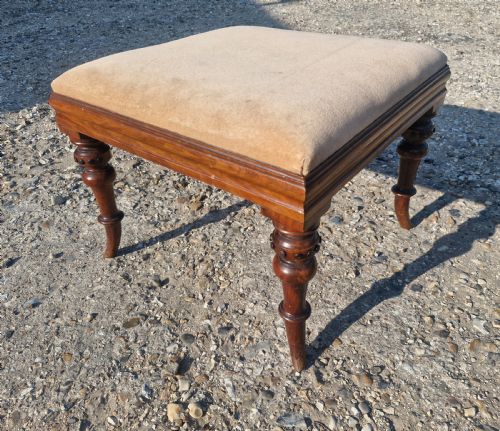
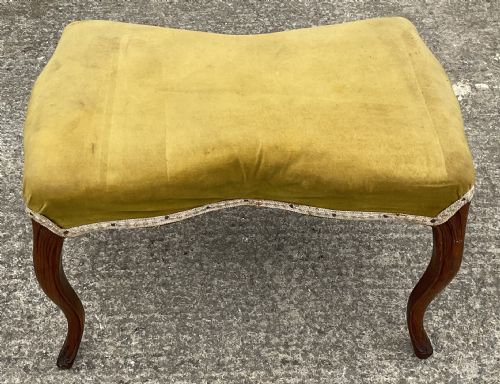
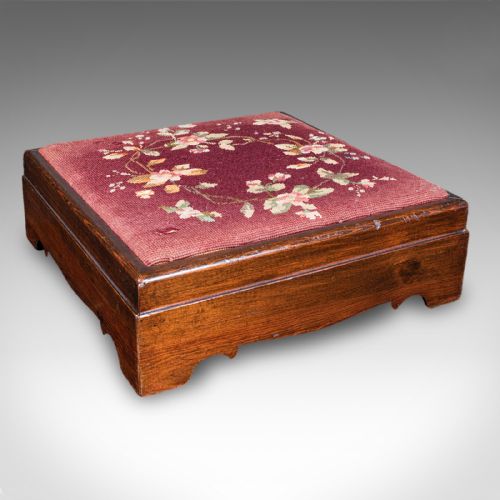
An antique padded footrest is a low domestic seat designed for comfort and repose, frequently encountered here as a Victorian or Edwardian stool upholstered in fabric, leather, or tapestry. These pieces range from simple fireside supports to large ottomans with storage, dressing stools, and adjustable gout stools.
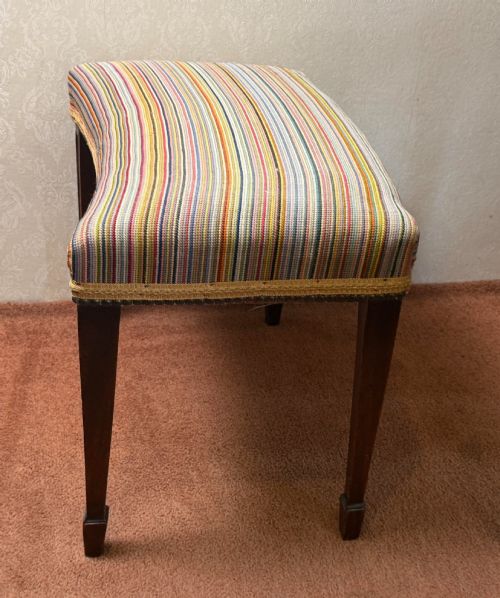
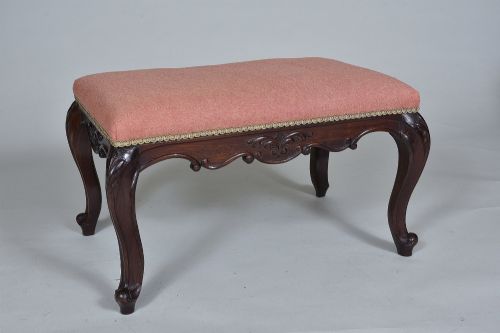
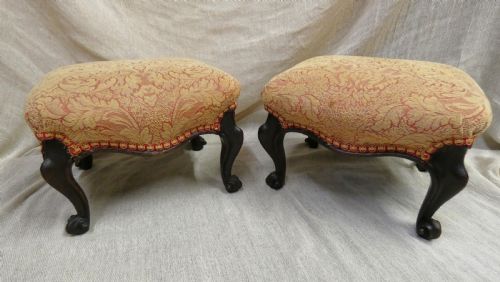
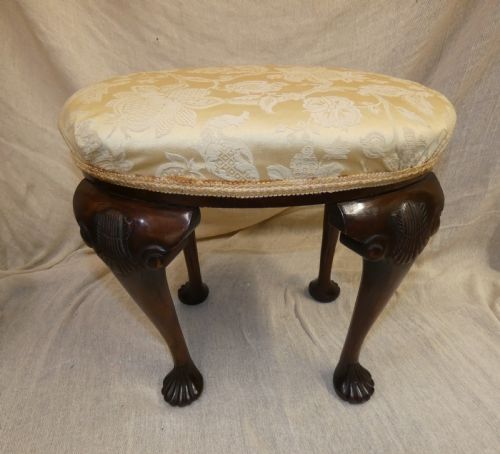
The selection on this page spans periods from the eighteenth century through the Edwardian era, with nineteenth-century examples forming the core of what is available. Makers worked within diverse revival styles, producing walnut pieces in the Queen Anne style alongside mahogany frames with cabriole legs or square tapering supports.
Forms vary from compact oval and oblong shapes to substantial library stools and rocking frames set on brass castors. Whether covered in needlework, velvet, or woven rattan, each piece reflects the domestic seating habits of its period.
How they were made
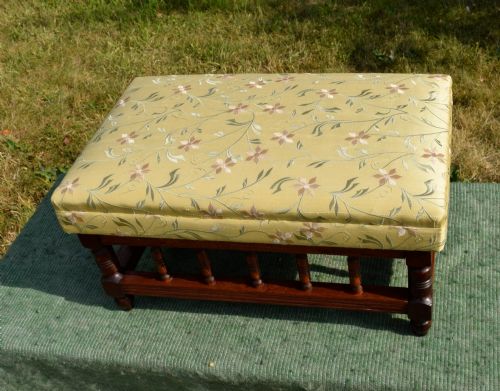
Frames were constructed from dense hardwoods such as mahogany, walnut, rosewood, pitch pine, and oak, often shaped with carved details or turned bobbin legs. Craftsmen employed traditional joinery to support the weight placed upon these low seats.
Upholstery relied on natural textiles including wool, cotton, leather, velvet, and tapestry, secured over padding to create a resilient surface. Metal elements such as brass castors or decorative studs were frequently added to facilitate movement and finish the edges.
Antique Padded Footrest Retail Price Guide 2026
Typical asking prices for padded footrest among the pieces listed under this phrase on Sellingantiques today, from the lower quarter to the upper quarter. They describe what is for sale here now, not the wider market.
The selection spans the Regency period, the Victorian era, and the Edwardian period, alongside revival styles referencing the eighteenth century.
What varies in quality
The distinction between standard domestic seating and finer examples lies in the ambition of the timber framing and the execution of the carving. Frames fashioned from figured walnut or rosewood with sculptural cabriole legs and detailed mouldings represent a more considered commission than plain utilitarian pine or beech.
The sophistication of the upholstery and the integrity of the underlying structure also determine standing. Pieces retaining period textiles, hand-worked needlework, or specialised mechanical adjustments like rocking mechanisms show greater craftsmanship than simple re-covered variants.
Howard and Sons·Mathew Gregson·Loidrault Freres Paris
The Antique Padded Footrest Glossary
- Cabriole leg
- A furniture leg that curves outward at the knee and tapers inward toward the foot, often ending in a pad or scroll. This form draws inspiration from animal legs and appears frequently on eighteenth-century and revival pieces.
- Gout stool
- A specialised footrest designed to elevate and support the foot or leg of someone suffering from joint pain. These often feature adjustable rocking actions or angled platforms.
- Ottoman
- A low, upholstered seat or footstool without a back or arms, sometimes constructed with internal storage space beneath the hinged top. Larger examples serve double duty as casual seating and tables.
- Bobbin leg
- A furniture support turned on a lathe to resemble a string of rounded bobbins or spools. This decorative turning technique was popular in seventeenth-century English furniture and enjoyed revivals in the nineteenth century.
- Needlework
- Hand-stitched textile work, often utilising wool or silk threads on a canvas ground to create floral or geometric patterns. It provides a durable and decorative covering for stool tops.
Antique Padded Footrest: Frequently Asked Questions
How were footstools used historically?
Footstools were placed beside armchairs and sofas to keep feet elevated away from cold drafts near the floor. They provided ergonomic support during long periods of sitting in formal parlours and private studies.
Some specialised variants, such as rocking gout stools, offered gentle movement for those needing leg elevation. Others functioned as dressing table seats or portable perches in libraries.
How do I date a footstool?
Dating relies on examining the timber species, leg profiles, and construction methods used in the frame. Regency pieces often feature scroll tops and brass paw feet, while Victorian examples frequently showcase walnut frames and cabriole legs.
Revival styles from the late nineteenth century borrow motifs from earlier periods like Queen Anne and Chippendale. Upholstery materials and tacking styles also offer clues to a piece's age, though many have been re-covered over time.
Where should I place one at home?
These compact pieces fit easily in front of a fireside armchair, sofa, or reading chair. Their low profile makes them unobtrusive additions to living rooms and bedrooms.
Longer benches and ottoman stools work well at the foot of a bed or beneath a window. They bring texture and warmth to a room through traditional wood finishes and tactile fabric coverings.