



Antique Padauk Tables
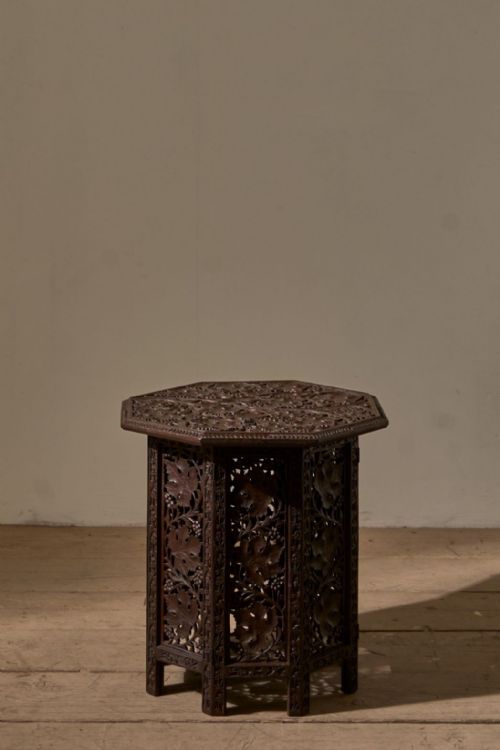
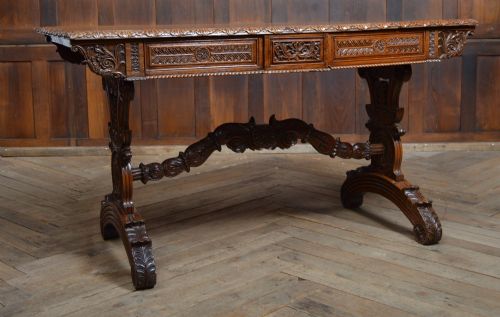
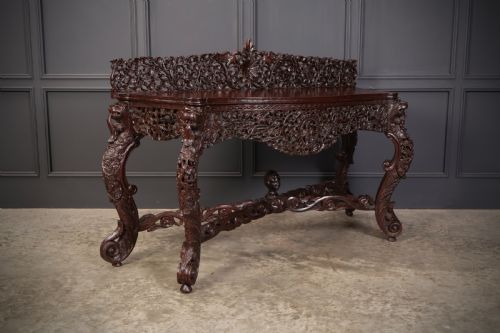
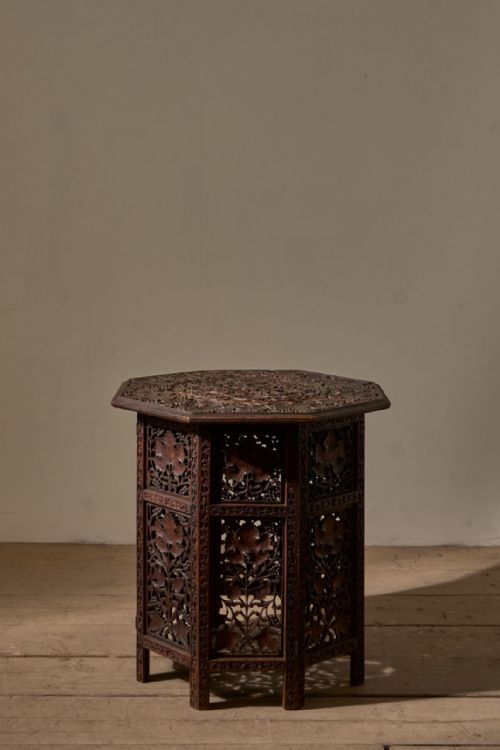
These antique padauk tables bring rich, dense tropical hardwood and intricate colonial carving straight into a room.
Antique Padauk Tables
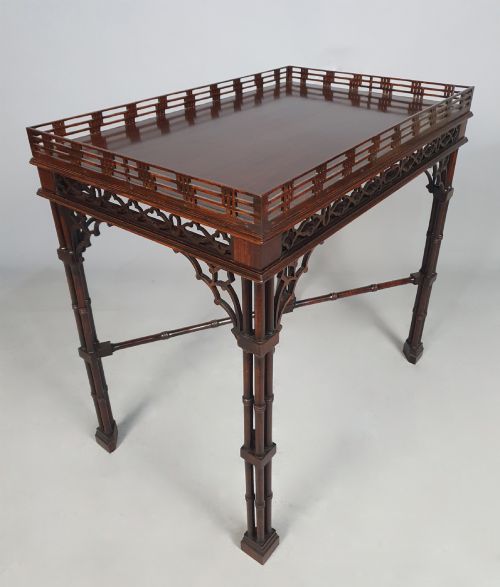
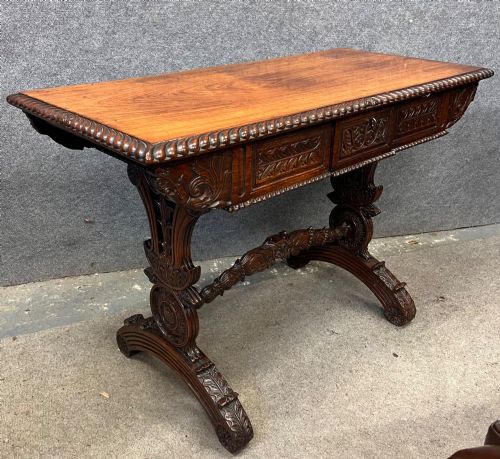
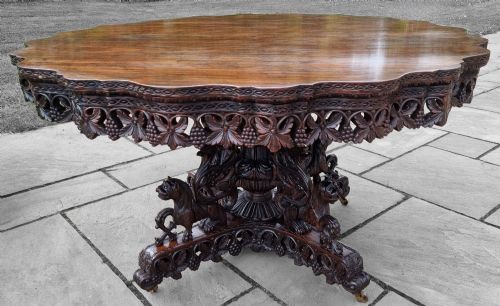
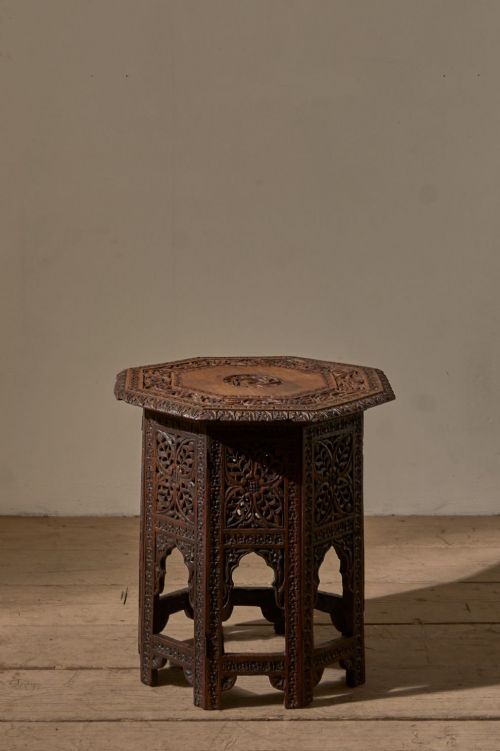
Antique padauk tables encompass a range of nineteenth-century forms made from this heavy, reddish-brown exotic timber. The selection on this page leans heavily toward Anglo-Indian and Burmese colonial productions, featuring deep, hand-carved ornamentation.
Buyers will encounter various functional forms designed for specific domestic spaces. Side tables, centre tables, console tables, and libraries dominate the listings, alongside larger pieces like partners desks, sideboards, and tiered buffets.
The periods span the Victorian era, particularly the mid-to-late nineteenth century around 1850 to 1890, often showcasing regional stylistic influences such as dragon motifs, leaf designs, or Gothic Revival elements.
How they were made
The primary material is padauk wood, supplemented in certain instances by teak, marble inserts, and brass hardware. Artisans selected this dense hardwood for its durability and its ability to hold exceptionally crisp, deep relief carving.
Construction techniques combine sturdy nineteenth-century joinery with elaborate hand-chizzled decoration. Carved motifs often cover pedestals, aprons, and tiers, reflecting the distinct craftsmanship of Anglo-Indian and Burmese workshops.
Antique Padauk Tables Retail Price Guide 2026
Typical asking prices for padauk tables among the pieces listed under this phrase on Sellingantiques today, from the lower quarter to the upper quarter. They describe what is for sale here now, not the wider market.
The listings on this page span the 19th century, featuring Victorian, Gothic Revival, and Anglo-Indian colonial styles.
What varies in quality
Quality in these tables rests upon the depth, precision, and sharpness of the woodcarving. Pieces with deeply undercut, intricate foliage or dragon designs display a superior level of artisan skill compared to shallower, simpler work.
The selection of the timber grain and the integrity of the structural joinery also determine distinction. Tables that retain their original marble tops, brass fittings, and solid pedestals without excessive timber movement stand at the upper end of the scale.
The Antique Padauk Tables Glossary
- Padauk
- A heavy, durable tropical hardwood with a distinctive reddish-brown colour that darkens with age. It serves as the primary structural and decorative timber for these colonial tables.
- Anglo-Indian
- A stylistic descriptor for furniture made in India during the British colonial period, often combining British furniture forms with local traditional carving.
- Centre table
- A freestanding table designed to be viewed from all sides, intended to sit in the middle of a room rather than against a wall.
- Console table
- A table fixed or placed against a wall, frequently supported by ornate brackets, pedestals, or carved legs.
- Partners desk
- A large double-sided desk manufactured with drawers and workspaces on both long sides, allowing two people to work face-to-face.
Antique Padauk Tables: Frequently Asked Questions
Where were these tables made?
These tables were largely produced in colonial workshops across India and Burma during the nineteenth century, responding to British domestic tastes.
Local artisans combined traditional European furniture shapes with intricate indigenous carving styles and native padauk timber.
How do I care for padauk wood?
Padauk is a remarkably stable and dense hardwood that requires minimal maintenance beyond regular dusting with a soft cloth.
Keep the timber away from direct heat sources and strong sunlight to prevent the rich reddish-brown surface from fading or drying out.
Can I use a centre table every day?
Centre tables are robustly constructed from heavy tropical hardwood and suit daily use as display surfaces or writing spots.
Ensure that heavy objects are distributed evenly and use coasters to protect the polished timber or inset marble top from moisture.
What is the difference between a side table and a console table?
Side tables generally feature four legs and stand independently against a wall or within a room.
Console tables often rely on wall brackets or sturdy pedestal bases and are specifically shaped to occupy perimeter spaces.