
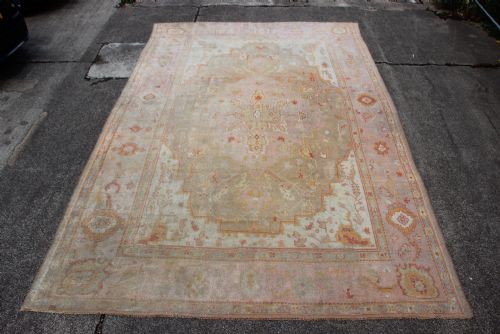
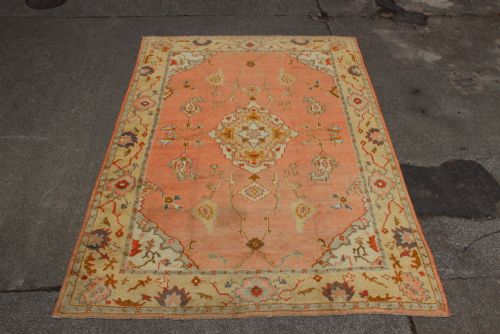

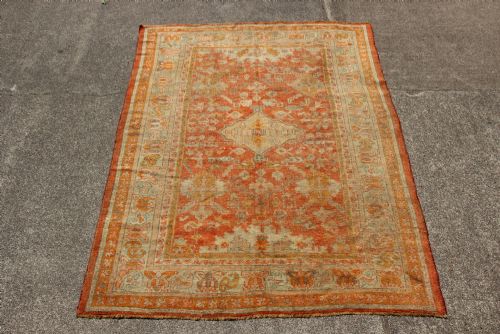


Antique Oushak Floor Carpet
These antique oushak floor carpets bring the muted tones and generous scale of Western Turkey into a room, offering a foundational floor covering shaped by centuries of weaving tradition.
Antique Oushak Floor Carpet
An antique oushak floor carpet represents a major weaving tradition originating in Western Turkey, appearing in large formats, runners, and room-sized pieces across the nineteenth and early twentieth centuries. When exploring this selection, buyers frequently encounter carpets associated with Ottoman styles, featuring expansive fields and soft pastel or pale grounds.
The objects span decades from the Victorian era into the early twentieth century, encompassing variations such as Ghiordes Oushak, Kula Oushak, and Angora Ushak rugs. These pieces function primarily as substantial floor coverings, anchoring large rooms with traditional motifs like medallions and willow tree designs.
The form adapts to diverse interior spaces, ranging from expansive square proportions to long runners suitable for hallways. Each piece reflects the aesthetic sensibilities of Turkish workshops, utilising characteristic wool constructions designed to withstand daily foot traffic.
What varies in quality
Quality in these carpets rests upon the fineness of the knotting and the complexity of the wool fleece utilised in the pile. Pieces incorporating angora wool or demonstrating particularly dense knot structure display superior definition within medallions and field designs.
The integrity of the foundation materials and the nuance of the colour palette also distinguish individual examples. Higher quality is evident in the harmonious fading of natural dyes and the precise execution of traditional Ottoman motifs across large formats.
Listings feature pieces from the late nineteenth century up to 1920, predominantly constructed from wool and cotton.
Maples
The Antique Oushak Floor Carpet Glossary
- Oushak
- A traditional type of carpet originating from the town of Ushak in Western Turkey, known for larger scale designs and softer colour palettes. These carpets often feature geometric medallions or floral motifs set against pale grounds.
- Ghiordes
- A town in Western Turkey associated with distinct regional weaving styles, sometimes referenced alongside Oushak carpets for its traditional knotting techniques and design vocabulary. Pieces bearing this descriptor reflect specific Anatolian heritage.
- Kula
- A historic Turkish carpet-weaving centre known for producing rugs with characteristic prayer designs or soft pastel colour schemes. Kula Oushak pieces combine these regional aesthetic traits with standard Ushak formats.
- Angora wool
- A fine fleece material utilised in specific nineteenth-century rugs to achieve a softer texture and distinct surface sheen. This material influences the handle and visual depth of the pile.
- Kilim
- A flat-woven textile produced without a pile, representing an alternative construction method within traditional Turkish rug-making. These pieces offer a lighter weight compared to knotted floor carpets.
Antique Oushak Floor Carpet: Frequently Asked Questions
How do I style an antique oushak floor carpet?
These large carpets suit generous living spaces or reception rooms where their expansive fields and muted tones can anchor surrounding furniture. They work well against wooden flooring, letting the pale grounds and traditional medallions remain visible.
Because the palettes are generally soft and pastel, the carpets integrate easily into both traditional and contemporary interiors. Allow sufficient perimeter space around the edges to let the proportions of the rug define the room layout.
What period do these carpets come from?
The pieces available date predominantly from the late nineteenth century through to the early twentieth century, spanning the Victorian era and the decades leading up to 1920. This period represents a mature phase of Turkish production geared towards both domestic use and export.
Stylistic markers such as Ottoman design influences and specific regional weaves like Ghiordes and Kula help place these pieces within their historical window. The materials and construction methods reflect the traditional practices of Western Anatolia during these decades.
How should I care for a wool floor carpet?
Regular gentle vacuuming without a rotating brush helps prevent dust accumulation within the wool pile. Professional cleaning specifically suited for antique textiles ensures the cotton foundations and natural dyes remain protected over time.
Positioning the carpet away from direct, harsh sunlight prevents the pale grounds and pastel colours from fading unevenly. Using an appropriate underlay helps reduce friction against hard floors and keeps the large formats stable underfoot.
What is the difference between an Oushak and a Kula Oushak?
Standard Oushak carpets typically feature large-scale geometric or floral medallions set against expansive pale fields, originating from the primary workshops in Western Turkey. They are known for their generous room-sized proportions and soft colour palettes.
Kula Oushaks incorporate stylistic elements or regional techniques associated with the town of Kula, often resulting in distinct border patterns or specific pastel tonalities. These variations highlight the diverse local traditions operating under the broader Anatolian umbrella.