



Antique Ottoman and Chairs
These antique ottoman and chairs sets bring historic seating forms and matching footstools together, offering both comfort and decorative presence.
Antique Ottoman and Chairs
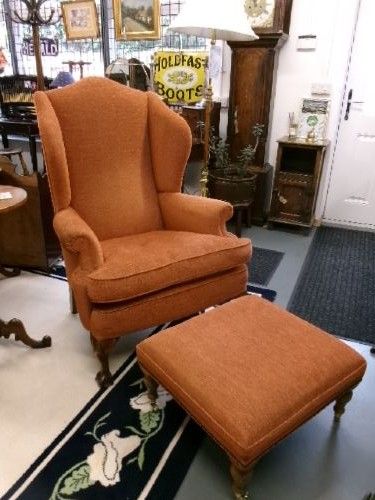
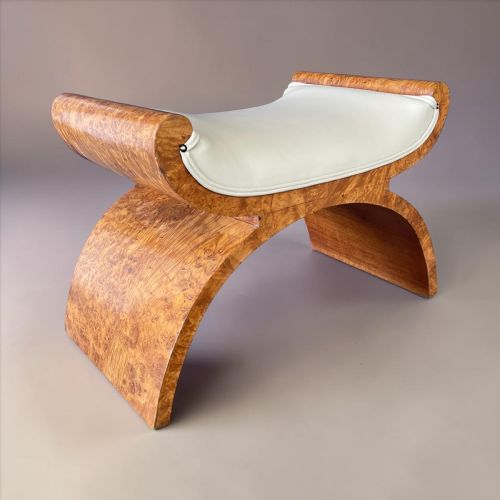
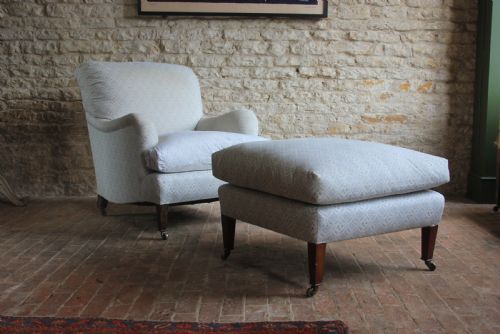
An antique ottoman and chairs grouping pairs seating with matching footstools or ottomans, ranging from Victorian parlor arrangements to Edwardian suites. Buyers encountering this selection will find various forms including armchairs, dressing stools, window seats, and footstools designed to complement each other.
The periods represented span the nineteenth century through the art deco era, encompassing Victorian, Edwardian, and regional revival styles. Pieces originate from diverse workshops, including English cabinet makers, French makers, and Levantine or Syrian artisans working in distinct regional traditions.
How they were made
Construction relies heavily on timbers such as walnut, mahogany, and rosewood, shaped into cabriole legs, X-frames, and curule structures. Joinery techniques reflect the period of manufacture, from traditional cabinet making to sturdy upholstered frames.
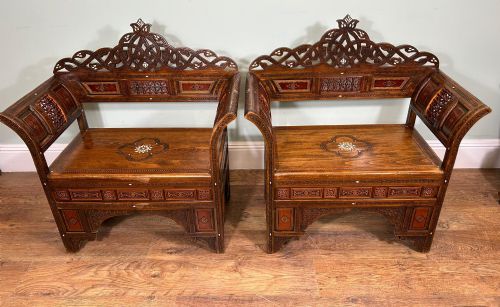
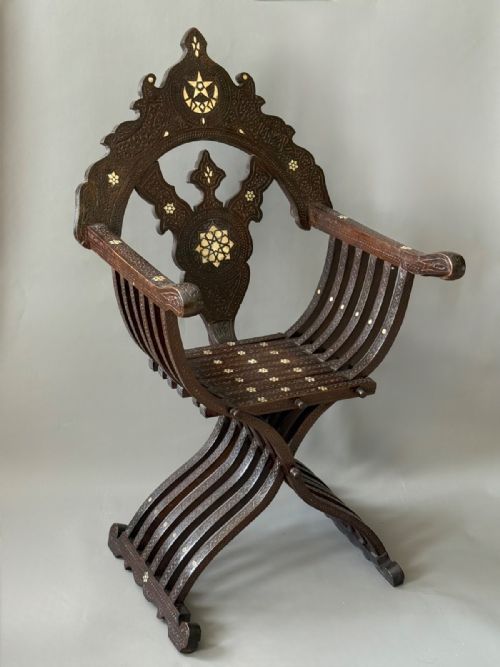
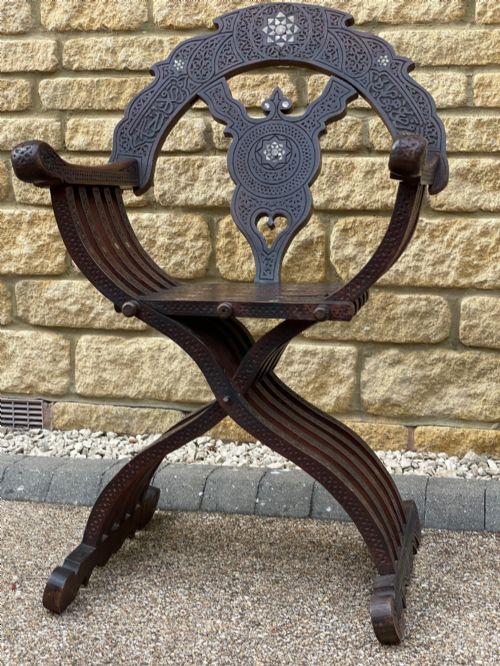
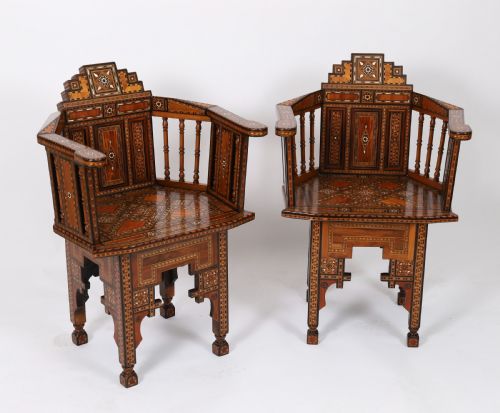
Surface ornamentation incorporates brass fittings, textile upholstery, and intricate parquetry or mother-of-pearl inlay. Syrian and Levantine pieces utilise detailed geometric wood and shell inlays, whilst European examples often feature hand-carving or buttoned back upholstery fabric.
Antique Ottoman and Chairs Retail Price Guide 2026
Typical asking prices for ottoman and chairs among the pieces listed under this phrase on Sellingantiques today, from the lower quarter to the upper quarter. They describe what is for sale here now, not the wider market.
What varies in quality
Quality differences stem from the precision of timber selection, the execution of hand-carved details, and the complexity of inlay work. Finer examples display crisp carving on walnut or rosewood frames and tightly fitted parquetry or mother-of-pearl sections.
The integrity of the matching elements dictates overall success, as suites designed together maintain a harmonious scale and finish. Original upholstery treatment and the preservation of delicate inlaid surfaces separate standard production items from distinguished workshop pieces.
Harry and Lou Epstein·Howard and Sons
The Antique Ottoman and Chairs Glossary
- Parquetry
- Geometric wood inlay forming patterned surfaces. This technique creates decorative geometric designs across chair backs and stool tops.
- Cabriole leg
- A furniture leg featuring a double curve resembling animal legs. It swells outward at the knee and tapers inward to the foot.
- X-frame
- A chair or stool base formed by intersecting diagonal members. This ancient structural form appears in curule stools and Savonarola chairs.
- Curule stool
- An ancient Roman stool shape with bowed legs forming an X-shape. These pieces often feature gilded surfaces.
Antique Ottoman and Chairs: Frequently Asked Questions
How do I match an antique ottoman with older chairs?
Matching relies on comparing timber types, such as walnut or mahogany, and observing the stylistic period of the carved details or legs.
Unified suites often share specific decorative motifs like mother-of-pearl inlay or buttoned back upholstery fabric across both pieces.
What defines a Levantine inlaid armchair?
These chairs are characterised by intricate parquetry and mother-of-pearl inlay assembled into geometric patterns across wooden frames.
Originating from nineteenth-century workshops in the region, they frequently incorporate Moorish design influences.
Where were X-frame stools placed historically?
X-frame and curule stools served as versatile moveable seating in Victorian and earlier domestic interiors.
They frequently functioned as window seats or dressing table stools due to their compact footprint.
How do I identify Victorian walnut stools?
Victorian walnut stools typically feature carved cabriole legs, sometimes ornamented with specific motifs like animal heads.
They often survive alongside matching armchairs from the same period.