

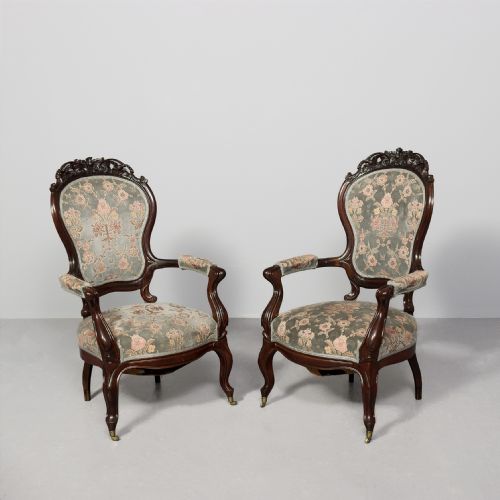


Carved Rosewood Lounge Chair
A carved rosewood lounge chair brings rich timber and deep historical character into a room, offering both sculptural presence and comfortable seating.
Carved Rosewood Lounge Chair
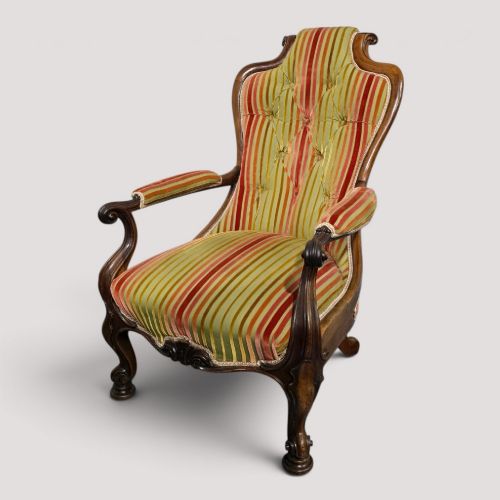
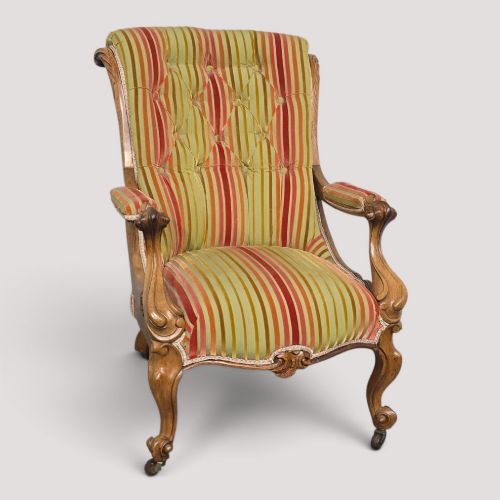
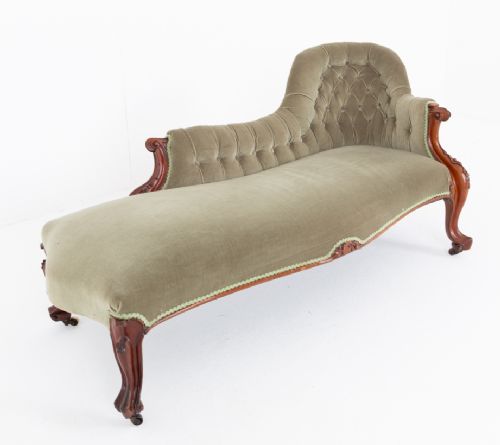
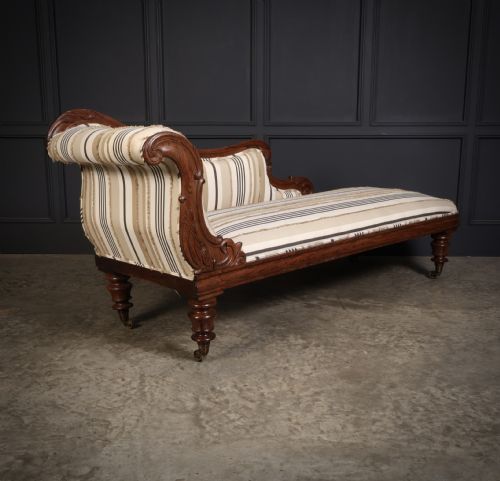
A carved rosewood lounge chair encompasses a variety of seating forms designed for relaxation, including library armchairs, chaise longues, and nursing chairs. These seating options emerge from periods such as the Regency, Victorian, and Edwardian eras, displaying diverse cultural influences from French Rococo Revival to Anglo-Indian colonial craftsmanship.
The most common examples on this page are Victorian pieces featuring exposed timber showwood frames, cabriole legs, and buttoned back upholstery. Buyers also encounter chaise longues, daybeds, and corner bedroom chairs that utilise the dense grain and dark tones of the primary timber.
How they were made
The construction relies heavily on dense tropical hardwoods, predominantly rosewood alongside padauk wood and walnut, selected for structural strength and deep colour. Artisans carved intricate decorative details directly into the solid timber frames, frequently incorporating parcel gilt highlights or inlaid accents.
Upholstery methods span traditional stuffing techniques paired with contemporary or period fabrics such as velvet, satin, and standard textiles. Frames often incorporate brass castors or subtle structural joints hidden beneath buttoned or open upholstered panels.
Carved Rosewood Lounge Chair Retail Price Guide 2026
Typical asking prices for carved rosewood lounge chair among the pieces listed under this phrase on Sellingantiques today, from the lower quarter to the upper quarter. They describe what is for sale here now, not the wider market.
The listings encompass multiple periods, running from the 18th Century through the Regency, Victorian, and Edwardian eras up to 1900.
What varies in quality
Quality rests upon the crispness of the hand-carved ornamentation on the showwood frame and the proportional balance of the legs and arms. Superior examples demonstrate precise joinery and a rich, undisturbed patina across the timber surface.
The integration of the upholstery with the wooden structure also dictates distinction, where tightly buttoned backs and harmonious fabric choices elevate the piece. Regional variations, such as the intricate carving found on Anglo-Indian Bombay models, introduce distinct levels of craftsmanship.
The Carved Rosewood Lounge Chair Glossary
- Rosewood
- A dense, heavily grained hardwood prized for its dark reddish-brown colour and durability in fine furniture. It takes a high polish and accommodates intricate carving.
- Showwood
- The exposed wooden sections of an armchair or lounge chair frame that remain visible around the upholstered elements. These parts often display the primary carving and polish.
- Cabriole leg
- A furniture leg that curves outward in a convex arc and tapers inward in a concave arc, terminating in a modest foot. This form appears frequently on Victorian seating.
- Parcel gilt
- A decorative technique where specific carved details or raised portions of a wooden frame are partially gilded with gold leaf or paint. This highlights particular motifs against the dark timber.
Carved Rosewood Lounge Chair: Frequently Asked Questions
How do I identify a Regency rosewood armchair?
Regency pieces often display classical proportions and restrained decorative motifs inspired by ancient Greek and Roman designs. The timber selection typically shows deep grain patterns combined with precise, linear construction.
Examination of the legs, arm supports, and structural joints helps separate this early nineteenth-century style from later Victorian interpretations.
What is an Anglo-Indian planters chair?
An Anglo-Indian planters chair is a specialised form created during the colonial period, featuring extended arms designed for resting feet. These pieces often utilise dense timbers like rosewood or padauk wood and showcase distinctive regional carving.
They reflect a fusion of British seating requirements with local woodworking traditions from the Indian subcontinent.
Where should I place a chaise longue?
A chaise longue suits spacious living areas, bedrooms, or reading rooms where its elongated silhouette can be appreciated from multiple angles. Placement often allows adequate clearance around the scrolled end and backrest.
Because these pieces function as focal points, positioning them away from direct sunlight helps protect the rosewood frame and delicate fabric.
How do I care for antique rosewood furniture?
Maintaining antique rosewood involves dusting regularly with a soft, dry cloth and avoiding harsh chemical polishes that can degrade the surface. Keeping the furniture away from excessive heat sources prevents the timber from drying out or cracking.
Professional conservation may be required occasionally to nourish the wood and preserve the original finish.