

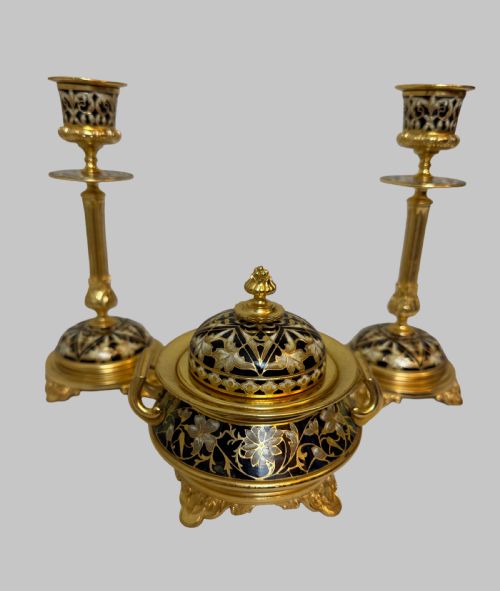


Antique Ormolu Inkstand
An antique ormolu inkstand brings gilded weight and grand nineteenth-century design to a desk.
Antique Ormolu Inkstand
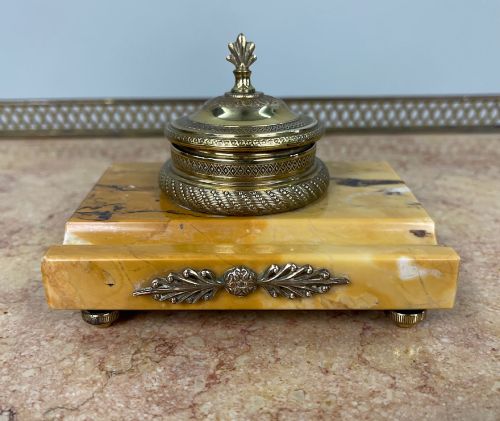
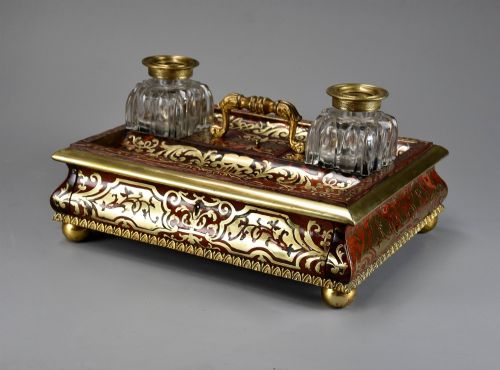
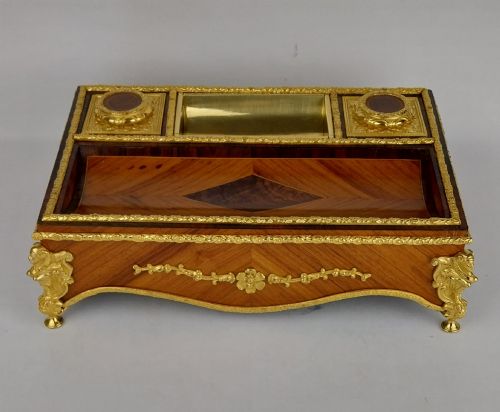
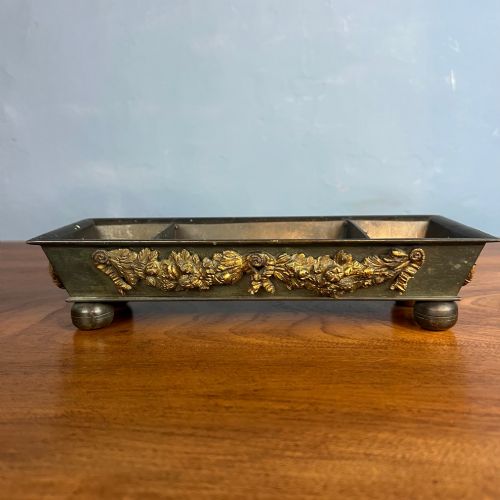
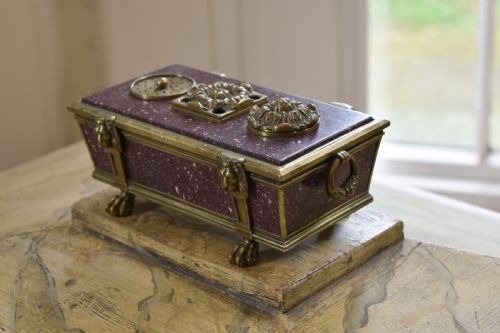
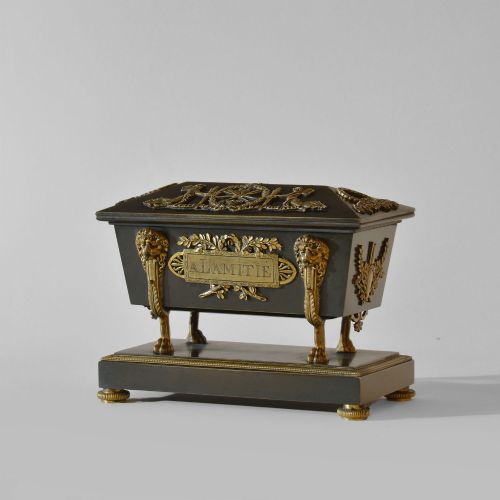
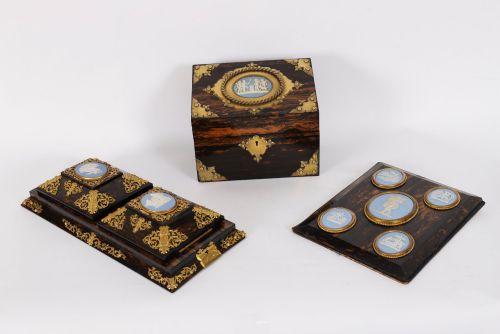
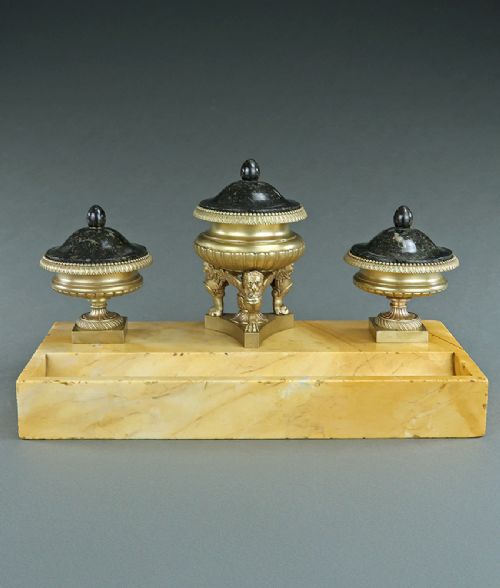
An antique ormolu inkstand is a sophisticated desk accessory designed to hold writing materials, frequently incorporating glass inkwells alongside cast metal mounts. These items span the nineteenth century, with French Empire, Victorian, and Napoleon III examples appearing frequently across the selection.
The primary forms on this page include desk sets, encriers, and mounted caskets, often paired with matching candlestands or clocks. Materials range from ormolu and gilt bronze to contrasting marble bases in Sienna, vert, and onyx.
How they were made
The creation of these objects relies on metal casting, where bronze or brass receives a layer of gilt or ormolu finish through mercury gilding or electroplating. Artisans then mounted these gilded elements onto heavy stone bases such as marble and fitted them with coromandel wood or glass.
Decorative details often include champlevé enamel work, figural casts of animals like lions or kittens, and classical Neoclassical motifs. These techniques combine metalworking and stonemasonry to produce durable desk furnishings.
Antique Ormolu Inkstand Retail Price Guide 2026
Typical asking prices for ormolu inkstand among the pieces listed under this phrase on Sellingantiques today, from the lower quarter to the upper quarter. They describe what is for sale here now, not the wider market.
Listings feature nineteenth-century desk accessories combining ormolu, gilt bronze, and marble.
What varies in quality
The precision of the metal casting and the crispness of the chased details determine the visual merit of the piece. Finer examples display deeply defined foliage, sharp figural rendering, and heavy, unblemished stone bases.
The selection of secondary materials also influences the standard of the object, such as solid coromandel wood foundations or thick, polished glass ink inserts rather than simpler brass or mahogany.
Edwards and Jones·Albert Marionnet·Moser
The Antique Ormolu Inkstand Glossary
- Ormolu
- Gilded bronze produced by applying a mercury and gold amalgam to a bronze base and heating it until the mercury vaporised. This technique creates a durable golden finish characteristic of nineteenth-century decorative arts.
- Encrier
- A French term for an inkstand or inkwell desk set. These containers typically house one or more glass ink inserts alongside pen trays.
- Champlevé
- An enamelwork technique where troughs are gouged into a metal surface and filled with vitreous paste before firing. This adds colourful decorative patterns to the bronze framework.
- Coromandel
- A dense, dark timber imported from Asia, often contrasted with bright ormolu mounts on Victorian desk sets. It provides a heavy, durable foundation for luxury stationery boxes.
- Neoclassical
- A revival style drawing inspiration from classical antiquity, featuring symmetrical motifs, urns, and foliate scrolls. It dominates many nineteenth-century French and English desk accessories.
Antique Ormolu Inkstand: Frequently Asked Questions
What is an ormolu inkstand?
An ormolu inkstand is a desk accessory made from gilded bronze, often combined with marble or exotic woods, designed to hold ink and writing implements.
These functional objects served as centrepieces for nineteenth-century writing desks, combining utility with decorative metalwork.
How do I identify French Empire inkstands?
French Empire inkstands typically display strict classical symmetry, bronze mounts, and dark marble bases reflecting Napoleonic taste.
They rely on military motifs, laurel wreaths, and Neoclassical architecture rather than the ornate curves seen in later styles.
What materials are used in these inkstands?
The primary metals are ormolu, gilt bronze, and brass, frequently paired with Sienna, vert, or onyx marble bases.
Secondary materials include cut glass for inkwells, coromandel wood for boxes, and champlevé enamel for surface decoration.
How were nineteenth-century inkstands used?
They were placed on writing tables to provide a secure receptacle for liquid ink, sand for blotting, and quills or pens.
Wealthy households utilised matching desk sets that included candlestands, blotters, and decorative caskets alongside the inkwell.