


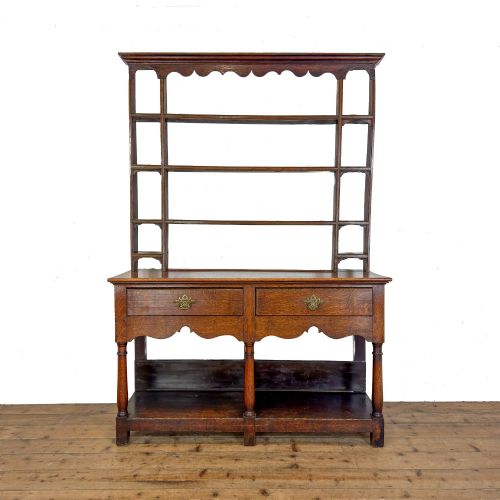


Antique Open Pot Board
These antique open pot board pieces offer traditional storage and display, bringing authentic country house character into a room.
Antique Open Pot Board
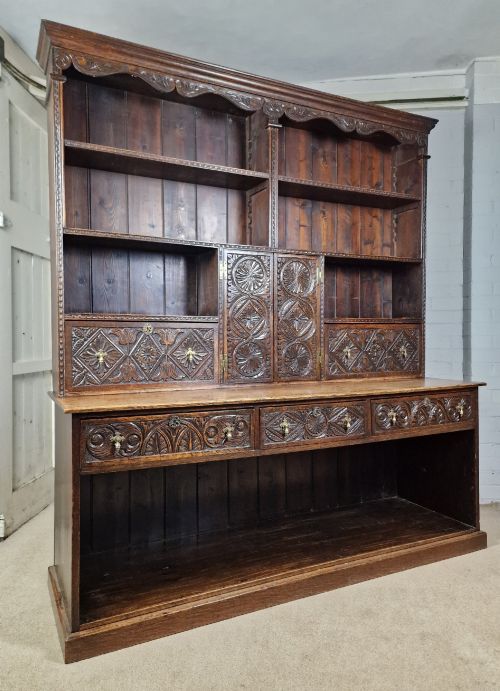
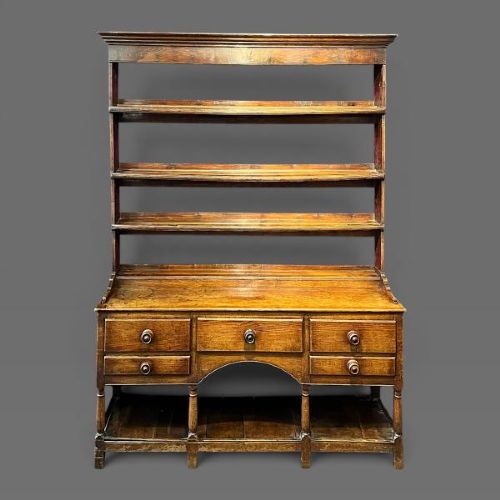
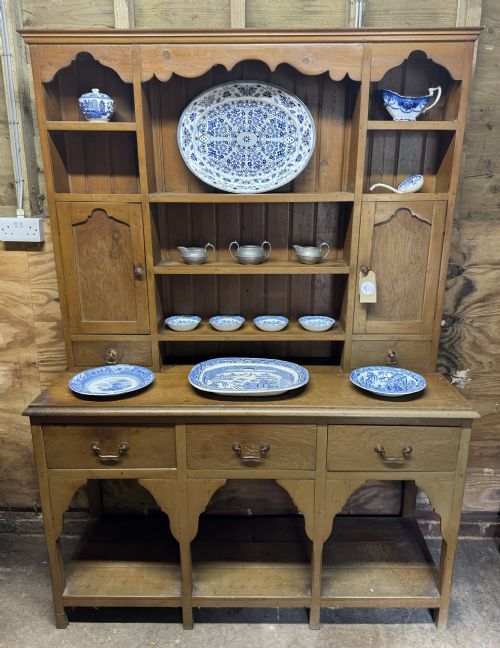
An antique open pot board is a sturdy base or sideboard featuring a low shelf beneath the main surface, historically designed for storing pots and kitchen utensils. The examples found here span the eighteenth century through to the Edwardian period, encompassing Georgian and vernacular styles.
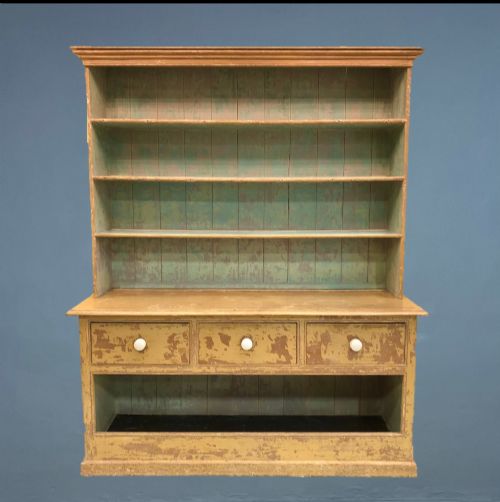
Buyers will encounter various forms including Welsh dressers, dresser bases, and pieces complete with original delph racks. These items originate from vernacular traditions, predominantly utilising oak and pine materials across English and Welsh workshops.
How they were made
Makers constructed these sturdy items predominantly from solid oak and pine timbers, frequently employing traditional joinery methods suited to heavy country use. Surfaces often retain original patinas, while certain examples feature painted finishes.
Metal hardware such as brass elements occasionally appears on these pieces, alongside regional variations from locations like Carmarthenshire.
Antique Open Pot Board Retail Price Guide 2026
Typical asking prices for open pot board among the pieces listed under this phrase on Sellingantiques today, from the lower quarter to the upper quarter. They describe what is for sale here now, not the wider market.
Listings span the eighteenth, nineteenth, and early twentieth centuries, utilising oak, pine, and painted finishes in Georgian and vernacular styles.
What varies in quality
Quality rests in the survival of original surfaces, such as patinas and early paintwork, alongside the integrity of the timber. Pieces retaining their original delph racks stand apart from modified examples.
Proportion and regional vernacular detailing distinguish standard utility items from exceptional country house specimens produced during the Georgian era.
The Antique Open Pot Board Glossary
- Pot board
- The lower open shelf built into the base of a dresser, historically used for resting pots and heavy kitchenware. This defining feature sits just above the floor.
- Delph rack
- The wooden shelving superstructure mounted on top of a dresser base for displaying plates and pottery. These racks are sometimes original to the piece.
- Vernacular
- Regional furniture built by local craftsmen to practical designs rather than following strict metropolitan pattern books. This style is typical of country workshops.
- Patina
- The surface sheen and depth of colour developed by wood over centuries of handling, polishing, and exposure to light. Original surfaces are prized by collectors.
Antique Open Pot Board: Frequently Asked Questions
What is a pot board dresser?
A pot board dresser is a heavy storage item featuring a flat top surface, drawers, and an open lower shelf near the floor. They were designed for domestic utility in country kitchens.
The lower shelf provided accessible storage for heavy earthenware pots, separating them from food preparation areas on the main top surface.
Where were these dressers made?
These pieces originate primarily from regional workshops in England and Wales. Many carry distinct vernacular characteristics tied to their local areas.
Examples from Carmarthenshire and other Welsh counties reflect specific local cabinet-making traditions using native timbers like oak and pine.
How do I style a pot board?
The lower pot board shelf offers an ideal space for displaying heavy ceramic bowls, copper pans, or stacks of antique plates. Keeping items functional suits the rustic nature of the furniture.
In living spaces or kitchens, the open base prevents the heavy wooden mass from feeling overly dominant in a modern room.
Are these pieces oak or pine?
The selection includes both oak and pine constructions, reflecting the primary native hardwoods and softwoods available to period rural cabinet makers. Oak examples tend to show deep honey tones.
Painted finishes also appear on several pieces, altering the visible grain of the underlying timber depending on the regional workshop practices.