

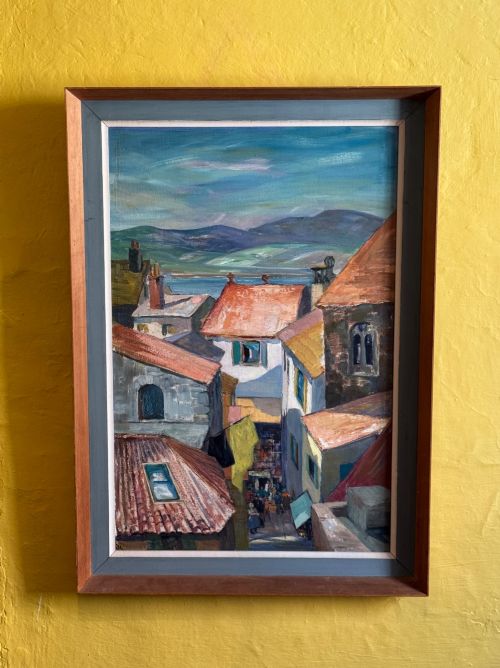
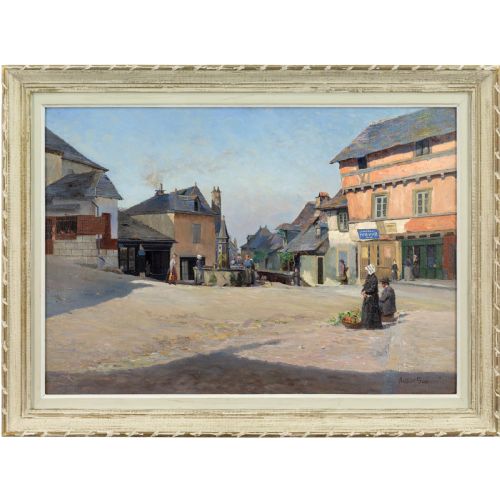
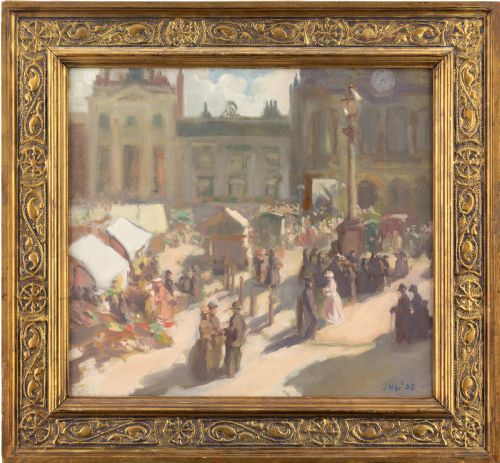
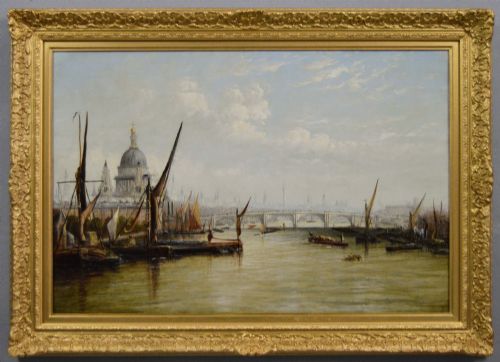
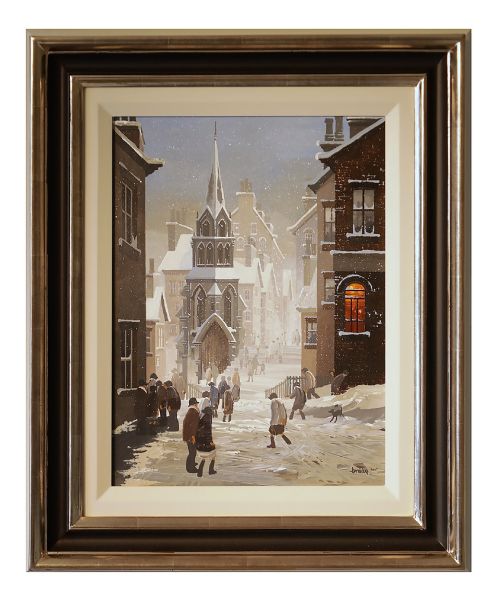
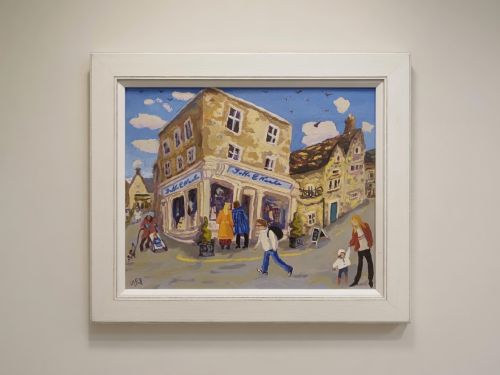

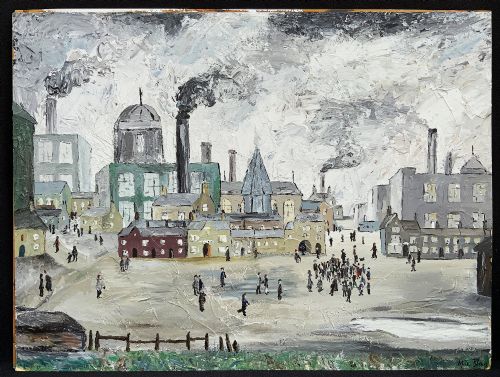


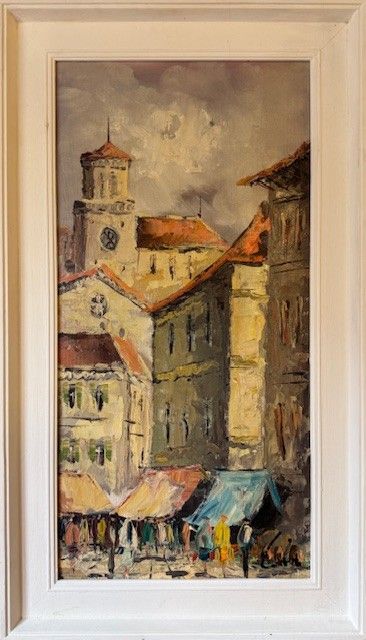


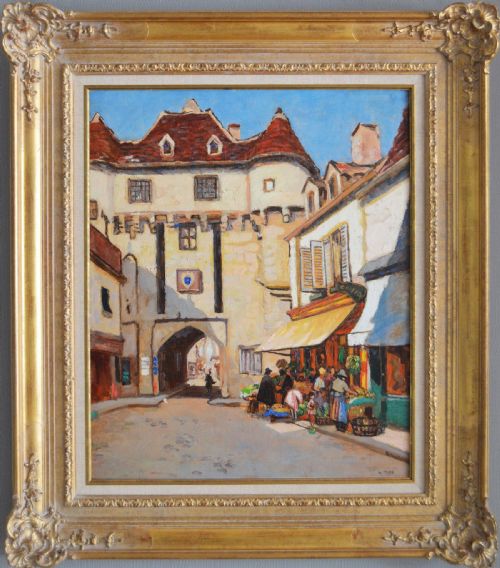
Antique Oil Townscape Painting
An antique oil townscape painting captures the streets, canals, and squares of past eras in rich pigment and decisive brushwork.
Antique Oil Townscape Painting
When you search for an antique oil townscape painting, you encounter urban views, bustling markets, and quiet architectural studies executed across the nineteenth and early twentieth centuries. These works record domestic streets, continental harbours, and canal scenes from British, Dutch, and French locations.
The selection ranges from late Georgian urban prospects and Victorian river views to Post-Impressionist cityscapes and industrial Northern scenes. Canvases and panels depict specific named places, such as Venice, Whitby, and the River Thames, alongside anonymous village lanes and European squares.
Materials and construction
Artists built these compositions primarily using oil paint applied to canvas or wooden panels, sometimes supported by board. The pigment delivers depth and varied texture, capturing light on stone, water, and brick.
Many works retain their period framing, utilising giltwood, gesso, and gold leaf to complement the painted surface. Panel supports provide a rigid ground for detailed nineteenth-century street scenes, while canvas accommodates broader impressionistic strokes.
Antique Oil Townscape Painting Retail Price Guide 2026
Typical asking prices for oil townscape painting among the pieces listed under this phrase on Sellingantiques today, from the lower quarter to the upper quarter. They describe what is for sale here now, not the wider market.
Several artists clearly braved freezing river quays to paint icy winter townscapes before heading indoors for tea.
What separates the best examples
Quality rests in the handling of light, atmospheric perspective, and architectural precision by the painter. Stronger examples demonstrate confident brushwork that defines figures, water reflections, and stone facades without stiffness.
Condition of the pigment and the originality of the surface separation also define the better pieces. Works retaining untouched nineteenth-century or early twentieth-century varnish and period giltwood frames command greater interest.
Arthur Gué·Francis Moltino·John Hodgson Lobley·Paul-Élie Gernez·Fred Yates·Cornelis Christian Dommersen·Alfred Pollentine·Edward Henry Holder·John Sanderson Wells·Jane Vivian·Ludwig Hermann·Arthur Joseph Meadows·Josephine Haswell Miller·Donald Wood·George Willis Pryce·Letitia Marion Hamilton·David Cox Senior·Louis Dommersen·RP Bonington
The Antique Oil Townscape Painting Glossary
- Oil on Canvas
- A traditional painting medium where oil paints are applied to a woven fabric support stretched over a wooden frame.
- Giltwood
- Wood carved and coated with gold leaf or gold paint, frequently used for traditional picture framing.
- Gesso
- A plaster-like primer mixture applied to wood panels or frames to create a smooth surface for gilding or painting.
- Post-Impressionism
- An art movement following Impressionism that extends its use of vivid colours and thick brushwork while exploring structural form.
- Panel
- A flat piece of wood used as a rigid support for oil paintings instead of stretched canvas.
Antique Oil Townscape Painting: Frequently Asked Questions
What periods do these townscapes cover?
The available works span from the late Georgian and Regency eras through the Victorian period and into the early twentieth century, including twentieth-century post-impressionist examples.
Most pieces date from the nineteenth century, capturing urban development, maritime trade, and continental architecture across Britain and Europe.
How do I identify the location in a painting?
Many paintings include titled subjects on the reverse or within the composition, recording specific landmarks like Venice, the Thames, or regional market squares.
Artists often inscribed town names, dates, and signatures directly onto the canvas, panel, or original frame structure.
Are these paintings on canvas or wood?
Artists utilised both stretched canvas and wooden panels as supports for their oil townscapes during these periods.
Panels offer a rigid surface frequently seen in nineteenth-century board works, while larger vistas typically employ traditional woven canvas.
How should I care for an antique oil painting?
Keep the artwork away from direct sunlight and fluctuating humidity levels to protect the oil pigment and wooden or giltwood frames.
Dust the surface gently with a dry, soft brush and avoid using liquid cleaners on either the canvas or the frame.