


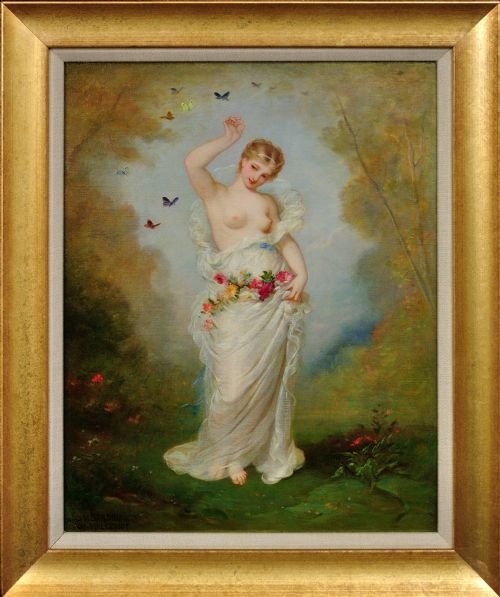


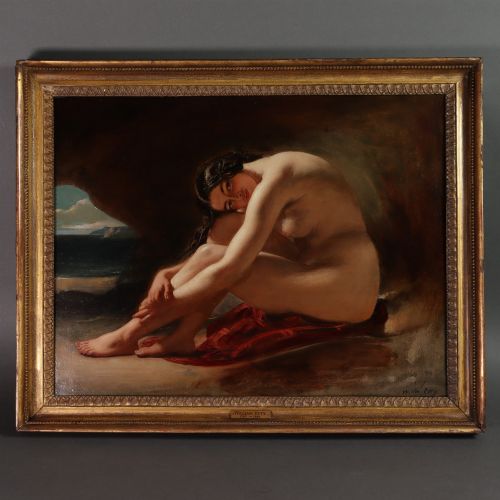
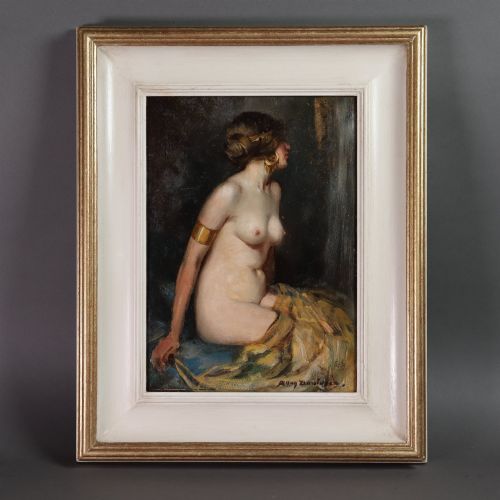


Antique Oil Portrait Nude
An antique oil portrait nude captures the human form through layered pigments, bringing academic discipline and romantic expression into a room.
Antique Oil Portrait Nude
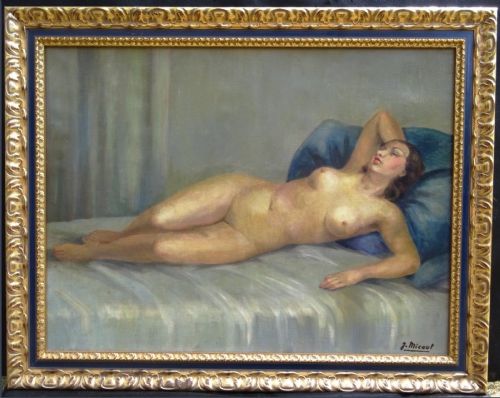
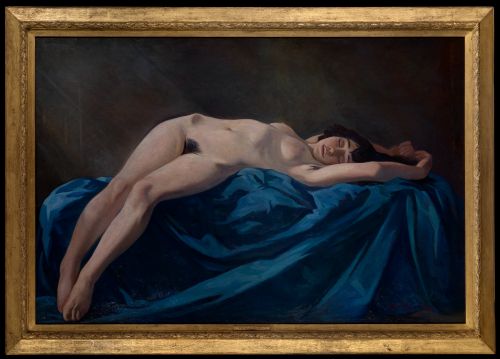
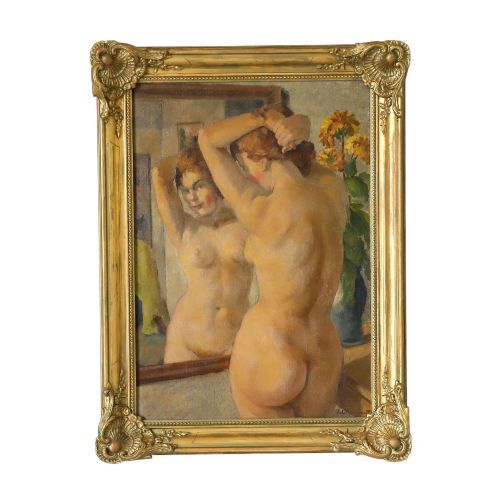
An antique oil portrait nude sits at the intersection of classical study and expressive painting, emerging across periods from the eighteenth century through the early twentieth century. These artworks present female subjects in settings ranging from pastoral riverbanks and caves to draped interiors and sunlit cliffs.
The pieces appearing on this page span French Academic styles, Impressionism, Victorian Romanticism, and early twentieth-century avant-garde movements. Buyers encounter works rendered on canvas, panel, board, and paper, often housed within period giltwood frames.
Subjects include mythological figures such as Nereids and Andromeda alongside direct life studies and liberated figures from the 1920s. The selection reflects both formal academic training and individual artistic experimentation across British and European schools.
Materials and technique
Artists built these works using oil paint applied to stretched canvas, wooden panels, or rigid boards, working up pigment layers to achieve depth in skin tones and shadows. Brushes and palette knives created varied textures, from smooth academic blending to energetic impressionistic strokes.
Many paintings retain their original giltwood frames, which provide structural support and complement the warm tonality of the oil pigments. The combination of durable ground materials and stable oil media explains the survival of these delicate figurative studies across the centuries.
The selection includes academic realism, impressionism, Fauvism, and avant-garde styles originating from British, French, and Belgian schools.
Judging quality
Quality rests upon the artist's command of anatomical proportion, light fall, and tonal subtlety within the figure. A stronger piece demonstrates confident brushwork and anatomical understanding, whereas lesser examples rely on formulaic shading or stiff contours.
The depth of psychological engagement or narrative conviction separates standard life studies from masterworks. Integration with the surrounding frame and the preservation of the original pigment surface further influence the standing of each piece.
Eric Robertson·Raymond Moritz·André Charles Voillemot·Alexandre-Louis Martin·Gaetan Dumas·William Etty·Allan Douglas Davidson·James Clark·Fernand Jean Barbier·William Edward Frost·Peter Paul Rubens·Jean Hippolyte Marchand·Auguste Renoir·Henri Moreau·Emil Danielsson
The Antique Oil Portrait Nude Glossary
- Academic realisms
- A style of painting governed by the strict rules of nineteenth-century European art academies. It prioritises precise drawing, smooth finishes, and classical subject matter.
- Giltwood
- Wood carved and coated with a thin layer of gold leaf or metallic paint. It frequently frames nineteenth-century oil paintings to enhance their visual weight.
- En grisaille
- A painting executed entirely in shades of grey or neutral monochrome. Artists often used this technique to emulate sculpture or to plan tonal values.
- Fauve
- A style associated with early twentieth-century painters who utilised bold, non-naturalistic colours. These works emphasise flat planes and expressive brushwork over academic realism.
Antique Oil Portrait Nude: Frequently Asked Questions
How are antique nude portraits dated?
Dating relies on stylistic markers, costume elements, framing materials, and documented signatures or exhibition records. Stylistic shifts from Victorian romanticism to early twentieth-century impressionism provide clear chronological boundaries.
Secondary evidence such as stretcher construction, canvas stamps, and biographical details of the artist help narrow the creation date to a specific decade.
Where should these paintings be hung?
These works suit studies, drawing rooms, or private bedrooms where controlled lighting preserves the oil pigments. They pair well with traditional interiors and minimalist spaces alike, depending on the framing.
Direct sunlight should be avoided to prevent fading of both the oil paint and the giltwood frame over time.
What is the difference between an academic study and a finished portrait?
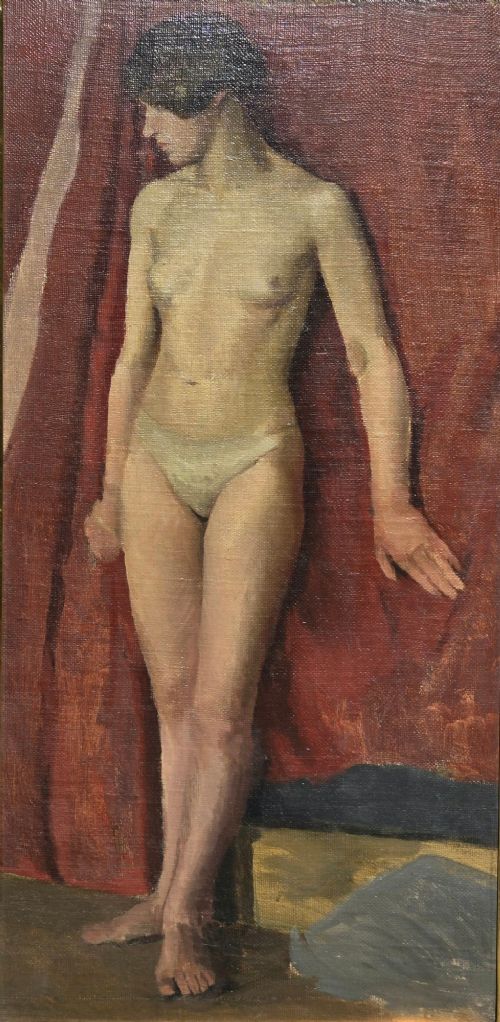
An academic study focuses on capturing specific lighting, musculature, and posture, often produced within a studio setting for instructional purposes. A finished portrait or narrative painting places the figure within a composed setting with a specific subject.
Both forms demonstrate high levels of technical skill, though studies often reveal the direct process of the artist.