
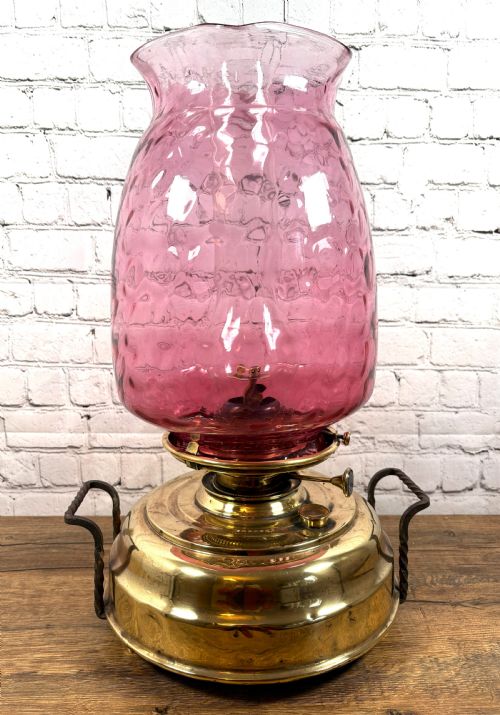


Antique Oil Burner Base
An antique oil burner base provides the solid foundation and reservoir for period lighting, offering a functional piece of Victorian interior history.
Antique Oil Burner Base
An antique oil burner base forms the lower reservoir and support structure of a period lighting fixture, designed to hold fuel safely beneath the burner mechanism. These items date primarily from the Victorian and Edwardian eras, spanning the mid-nineteenth century through to about nineteen hundred.
The versions most commonly met on this page are constructed from brass or glass, often taking the form of column lamps, cottage table models, or peg lamps designed to fit into separate holders. Many examples survive as standalone bodies or retain elements such as cranberry glass and satin glass reservoirs.
Origins trace back to domestic lighting needs of the eighteen fifties to nineteen hundreds, when paraffin and other oils lit homes before widespread electrification. Collectors encounter them either complete with shades or stripped back to the foundational metal and ceramic bodies.
Materials and construction methods
Makers utilised cast brass, iron, and heavy brass components to give these bases stability and weight, often forming reeded columns or stepped pedestals. Metal parts were turned, cast, and occasionally silver plated to achieve a polished finish.
Glass production played a major role, utilising mould-blown techniques to create milk glass, cranberry glass, and satin glass reservoirs. Ebonised ceramic also appears, offering a contrasting dark finish paired with metal mounts.
Listings feature items spanning from eighteen fifty to nineteen hundred, encompassing Victorian and Edwardian periods.
Distinctions in quality
Heft and solidity separate the better pieces from lighter utilitarian items, with heavy brass and thick glass indicating superior manufacture. Finer examples display crisp casting detail on reeded columns and collars rather than soft, simplified edges.
The choice of materials dictates the tier of the piece, particularly where coloured glass such as cranberry or satin glass meets quality metalwork. Superior bases integrate materials cohesively, maintaining proportion and structural balance.
The Antique Oil Burner Base Glossary
- Reservoir
- The container that holds the lamp oil within the base. This vessel sits below the burner and above the foot.
- Peg lamp
- A small oil lamp featuring a protruding metal pin or peg at the base. This allowed the lamp to drop directly into a candlestick or wall bracket.
- Reeded column
- A vertical pillar decorated with parallel rounded ridges running vertically up the shaft. This architectural motif appears frequently on nineteenth-century brass bases.
- Satin glass
- Glass treated with an acidic vapour bath to produce a velvety, non-reflective surface finish. It is soft to the touch and diffuses light effectively.
Antique Oil Burner Base: Frequently Asked Questions
What is an oil burner base?
An antique oil burner base is the lower portion of a Victorian or Edwardian oil lamp that houses the fuel reservoir and supports the burner mechanism.
These pieces were essential household items before electric lighting became common, serving as stable table or desk illumination.
How do I date these bases?
Dating relies on material combinations, manufacturing techniques, and stylistic clues such as reeded columns or specific glass types.
Most examples date from the mid-nineteenth century up to the Edwardian period, aligning with the height of paraffin lighting use.
Were these made of brass?
Brass is one of the most common materials found in these listings, often cast into heavy columns or decorative table mounts.
Other frequent materials include glass, cast iron, and ebonised ceramic.
How should I display them?
Many collectors display these bases as standalone decorative objects on sideboards or mantelpieces to showcase the period metalwork and coloured glass.
They can be placed where light highlights the glass reservoirs or polished brass surfaces.