

Antique Oil Artwork Interior
These antique oil artwork interior pieces capture domestic and social spaces through layered pigments, offering a glimpse into past daily life.
Antique Oil Artwork Interior
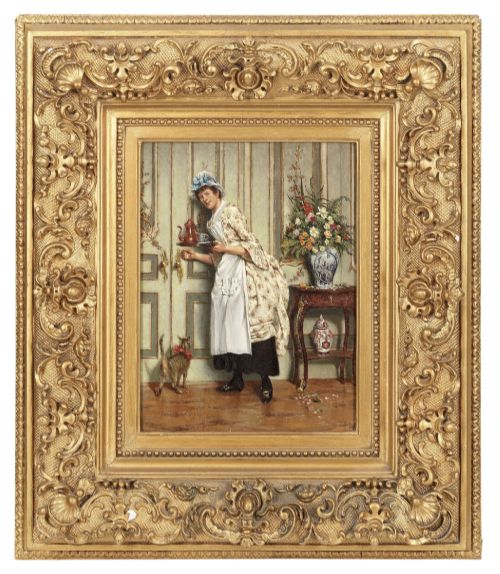
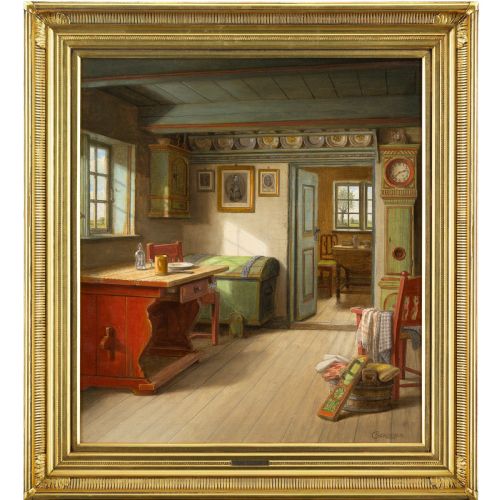
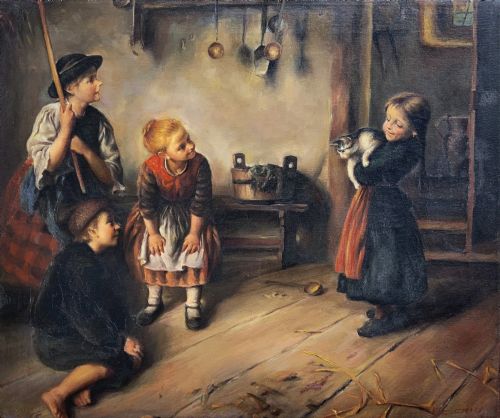
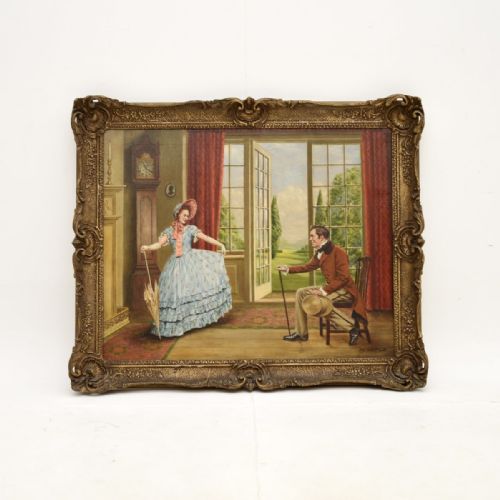
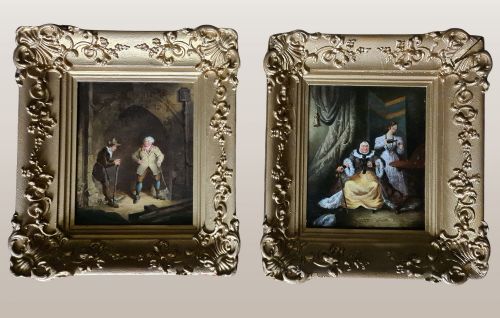
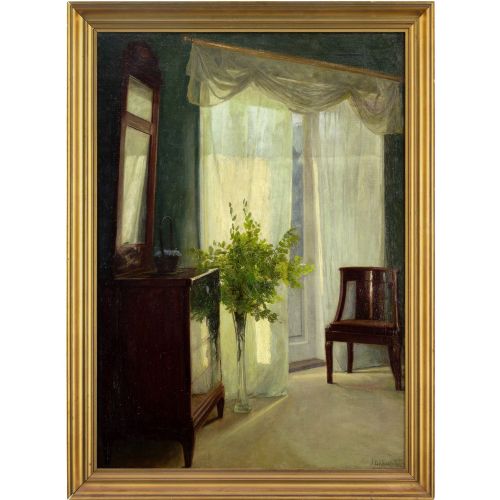
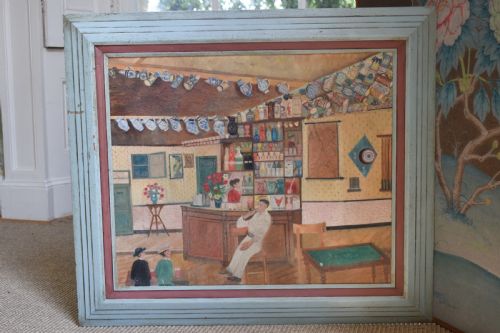
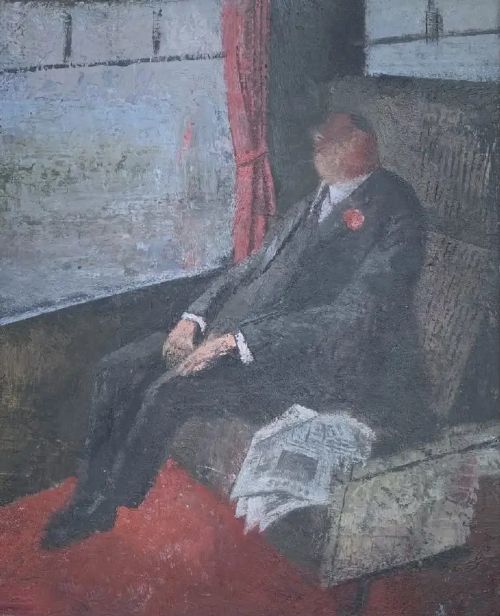
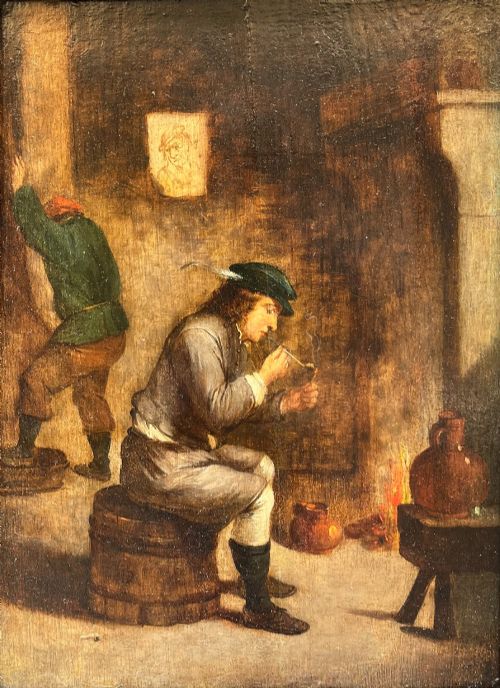
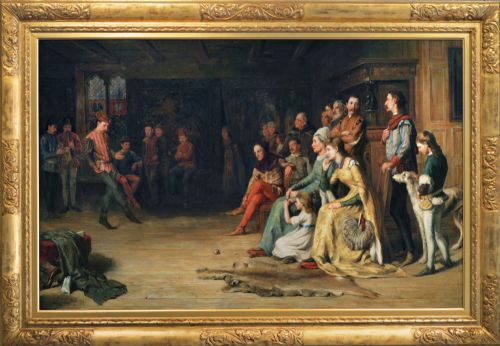
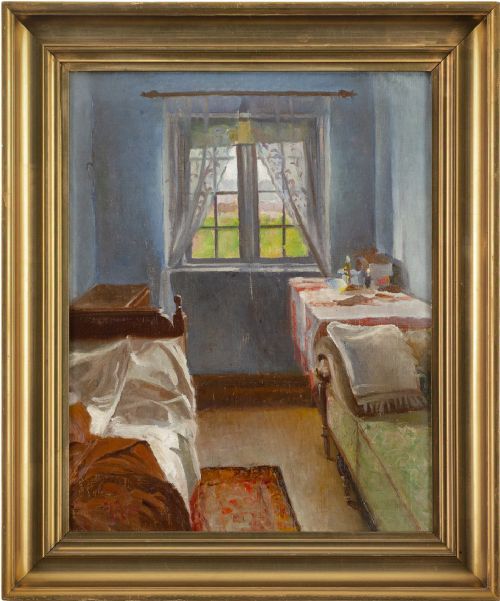
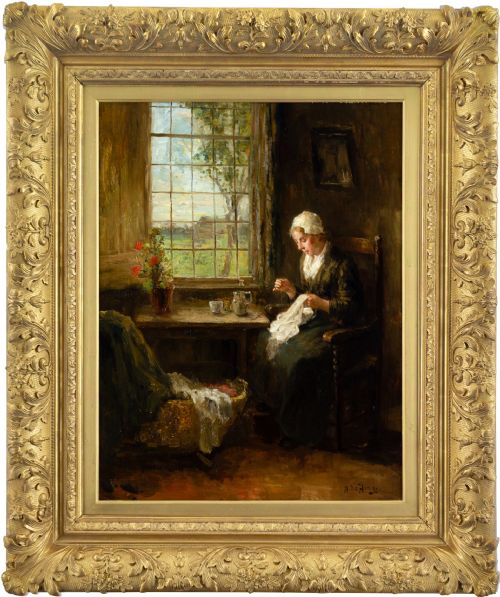
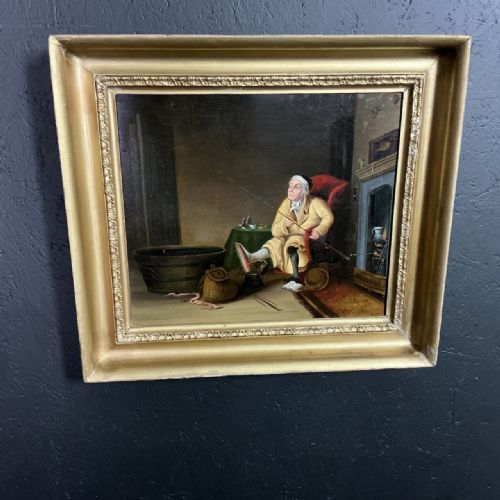
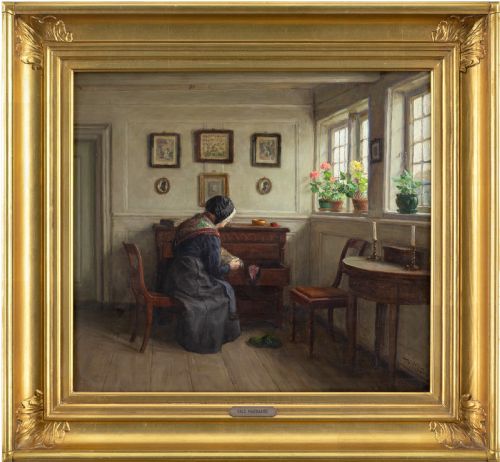
An antique oil artwork interior captures domestic rooms, taverns, country houses, and quiet domestic moments rendered on canvas or panel. These works range from Victorian genre paintings depicting tea time to Dutch school tavern scenes and Scandinavian realism.
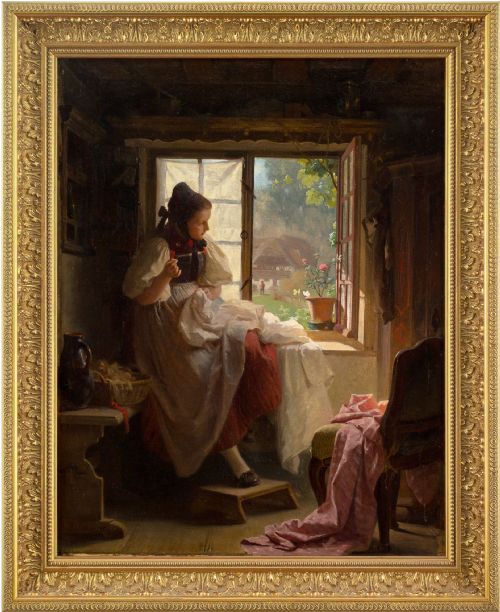
The selections available here span the seventeenth century through the early twentieth century, featuring works executed in oil paint on canvas, wood, board, and paper. Many pieces portray figures engaged in daily routines, card games, or sewing beside windows.
Buyers encounter named artists alongside continental and British schools, reflecting academic realism, intimist scenes, and luminist floral still lifes placed within domestic settings.
Canvases, Panels, and Pigments
Artists built these compositions using oil paint applied to stretched canvas, wooden panels, or heavy paper supports. The medium allowed for slow drying times, enabling painters to blend tones and achieve subtle shifts in light and shadow.
Many works retain their original giltwood and gesso frames, which utilise gold leaf to complement the painted light within the scene. Canvases are frequently mounted on wooden stretchers behind the painted surface.
Styles include Victorian genre painting, Scandinavian realism, Dutch school, and academic realism across British and continental schools.
Brushwork and Compositional Depth
Quality rests in the handling of light, particularly where sunlight falls across a cottage floor or enters through a garden door. Superior examples demonstrate controlled brushwork that defines texture in fabrics, wooden furniture, and human expressions.
The cohesion of the interior space and the natural placement of figures distinguish finer compositions from more rigid or formulaic workshop output. Preservation of the original oil paint surface without heavy overpainting determines the integrity of each piece.
Stephen Samuel Lewin·Alfred Lyndon Grace·John Lübschitz·Max Kaltenmoser·David Teniers·James Hamilton·Harry Kluge·Bernard De Hoog·Valdemar Magaard·Renato Moretti·Jacob Akkersdijk·Harry Brooker·Johann Hamza·Byam Shaw·Alexander Rosell·Benjamin Eugene Fichel·John Arthur Lomax·Albert Clark·John Watkins Chapman·Charles Haigh Wood·Frank Moss Bennett·Gabriel Puig Roda·Haynes King·James Kyd·Edwin Thomas Roberts
The Antique Oil Artwork Interior Glossary
- Genre Painting
- Depictions of everyday life and ordinary people engaged in domestic or social activities. These scenes often show figures in cottages, taverns, or drawing rooms.
- Chiaroscuro
- The strong contrast between light and dark within a painting, used to give volume to figures and objects. Painters employ this technique to create drama in interior settings.
- Gesso
- A plaster mixture applied to wood panels or frames as a base for painting or gilding. It provides a smooth surface for the application of oil paint or gold leaf.
- Luminist
- A style focusing on the effects of light, particularly soft daylight illuminating an interior space. Such works emphasise atmospheric clarity and subtle colour gradients.
- Oil on Canvas
- Pigment mixed with drying oil applied to woven fabric stretched over a wooden frame. This combination remains the primary support for historical fine art.
Antique Oil Artwork Interior: Frequently Asked Questions
What periods do these interior paintings cover?
The selection spans from the seventeenth century through the Victorian era up to the early twentieth century. Works reflect academic realism, Dutch traditions, and later intimist movements.
Dates vary by artist, with many pieces originating from the nineteenth and early twentieth centuries.
How should I hang an oil painting?
Display paintings away from direct sunlight and steady heat sources to protect the canvas and oil pigments. Ensure the wall fixings match the weight of both the artwork and its frame.
Keep the room at a stable humidity level to preserve the wooden stretchers and panel supports.
What subjects appear in these domestic scenes?
Common subjects include tea times, sewing by windows, card games in taverns, and quiet domestic moments in country houses. Figures are shown interacting within specific historical interiors.
Some works incorporate animal portraits or still life arrangements placed within rooms.