




Antique Officer Desk
An antique officer desk brings modular history into a room, offering portable campaign engineering built for travel.
Antique Officer Desk
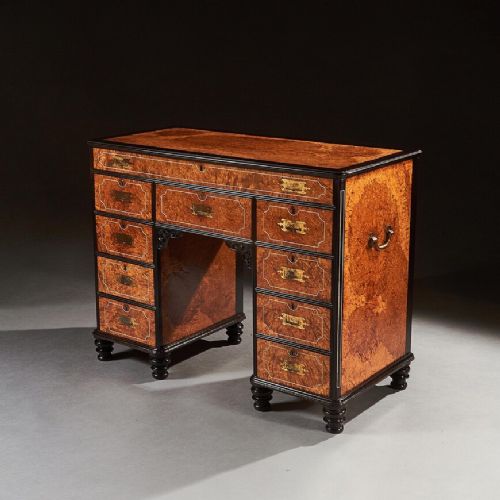
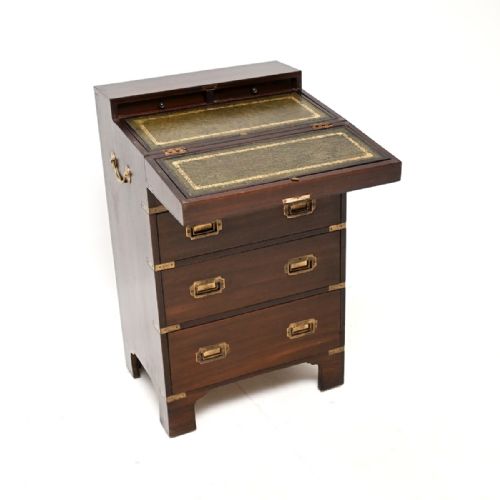
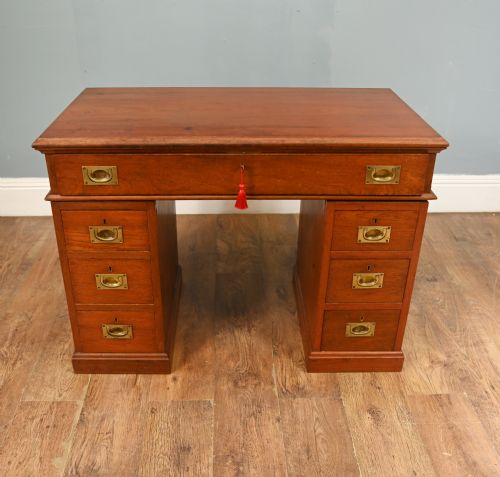
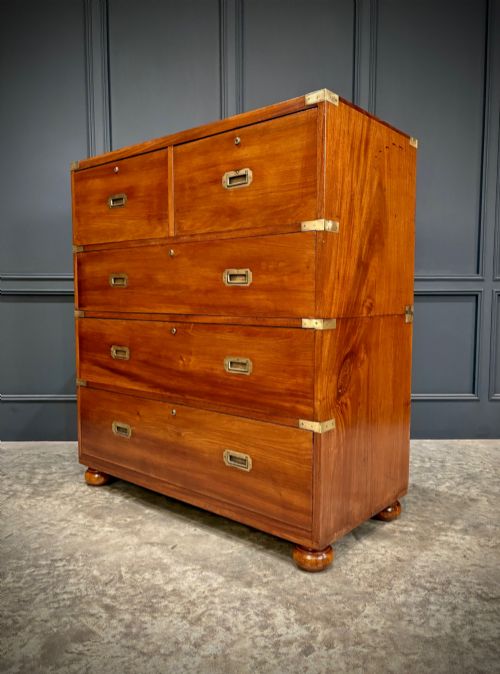
When you search for an antique officer desk, you encounter robust campaign furniture designed for military life on the move. The selection encompasses secretaire chests, writing slopes, and pedestal desks from the Victorian era and the nineteenth century.
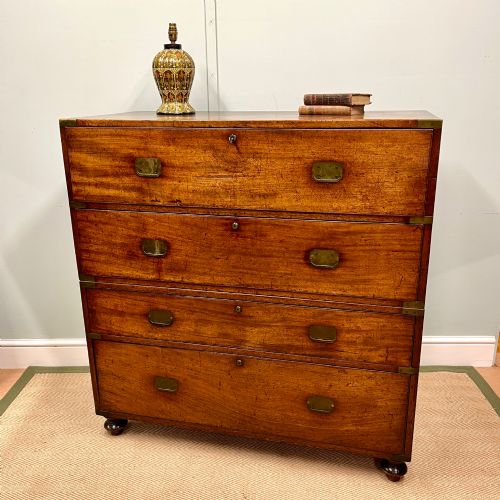
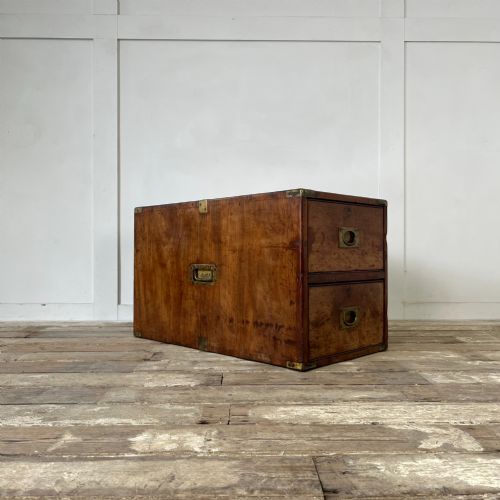
Mahogany, camphor wood, and teak dominate the selection, often fitted with brass corners and flush handles for transport. These forms range from compact desktop storage to substantial two-part chests containing fitted writing drawers.
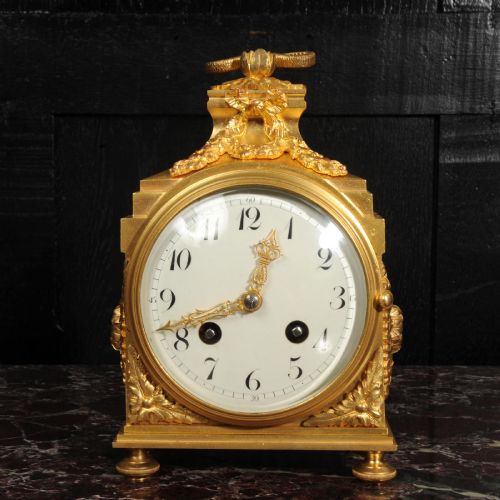
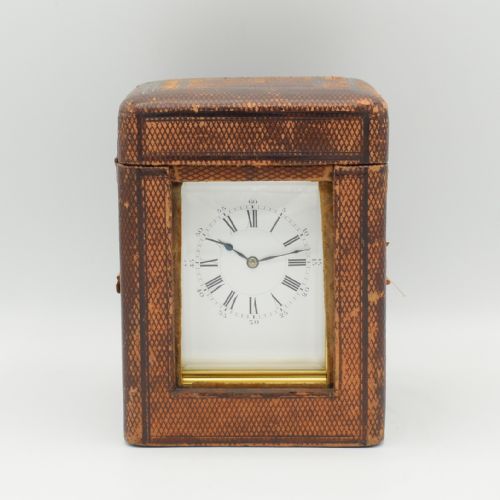
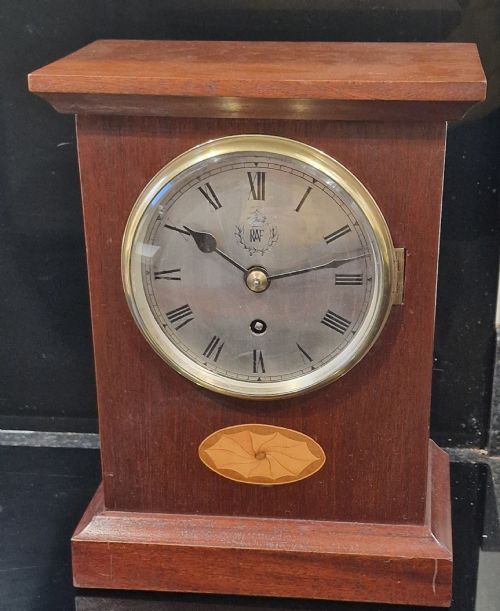
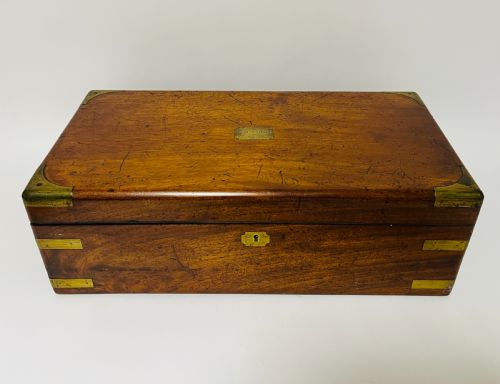
Buyers also encounter French ormolu pendule d'officier clocks and brass-bound writing boxes associated with military service. The standard offerings reflect nineteenth-century craftsmanship tailored for officers requiring functional workspace in the field.
Materials and Construction
Cabinet makers utilised dense timbers like mahogany, teak, and camphor wood to withstand tropical climates and rigorous travel. These woods were chosen for their stability and resistance to warping under canvas or on shipboard.
Brass corners, straps, and flush-fitting recessed handles protect the edges and allow pieces to pack tightly together. Dovetail joinery and multi-part modular construction ensure the furniture separates cleanly into manageable sections.
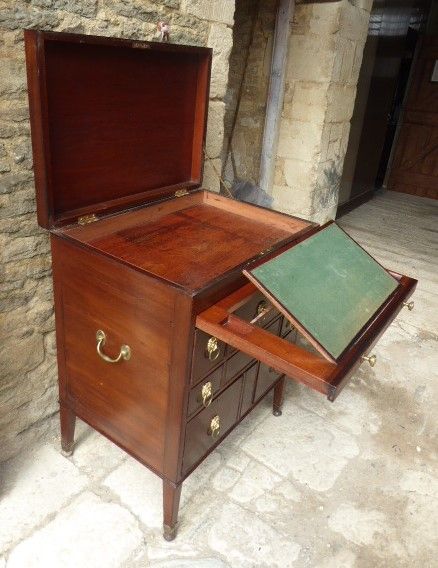
Interiors often feature fitted compartments lined with leather for correspondence and document storage. Secondary woods and precise secondary linings secure the structural integrity of folding writing surfaces and secret drawers.
Listings feature nineteenth-century campaign forms in mahogany, camphor wood, and teak, complemented by brass hardware and leather.
Markers of Quality
Quality rests in the precision of the brass hardware and the tightness of the joinery on multi-part chests. Superior examples retain original recessed handles, lock escutcheons, and internal leather writing surfaces without modern replacement.
The choice of timber defines the grade of the piece, with well-figured mahogany, burr veneers, or solid camphor wood marking out finer workshops. Secondary wood selection and the complexity of the interior pigeonholes and secret drawers reveal the maker's hand.
Henri Jacot·Ross of London·J. F. Bautte Et Cie·Drocourt
The Antique Officer Desk Glossary
- Campaign furniture
- Portable furniture built in sections with removable legs and recessed hardware for military transport. It is designed to pack flat or stack securely for transit.
- Secretaire chest
- A chest of drawers featuring a pull-out writing drawer with a drop-front panel. This panel conceals small drawers and pigeonholes for correspondence.
- Pendule d'officier
- A type of portable mantel or carriage clock originally made for military officers on campaign. These clocks often feature striking mechanisms and robust travel cases.
- Writing slope
- A portable box with a hinged sloping lid that opens to form a desk surface. Inside are compartments for inkwells, pens, and paper.
- Brass-bound
- Furniture reinforced with brass corners, straps, and braces to protect vulnerable edges from impact during travel. This reinforcement also adds structural rigidity.
Antique Officer Desk: Frequently Asked Questions
How do campaign desks separate?
Many campaign desks and chests are built in two or more stacking sections held together by internal brass bolts or side brackets. This modular design allowed officers to pack heavy furniture onto mules or wagons during nineteenth-century military movements.
To separate the sections, you typically release internal latches or remove securing pins hidden within the carcase. The pieces lift apart cleanly without the use of tools.
What is camphor wood used for?
Camphor wood provides a durable, fragrant timber that naturally resists insects and damp conditions. It was frequently selected for campaign chests destined for tropical service.
The aromatic quality of the wood helped protect uniforms and documents from moths and mildew during long voyages.
Are writing slopes lined with leather?
Most antique writing slopes and secretaire drawers feature fitted leather inserts to provide a smooth writing surface. These panels are often gold-tooled around the perimeter.
How can I date a campaign chest?
Dating relies on timber choice, construction methods, and the style of the brass hardware. Pieces from the eighteenth century tend to use simpler brass mounts, while Victorian examples often feature fully recessed flush handles and corner brackets.
Secretaire drawers and maker stamps, when present, also help narrow down the decade of manufacture.