



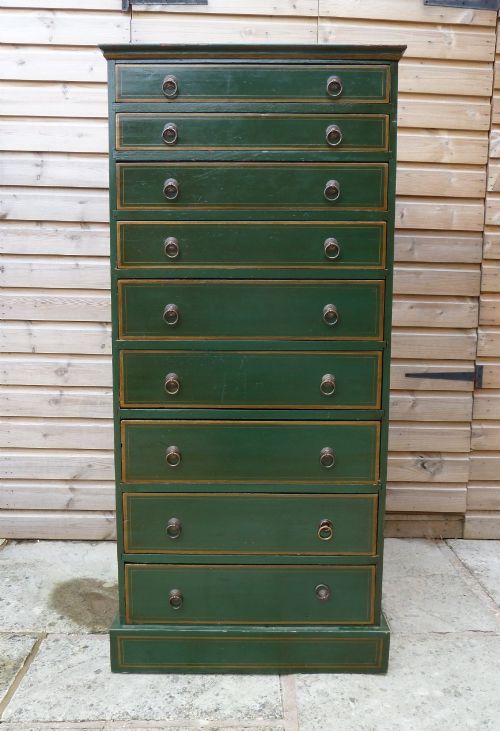
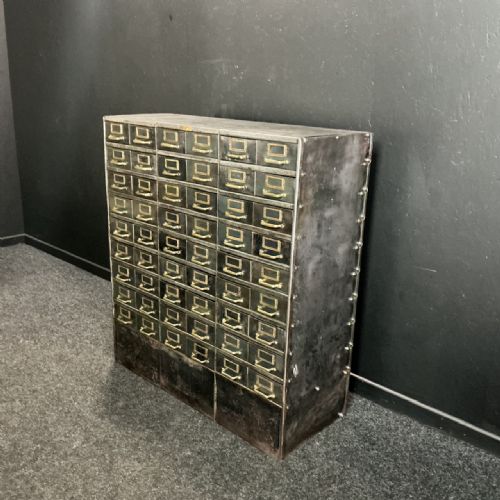
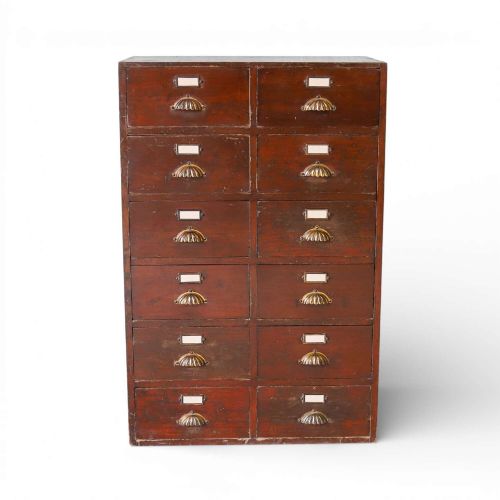
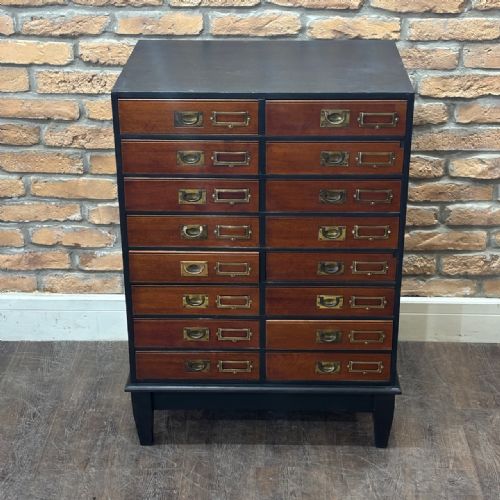


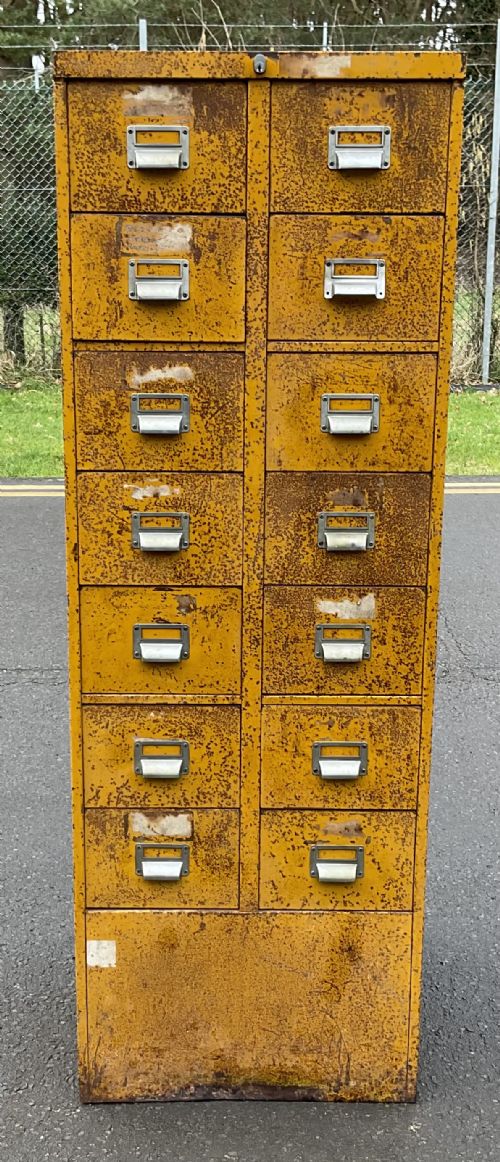
Antique Office Drawer Unit
An antique office drawer unit organises your workspace with utilitarian charm, offering practical storage through period craftsmanship.
Antique Office Drawer Unit
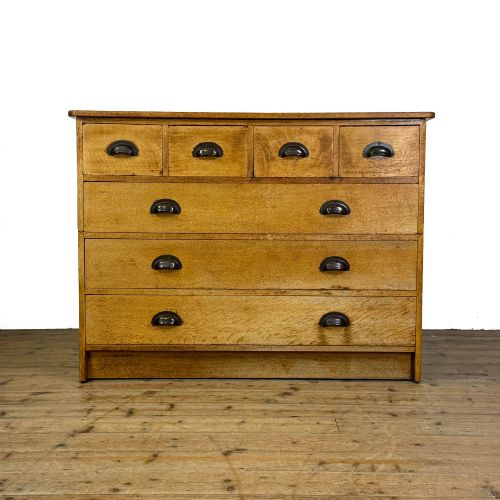
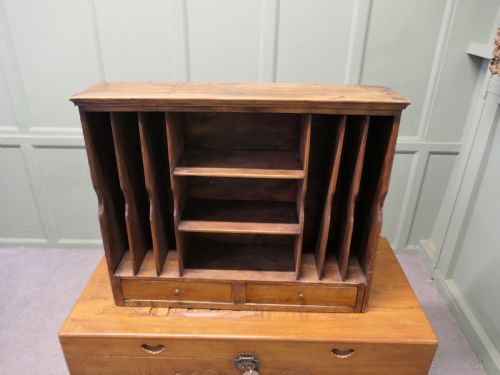
An antique office drawer unit comprises practical furniture designed for sorting paperwork, ledgers, and small items in a workspace. These pieces span the nineteenth century through the 1930s, encompassing Edwardian, Victorian, and industrial designs.
You will most frequently encounter oak filing cabinets and banks of drawers dating from around 1900 to 1920. These pieces often feature tambour fronts, multiple small drawers, and specialised filing mechanisms.
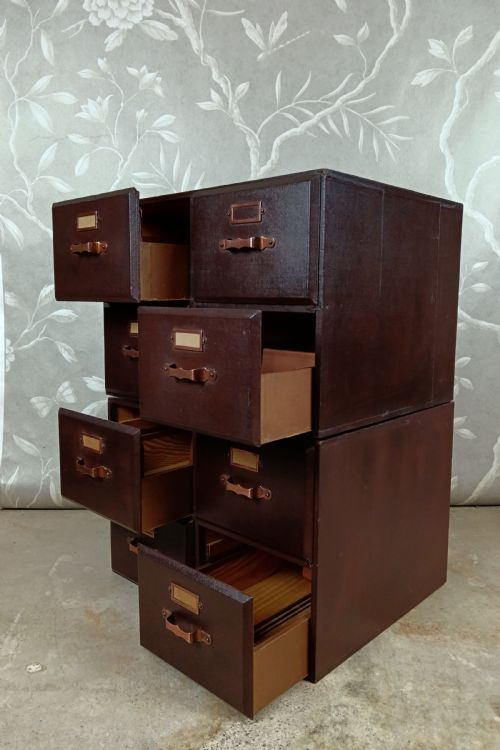
The selection includes specific forms such as desktop filing drawers, library card filing sets, and haberdashery cabinets. Origins range from British domestic and commercial workshops to French provincial settings.
How they were made
Cabinetmakers utilised solid hardwoods like oak, mahogany, and walnut alongside softer timbers such as pine and beech. Metal and steel components appear in industrial pieces, while painted wood finishes offer alternative appearances.
Construction techniques involve the integration of brass handles, original shell pulls, and integrated label holders. Specialised mechanisms include patented letter files, tambour slat doors, and leather-inset surfaces.
Antique Office Drawer Unit Retail Price Guide 2026
Typical asking prices for office drawer unit among the pieces listed under this phrase on Sellingantiques today, from the lower quarter to the upper quarter. They describe what is for sale here now, not the wider market.
Materials documented across the inventory include oak, mahogany, walnut, pine, beech, brass, steel, and painted wood.
What varies in quality
The distinction between tiers rests upon the choice of timber and the complexity of the internal mechanism. Dense oak and figured mahogany constructions indicate superior workshop output compared to simpler pine alternatives.
Hardware execution dictates the refinement of the piece. Original brass pulls, functioning patent filing systems, and intact tambour doors elevate a unit above standard utilitarian examples.
Amberg·Shannon
The Antique Office Drawer Unit Glossary
- Tambour
- A flexible door formed of narrow wooden slats running in a grooved track, commonly found on office cabinets to conceal interior shelving or filing slots. This mechanism allows access in confined spaces.
- Shell Pull
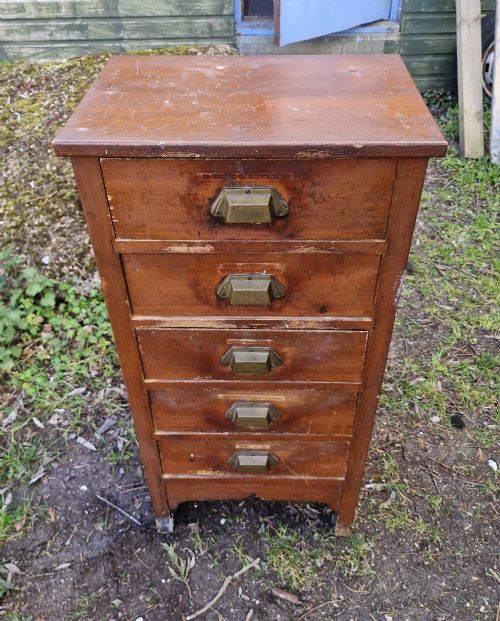
- A stamped or cast metal handle shaped like a scallop shell, frequently incorporating a slot for a paper label. These details identify working archives and filing furniture.
- Cartonnier
- A piece of furniture fitted with multiple compartments or drawers designed to hold cardboard storage boxes for documents. French examples often incorporate leather accents.
- Haberdashery Cabinet
- A multi-drawer unit originally built for retail display and stock organisation with shallow drawers. Collectors utilise them today for sorting small items.
Antique Office Drawer Unit: Frequently Asked Questions
How do I use an antique office drawer unit today?
These units suit modern studies for sorting correspondence, stationery, and crafting materials in shallow compartments. Their compact footprints allow placement on desks or as standalone floor units.
Larger banks of drawers provide deep storage for larger documents while retaining a period aesthetic. Their compartmentalised nature keeps modern workspaces tidy without sacrificing floor space.
What woods were used for office cabinets?
Cabinetmakers relied heavily on oak and mahogany for commercial and domestic office furniture due to their durability. Walnut and satin walnut also appear on refined pieces from the Edwardian era.
Softer timbers such as pine and beech are found on utility items and industrial pieces. Painted finishes were also applied to utilitarian workshop storage.
How do I identify an Edwardian filing cabinet?
Edwardian pieces typically feature quarter-sawn oak construction with visible medullary rays and polished brass hardware. They often utilise tambour fronts or banks of shallow drawers designed for paper storage.
Label holders and shell pulls are common indicators of this period's functional office design. The proportions remain compact to suit domestic studies of the early twentieth century.
What is a patent filing cabinet?
Patent cabinets incorporate specific internal mechanisms designed by inventors to improve document organisation and retrieval. Amberg's patent systems are notable examples found in early office furniture.
These units often feature specialised index dividers and locking mechanisms for secure record keeping. Collectors value these functioning mechanical elements for their ingenuity.