

Antique Occasional Table Shelf
An antique occasional table shelf combines surface space with integrated storage, offering a practical display piece for any room.
Antique Occasional Table Shelf
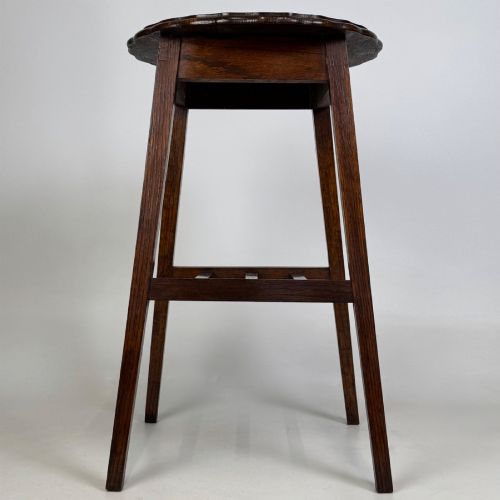
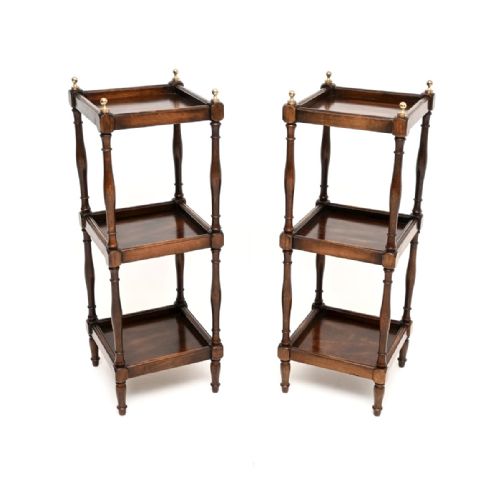
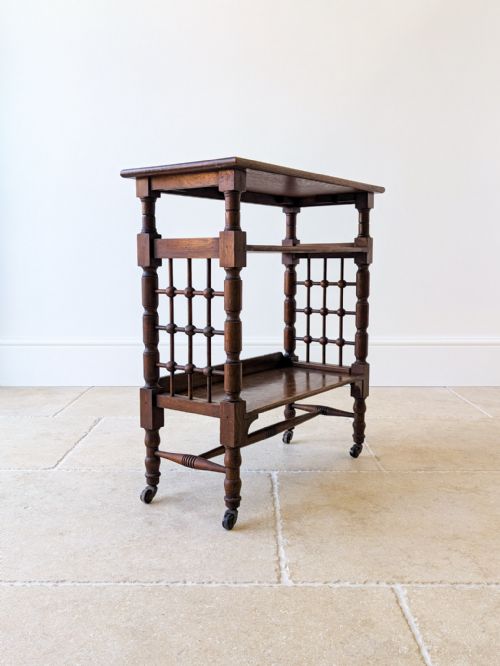
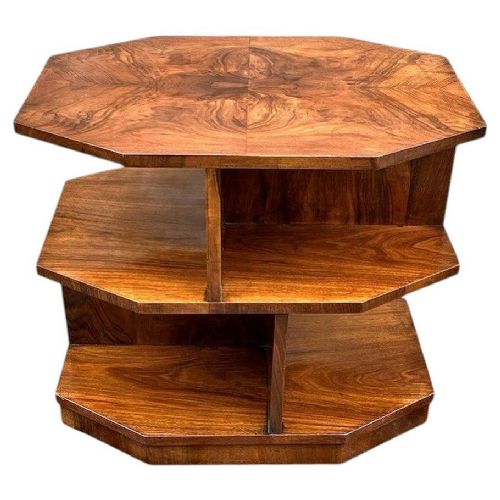
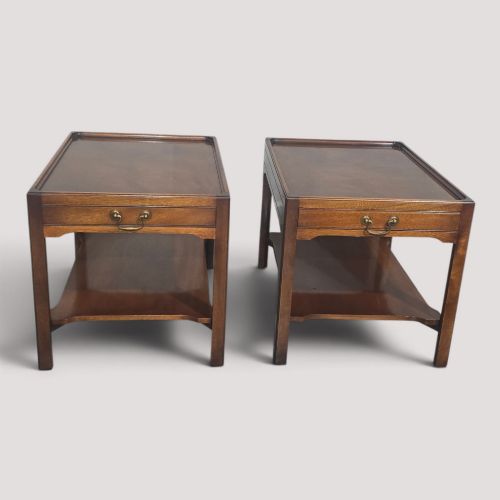
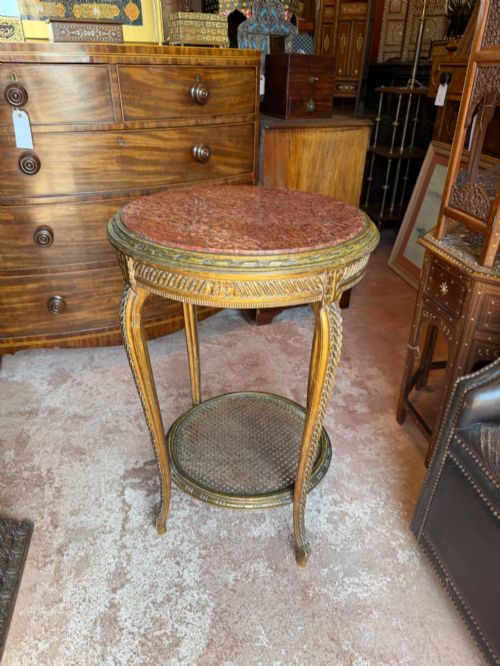
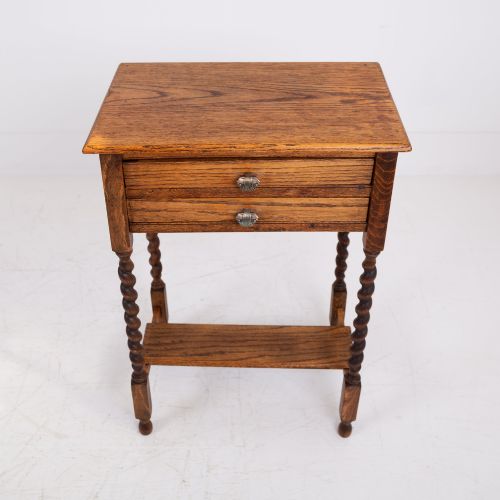
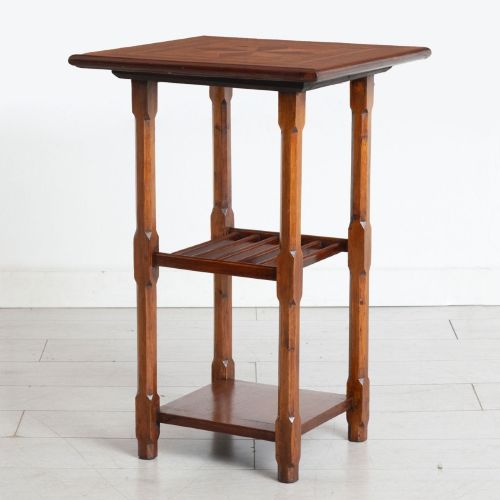
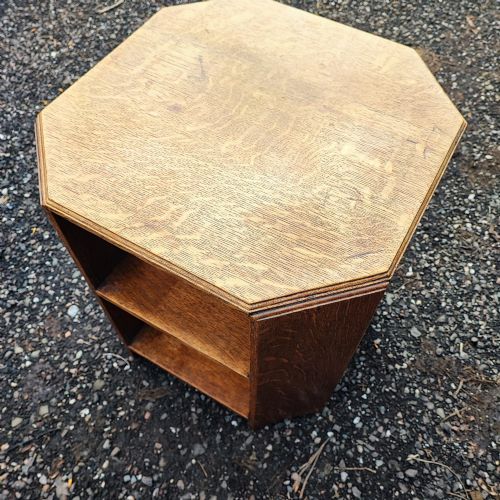
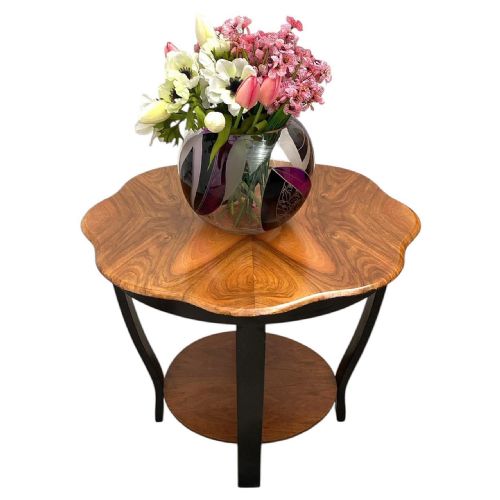
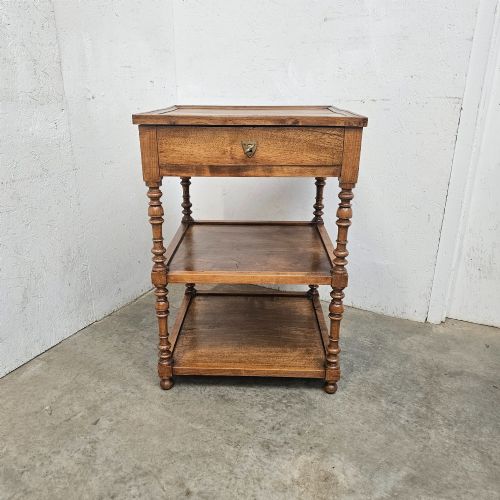
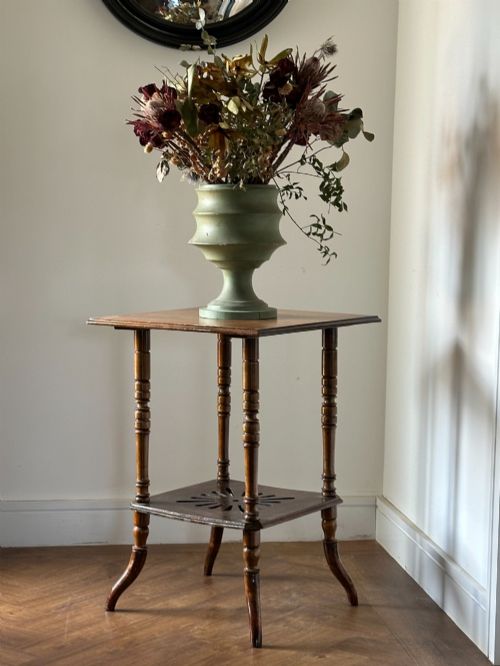
An antique occasional table shelf appears across multiple periods including the Victorian, Edwardian and early twentieth century. These pieces encompass forms such as etageres, whatnots, display shelves and side tables with lower tiers or bookshelf bases.
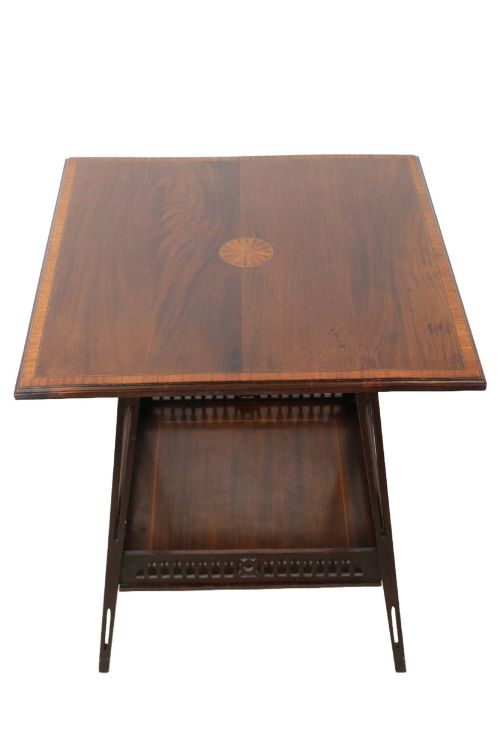
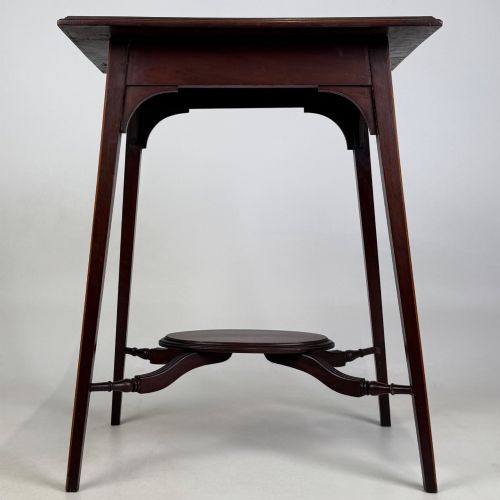
The Edwardian mahogany inlaid side table and the Arts and Crafts oak two-tier occasional table represent the most common variations on this page. They serve utilitarian purposes in living spaces while providing tiered surfaces for books and decorative objects.
Materials and Construction
Carpenters utilised traditional hardwoods such as mahogany, oak and walnut for the primary framework of these tables. Marquetry, parquetry and boxwood stringing frequently embellish the timber surfaces of Edwardian and French examples.
Auxiliary materials like brass, cane, bamboo, leather and ebonised wood appear in specific stylistic groups. Joinery techniques range from simple turned legs to intricate fretwork and multi-tiered etagere supports.
Listings span the nineteenth century through the 1930s, featuring Arts and Crafts, Edwardian, Victorian, and Art Deco styles in mahogany, oak, and walnut.
Craftsmanship and Design
The standard of timber selection and the precision of inlay determine the division between ordinary production and finer examples. Figured walnut, satinwood and finely executed marquetry reflect higher workshop execution.
Structural integrity depends on the rigidity of the lower shelf attachments and the stability of multi-tiered uprights. Pieces attributed to documented firms or specific design movements demonstrate superior handling of proportions and materials.
Trevor Page & Co·Maison Giroux·Liberty & Co
The Antique Occasional Table Shelf Glossary
- Etagere
- A piece of furniture consisting of a set of open shelves for displaying small objects. They typically feature multiple tiers supported by slender columns or uprights.
- Whatnot
- A multi-shelved open cabinet used for storing and exhibiting ornaments or books. This form dates back to the early nineteenth century and evolved into various occasional formats.
- Marquetry
- Decorative woodwork in which delicate pieces of various coloured woods are fitted into a veneer to form geometric or pictorial designs. It appears frequently on French and Edwardian table tops.
- Cricket table
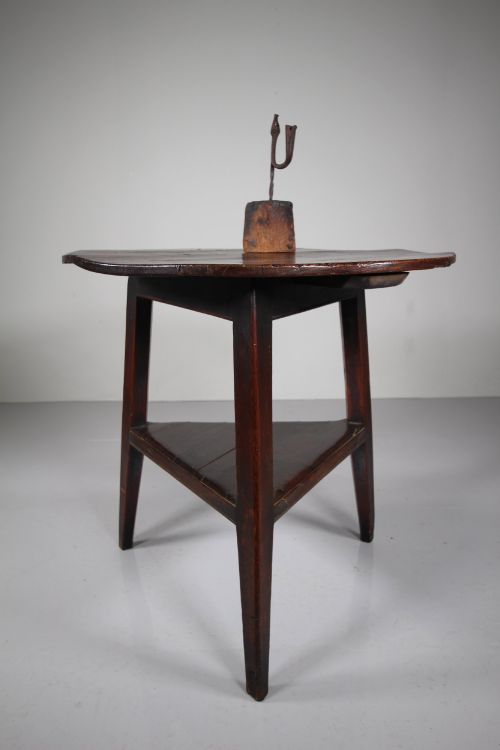
- A small, lightweight three-legged table with a round wooden top, traditionally used in English country houses. The simple design provides stability on uneven floors.
- Inlay
- A technique where contrasting materials are set into the surface of a base timber to create ornamentation. Boxwood and satinwood are common materials used for this linear decoration.
Antique Occasional Table Shelf: Frequently Asked Questions
What is an occasional table shelf?
An occasional table shelf is a small moveable table equipped with an integrated lower shelf or tier for storage. These surfaces hold books, magazines and small display items.
They function primarily in living rooms and parlours where extra surface area is required without occupying substantial floor space.
How do I date an occasional table?
Dating relies upon identifying stylistic markers, timber choices and construction methods specific to eras like the Victorian or Edwardian periods. Arts and Crafts pieces display plain oak and honest joinery, while Edwardian tables often feature mahogany and delicate inlay.
Secondary woods and hardware fastenings offer further clues for chronological placement.
Where should I place these tables?
These pieces suit placement beside seating furniture, in hallways or against walls where multi-tiered display helps organise small items. The lower shelf provides convenient storage for current reading material.
Their compact dimensions allow them to fit into corners and restricted spaces unsuited to larger furniture.
What woods were used for them?
Cabinet makers constructed these tables predominantly from mahogany, oak and walnut. Finer variations incorporated satinwood, rosewood and kingwood veneers.
Alternative materials like bamboo and ebonised wood also occur within specific stylistic contexts.