


Antique Oak Wall Hanger
These antique oak wall hanger selections bring practical British and continental utility to hallways with honest timber and period metalwork.
Antique Oak Wall Hanger
An antique oak wall hanger serves as a functional wall-mounted fixture for coats, hats, keys, and plates, drawing on forms from the sixteenth century through the art deco era. You will encounter domestic coat racks alongside architectural fragments, key boards, and taxidermy-mounted hall racks.
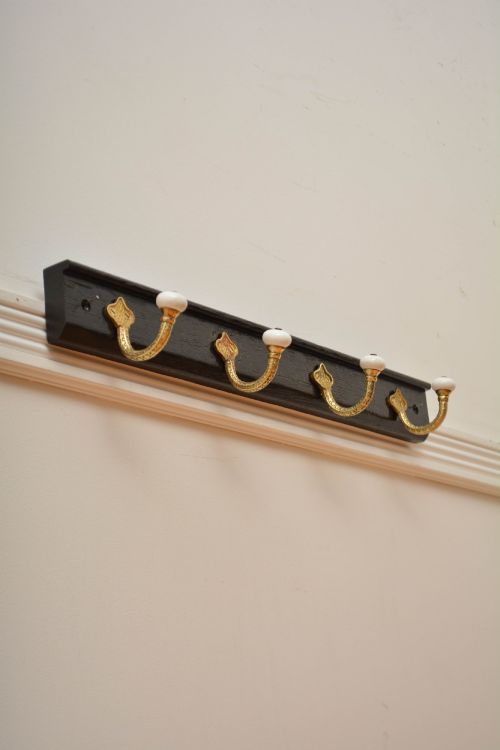
The material foundation across these pieces relies predominantly on solid oak, frequently paired with brass hooks or mounted on ebonised timber. Regional expressions range from traditional British domestic pieces to French hunting lodge and continental styles.
Makers adapted these wall fixings for hotel receptions, country houses, and everyday domestic spaces, leaving behind a diverse record of functional hallway furniture. Each variation reflects the specific domestic or institutional demands of its period.
Materials and construction
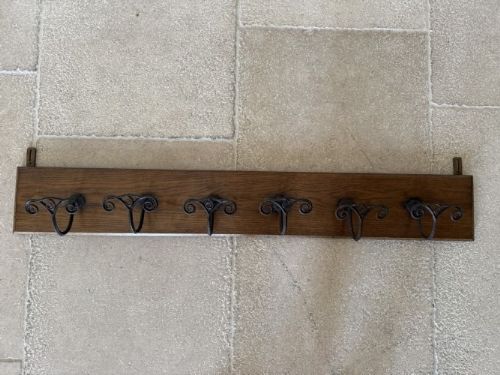
Carpenters built these wall fixtures using solid oak, sometimes ebonised for a darker finish, alongside golden oak boards and architectural carved fragments. Metalwork components, particularly brass and wrought iron, were integrated directly into the timber backplates to support weight.
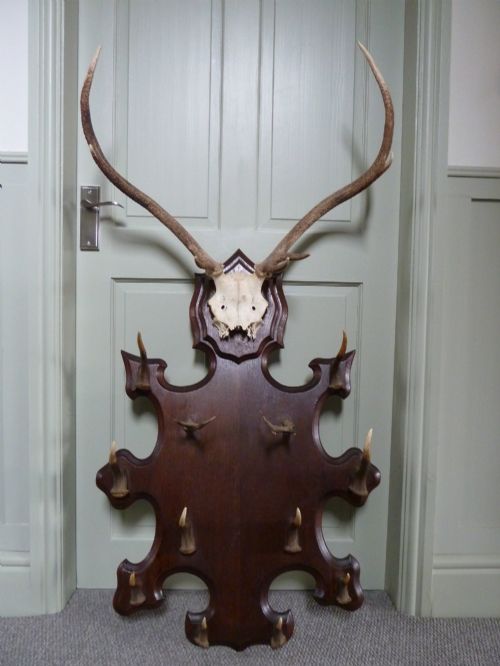
Natural materials appear frequently, including stag horn, bone, and taxidermy elements, which distinguish hunting lodge and country house pieces from standard domestic racks. Ceramic elements also supplement brass hooks on specific Victorian examples.
Joinery methods range from simple mounted backplates to carved architectural reliefs dating back to the sixteenth century, utilising basic wall-mounting brackets and secure peg constructions.
Stag horn hooks offer a rustic greeting that reminds visitors someone hunted dinner before hanging up their overcoat.
Markers of quality
Quality rests in the integrity of the oak timber and the substance of the accompanying metalwork, such as heavy cast brass or hand-forged wrought iron. Pieces featuring integrated natural materials like stag horn show greater sculptural ambition than standard utilitarian rails.
The refinement of the carving, especially on architectural fragments and continental hunting styles, dictates the aesthetic standing of the piece. Better examples display crisp detailing and robust original fixings that secure the structure to the wall.
The Antique Oak Wall Hanger Glossary
- Architectural fragment
- A surviving portion of a larger building or decorative structure, repurposed here as a wall-mounted panel. These pieces often feature early hand carving.
- Ebonised oak
- Timber treated to resemble ebony through a chemical staining or painting process. This dark finish was popular in the Victorian period for high-contrast decorative effect.
- Taxidermy hall rack
- A wall-mounted rack incorporating animal horns or mounts alongside coat hooks. These items originate primarily from nineteenth-century continental hunting lodge traditions.
- Hotel reception key board
- A specialised wall panel designed for holding room keys, often shaped as a shield or mounted on oak boards. These served institutional rather than domestic functions.
Antique Oak Wall Hanger: Frequently Asked Questions
How do I securely mount an antique oak wall hanger?
These pieces require sturdy wall fixings that match the weight of the solid oak backplate and anticipated load of coats or keys. Utilise appropriate wall plugs and screws aligned with the original mounting holes where possible.
Ensure the fixings anchor directly into solid wall studs or masonry to support the leverage exerted by extended hooks.
What is the difference between a coat rack and a hall stand?
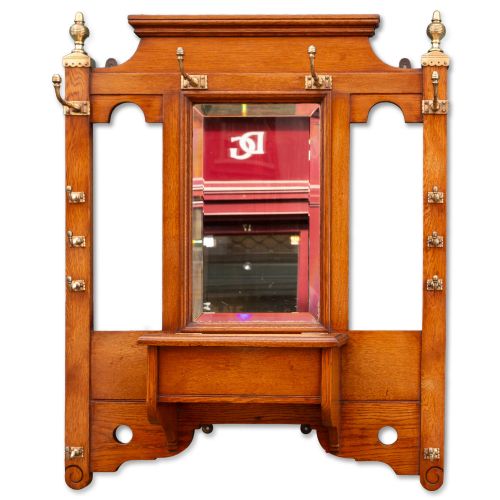
Wall-mounted coat racks consist primarily of a horizontal timber board fitted with hooks designed solely for hanging garments and hats. Hall stands and taxidermy racks often incorporate broader architectural elements, mirrors, or natural horn mounts.
Both serve hallway storage functions but vary significantly in visual prominence and decorative complexity.
How do I clean and maintain antique oak and brass?
Dust the oak timber regularly with a dry cloth and apply occasional high-quality beeswax to nourish the dry grain. Avoid modern liquid polishes that can build up a sticky residue on the wood.
Polish brass hooks sparingly with a soft cloth, taking care not to let abrasive cleaning agents stain the surrounding oak surface.
Are these wall hangers suitable for modern hallways?
The compact profile of wall-mounted racks makes them well-suited for contemporary entryways requiring practical hanging space without floor-standing furniture. Their robust timber construction handles daily domestic use reliably.
Different stylistic periods, from art deco wrought iron to traditional British oak, allow these pieces to integrate into various interior schemes.