






Flemish Carved Oak
Flemish carved oak encompasses substantial cupboards, tables, and figural panels that bring deep relief and rich grain into a room.
Flemish Carved Oak
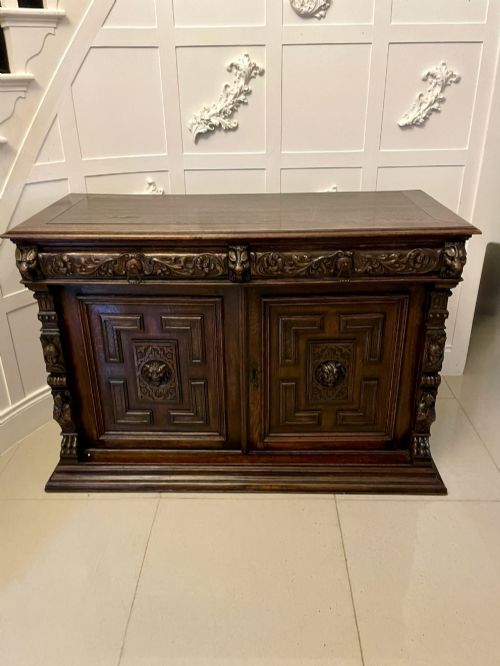
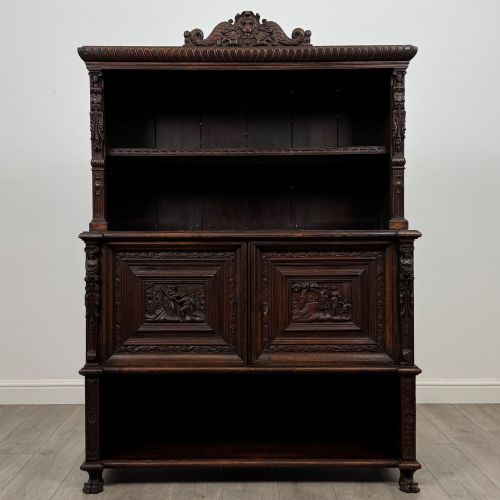
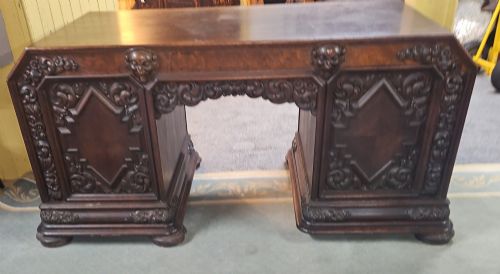
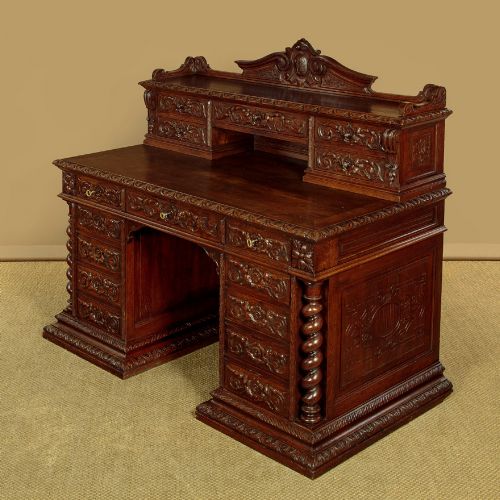
Buyers exploring flemish carved oak encounter robust furniture forms spanning utility and display, such as sideboards, cabinets, desks, and settle benches. Many surviving examples date from the nineteenth century, when revival movements emulated earlier seventeenth and sixteenth-century craftsmanship.
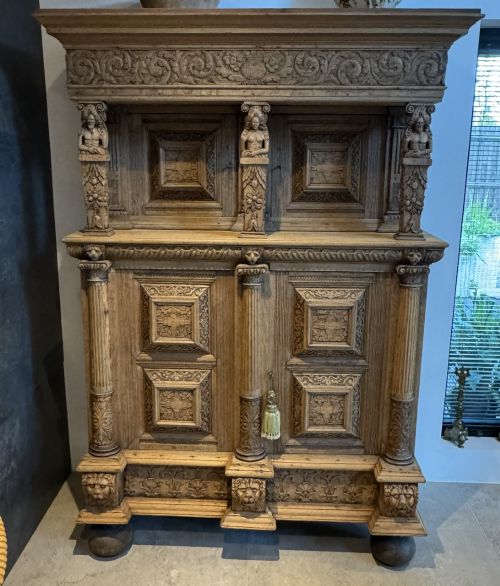
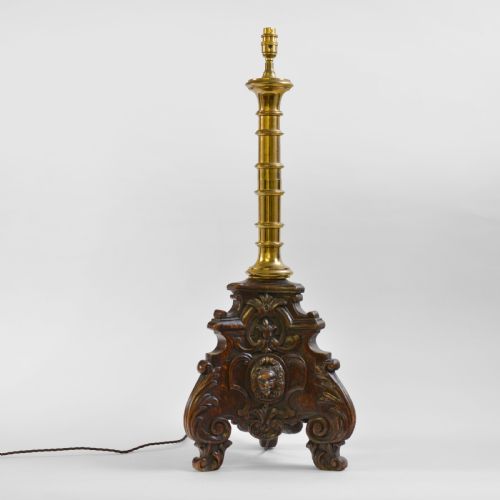
The selection frequently includes architectural hall stands, armoires, and wall panels adorned with figural motifs, masks, and mythological creatures. These items served prominent roles in domestic interiors, anchoring large dining halls and entrance spaces with dark, figured timber.
How they were made
Carpenters relied primarily on dense domestic oak, chosen for its structural strength and capacity to hold intricate, deep-relief carving without splintering. Iron hardware, brass fittings, glass panels, and occasional leather inserts supplemented the timber construction on larger cabinets and desks.
Woodworkers employed hand chisels and gouges to shape panels, caryatids, and lion masks directly into the solid wood grain. Construction techniques combined pegged mortise and tenon joints to bear the weight of heavy cornices and substantial cupboard doors.
Listings span multiple centuries, uniting sixteenth-century architectural fragments with nineteenth-century revival dining suites and cabinets.
What varies in quality
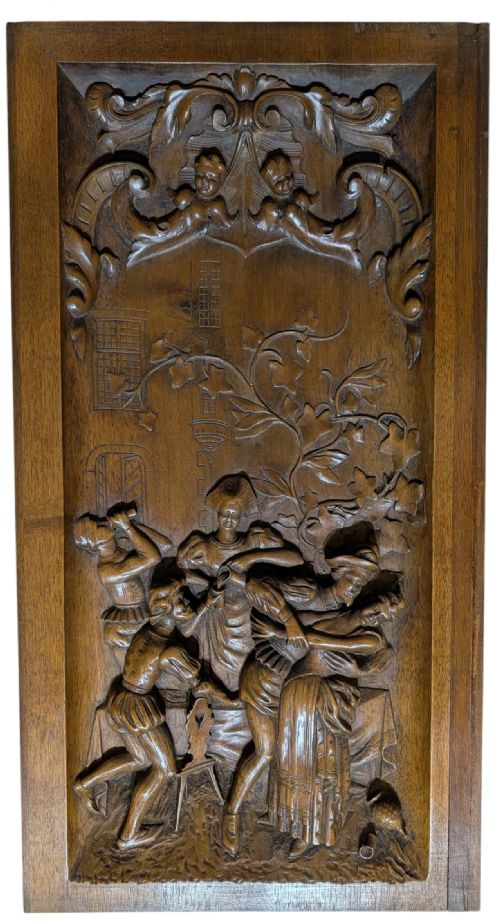
Depth and undercut precision in the carving dictate the artistic merit of individual items, distinguishing fluid figural reliefs from flat, mechanical mouldings. Master carvers achieved distinct facial expressions and dynamic movement in subjects like green men, caryatids, and hunting scenes.
Proportion and structural integrity also separate standard production from exceptional examples, particularly in large armoires and hall stands. Original patination on the timber surface reflects age and handling, preserving the natural warmth of the oak.
The Flemish Carved Oak Glossary
- Caryatid
- A sculpted female figure serving as an architectural support pillar. These figures appear frequently on seventeenth-century panels and nineteenth-century revival furniture.
- Green Man
- A decorative motif depicting a human face carved from or entwined with leaves and vines. It symbolises rebirth and recurs across gothic and baroque revival woodwork.
- Cushion frame
- A broad, convex wooden moulding surrounding a mirror plate or panel. This technique adds depth and visual weight to heavy frames.
- Barley twist
- A spiral-turned wooden column or leg resembling a twisted rope. This turning style is common on seventeenth-century tables and stands.
- Liege bowl
- A traditional deep metallic or wooden vessel associated with regional domestic use. Examples appear alongside carved dining furniture.
Flemish Carved Oak: Frequently Asked Questions
How do I identify a nineteenth-century revival piece?
Revival items often combine distinct historical styles, such as Flemish Baroque or Renaissance Revival, executed with heavy nineteenth-century machinery alongside hand finishing.
Inspect the interior construction, secondary timbers, and fastener types to differentiate nineteenth-century workshop methods from seventeenth-century originals.
Where were these pieces used originally?
Large oak cupboards, armoires, and sideboards anchored formal dining rooms, grand halls, and merchants' residences. Smaller panels and brackets adorned walls or functioned as architectural fragments within larger domestic schemes.
Tables and settles provided functional seating and surface space in communal living areas.
How should I care for antique oak furniture?
Maintain stable indoor humidity levels to prevent the dense oak timber from splitting or warping over time. Apply traditional beeswax sparingly to nourish the dry grain without attracting dust.
Avoid placing heavy furniture directly beside heat sources or under harsh, direct sunlight.
What motifs appear on carved panels?
Common decorative themes include biblical allegories, tavern scenes, hunting motifs with dogs and stags, and grotesque masks. Putti, cherubs, and floral arrangements also fill surrounding borders.
Figural carvings often depict specific mythological figures or allegorical representations like faith.