

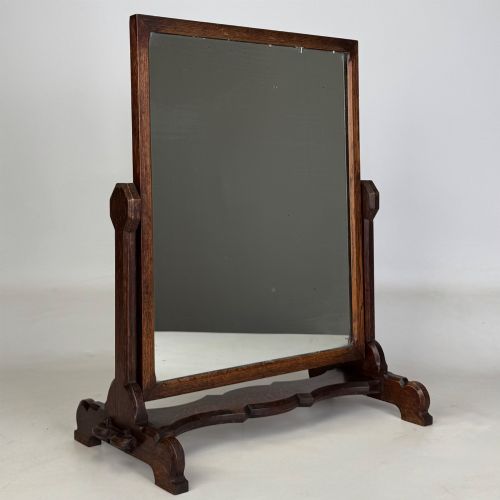
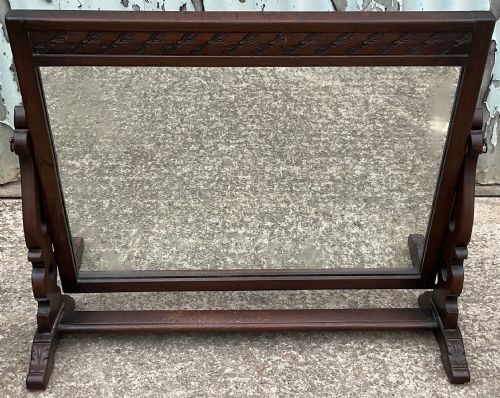


Antique Oak Toilet Table
An antique oak toilet table brings honest timber and compact utility to a bedroom, offering a surface for morning routines that carries centuries of craftsmanship.
Antique Oak Toilet Table
When you search for an antique oak toilet table, you enter a category of low furniture built for grooming, washing, and personal preparation. The selections here span from smaller dressing mirrors to larger vanity tables and commodes, showing how daily routines evolved across different eras.
You are most likely to meet pieces from the Victorian, Edwardian, and Arts and Crafts periods, alongside occasional Georgian and early twentieth-century examples. These items include adjustable swing mirrors, polished stands, and fitted tables designed to sit comfortably in a bedroom or dressing room.
The forms range from simple table mirrors mounted on oak supports to larger dressing tables associated with makers like Heals of London. Each object reflects the utilitarian needs of its period, executed in robust timber rather than lighter decorative woods.
How they were made
Construction relies heavily on solid oak, chosen for its durability and strong grain, often complemented by brass hinges, brackets, and adjustable fittings. Glass provides the reflective surface for swing mirrors, whilst bevel edges add a refined finish to the better examples.
Makers utilised traditional joinery alongside surface treatments such as wood inlay and carved details. The Arts and Crafts pieces show a distinct emphasis on honest construction and simpler lines, contrasting with the heavier carved motifs of Rococo Revival items.
Antique Oak Toilet Table Retail Price Guide 2026
Typical asking prices for oak toilet table among the pieces listed under this phrase on Sellingantiques today, from the lower quarter to the upper quarter. They describe what is for sale here now, not the wider market.
Some Victorian mirrors swing with such well-balanced grace that they need no locking screw to hold a reflection steady.
What varies in quality
The distinction between ordinary and superior pieces rests on the weight of the timber and the refinement of the joinery. Heavier solid oak construction and crisp, purposeful carving elevate a piece far above simpler mass-produced alternatives.
Attention to detail in the hardware, such as solid brass adjustments and well-bevelled mirror glass, marks out the work of better workshops. The integration of maker attribution, like early Heals pieces, adds a layer of design integrity that simpler vernacular items lack.
Heals of London·E A Taylor
The Antique Oak Toilet Table Glossary
- Swing mirror
- A looking glass hung on pivots between two upright posts, allowing the user to tilt the angle of reflection. This form is central to most toilet tables and dressing mirrors.
- Bevel edge
- A sloping border ground around the perimeter of the mirror glass to catch the light and add depth. It is a sign of finer glass production.
- Arts and Crafts
- A design movement valuing handcraft, vernacular traditions, and honest materials over machine-made ornamentation. Pieces in this style often feature clean oak lines and minimal fuss.
- Close stool
- An eighteenth-century box or cabinet enclosing a chamber pot, serving as an early form of indoor convenience. These often double as low wooden seats or small tables.
- Rococo Revival
- A nineteenth-century decorative style drawing on asymmetrical scrollwork, naturalistic motifs, and flowing curves. In toilet mirrors, it translates to exuberant carved frames.
Antique Oak Toilet Table: Frequently Asked Questions
How do I date an oak toilet table?
Dating relies on observing the prevailing style, construction methods, and hardware used in the piece. Arts and Crafts items show clean lines from around nineteen hundred, whilst Rococo Revival pieces display heavy carved scrolls typical of the late nineteenth century.
Examination of the mirror glass, backboards, and brass fittings also helps confirm whether a piece belongs to the eighteenth, nineteenth, or twentieth century.
Were these tables used for washing?
Many toilet tables and commodes accommodated basins, ewers, or chamber pots alongside grooming equipment before plumbed bathrooms became common.
Over time, the function shifted towards hair styling and applying cosmetics, leading to the lighter dressing table designs seen in the Edwardian era.
How do I care for antique oak furniture?
Protect antique oak by keeping it away from direct heat sources and strong sunlight, which can dry out the timber and crack the finish. Dust regularly with a dry cloth and apply occasional high-quality beeswax to nourish the wood.
Avoid using modern liquid polishes containing silicone, as they build up a residue that harms the traditional patina.