



Antique Oak Screw
An antique oak screw holds the immense tension of centuries, offering a tactile mechanical sculpture for the modern desk.
Antique Oak Screw
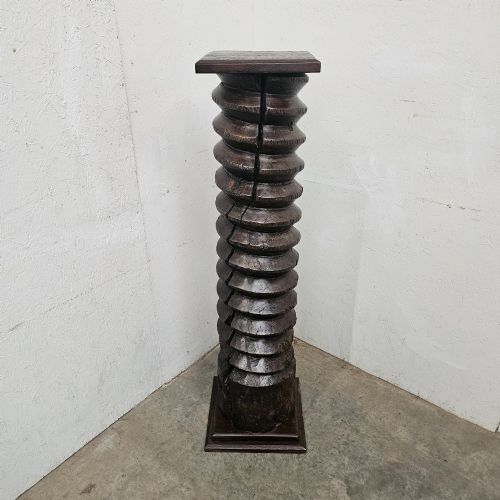
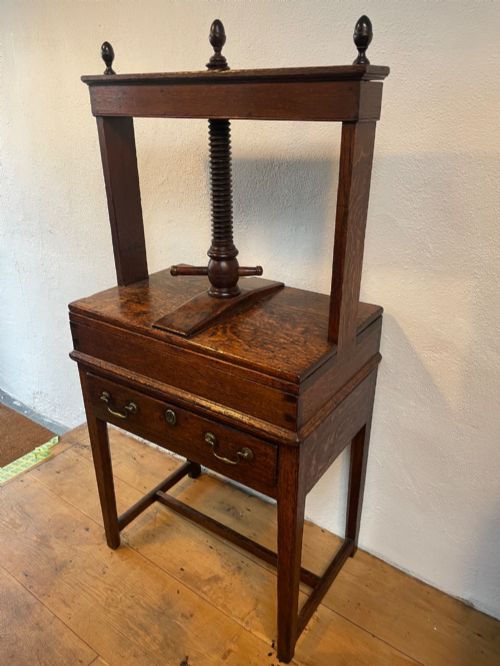
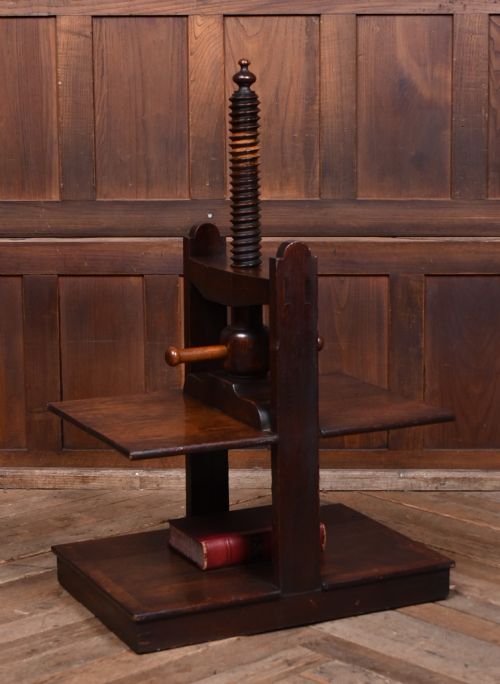
The antique oak screw appears in several distinct domestic and agricultural forms across this collection, most commonly as a functional book press or linen press. Buyers seeking an antique oak screw will encounter heavy table-top book presses, provincial press chests, and French wine or dairy cheese presses from the Georgian and Victorian eras. These robust implements combine sturdy timber framing with large wooden or metal threaded spindles designed to exert immense downward pressure.
Beyond domestic presses, the selection encompasses country swivel stools and even curious personal ornaments like gold screwback earrings shaped as oak leaves. The primary focus for most collectors remains the substantial tabletop book press or provincial linen press, where the sculptural quality of the threaded screw forms the visual centrepiece. Dating predominantly from the eighteenth and nineteenth centuries, these items reflect the utilitarian craftsmanship of rural workshops and country houses.
How they were made
Makers utilised dense timbers such as oak, elm, and ash to construct the heavy frames and platens required to withstand relentless mechanical pressure. The massive wooden screws and matching threaded box nuts demand precise hand-cutting techniques to ensure the thread runs smoothly without binding or stripping under load.
Secondary materials like iron and brass appear in reinforcing plates, handles, and mechanical screw mechanisms, contrasting with the warm patina of dark oak and timber. Joinery relies on traditional pegged mortise and tenon construction, ensuring the rigid stability necessary for heavy pressing tasks in dairies, laundries, and libraries.
Antique Oak Screw Retail Price Guide 2026
Typical asking prices for oak screw among the pieces listed under this phrase on Sellingantiques today, from the lower quarter to the upper quarter. They describe what is for sale here now, not the wider market.
What varies in quality
The distinction between ordinary utility items and superior pieces rests entirely on the crispness of the hand-cut thread and the integrity of the timber. A fine antique oak screw possesses deep, clean threads that turn true and true along the shaft, whereas lesser examples show excessive wear, cross-threading, or crude timber replacement.
Proportion and wood selection also dictate desirability, with pieces featuring rich grain figure and well-balanced frames commanding greater attention than plain, utilitarian workshop items. The integration of brass fittings or secondary woods like elm adds refinement to provincial country pieces.
The Antique Oak Screw Glossary
- Platen
- The heavy flat board or block in a press that distributes uniform downward pressure onto the material below. It travels up and down the central threaded screw as the handle turns.
- Linen Press
- A large piece of furniture designed for storing and pressing household linens to keep them flat and crease-free. Early examples incorporate a powerful internal screw mechanism.
- Book Press
- A heavy tabletop device utilised for flattening paper, binding books, or pressing botanical specimens. The wooden screw mechanism provides the mechanical advantage needed for precise compression.
- Cheese Press
- A specialised dairy implement used to expel whey from curd during cheese-making. These provincial pieces feature robust wooden frames and large screws adapted for wet environments.
- Box Nut
- The internal threaded block fixed within the frame through which the main screw travels. Its tight fit determines the operational smoothness of the entire mechanism.
Antique Oak Screw: Frequently Asked Questions
What is an antique oak screw press?
An antique oak screw press is a heavy mechanical device built from timber, utilising a large wooden threaded screw to apply vertical pressure. These sturdy implements were indispensable in domestic households, dairies, and binderies for flattening paper, pressing linen, or extracting liquids.
Today, collectors appreciate them as striking examples of early mechanical ingenuity and robust rural carpentry. They serve as functional desk accessories or sculptural statement pieces in traditional and contemporary interiors alike.
How do I date an oak screw press?
Dating these pieces relies heavily on examining the construction methods, nail types, and overall stylistic vernacular of the wooden frame. Georgian and nineteenth-century examples often display hand-cut joinery, pegged joints, and heavy patination acquired through decades of agricultural or domestic use.
The complexity of the screw mechanism and the turning style of the handles also provide chronological clues. Simpler, chunkier frames generally point towards earlier provincial workshops, while more refined Victorian models feature tighter tolerances and standardised iron components.
Can I still use an antique book press?
Most antique book presses remain fully operational and capable of applying significant pressure if the wooden threads are clean and well-maintained. Users should gently wax the wooden screw periodically to ensure smooth travel through the box nut without binding.
Caution is required not to over-tighten historic timber mechanisms, as excessive force can strip old wooden threads or split the surrounding frame. Regular gentle use helps keep the wood conditioned and prevents the screw from seizing.
How do I clean and maintain antique oak?
Maintaining antique oak involves dusting with a dry cloth and occasionally feeding the dry timber with a traditional beeswax polish. Avoid modern liquid cleaners or silicone sprays, which can penetrate open grain and ruin the historic patina accumulated over centuries.
The wooden screw benefits from a very light application of plain beeswax on the threads to ease friction. Keeping the timber away from direct heat sources and dramatic humidity swings prevents the oak from shrinking and cracking.