

Antique Oak Desk Top
An antique oak desk top brings the honest grain and substance of past centuries straight onto your workspace, offering a solid foundation for daily writing.
Antique Oak Desk Top
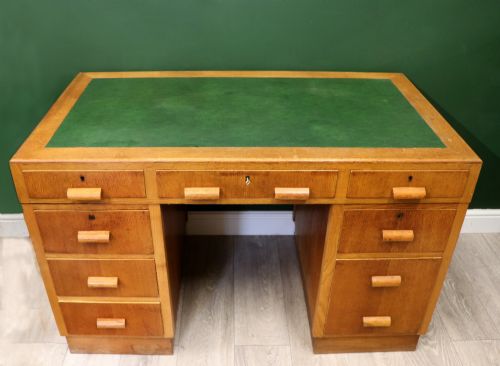
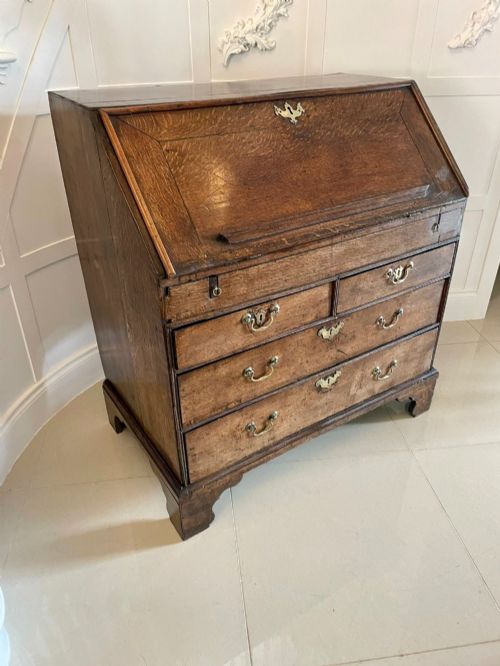
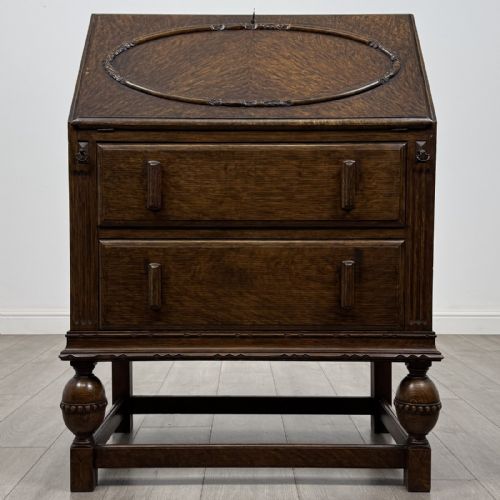
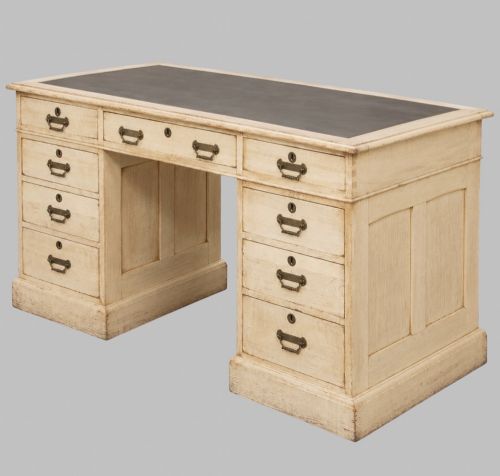
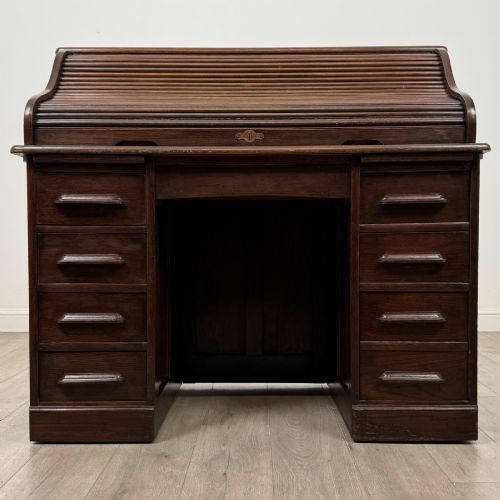
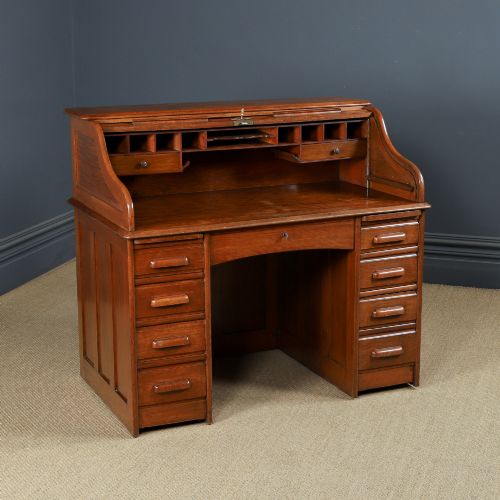
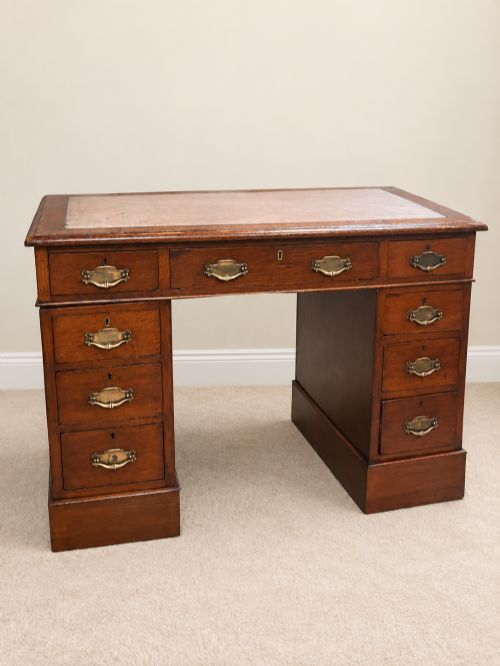
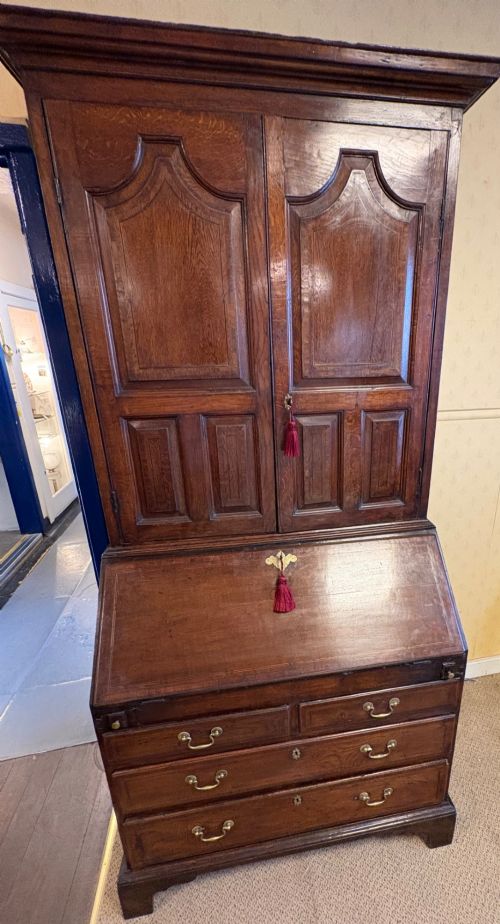
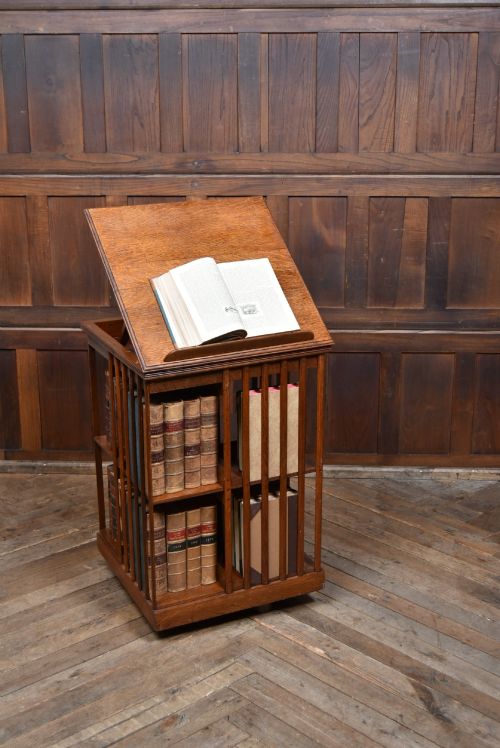
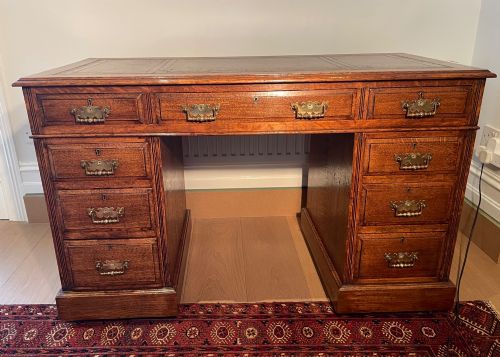
The pieces appearing on this page range from simple plank surfaces of early bible boxes to carved sections of Victorian partners desks and Edwardian roll-tops. Oak dominates the material record, frequently paired with fitted drawers, brass handles, and leather writing inserts.
Buyers selecting these items generally seek genuine timber character, patinated finishes, and historical utility rather than uniform modern laminate. Each survivor demonstrates how workspace surfaces evolved from plain plank tables to compartmented writing stations.
Materials and Construction
Makers constructed these working surfaces predominantly from solid oak, sometimes utilising burr oak or pollard oak for decorative grain patterns. Leather inserts appear frequently on writing surfaces, while brass and cast iron provide functional hardware for handles, hinges, and mechanisms.
Carpenters relied on traditional joinery methods, including dovetailing for drawer construction and mortise and tenon joints for structural stability. Surfaces were planed, polished with wax, or left with natural finishes that developed deep patinas through decades of daily use.
One persistent gamekeeper managed to clerk his estate records beneath an oak top that outlived both his dogs and his inkwells.
Judging Quality
Quality rests primarily on the depth of the timber grain, the integrity of the original construction, and the preservation of surface patina. Superior examples display carefully selected quarter-sawn oak figure and crisp, hand-cut joinery without modern structural alterations.
The presence of original brass fixtures, leather writing panels, and properly functioning interior compartments separates standard utility items from finer surviving pieces. Minimal intervention and honest signs of age indicate a higher grade of craftsmanship than heavily sanded or restructured surfaces.
The Antique Oak Desk Top Glossary
- Bureau
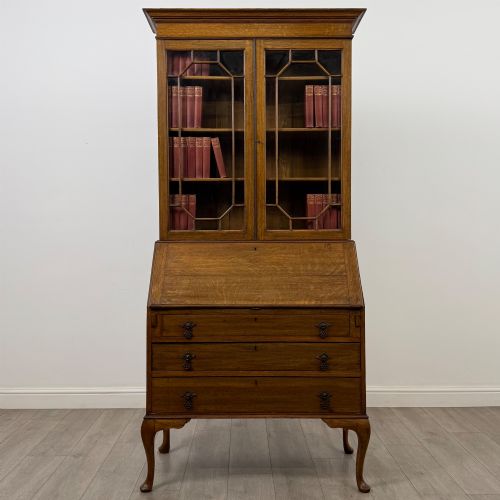
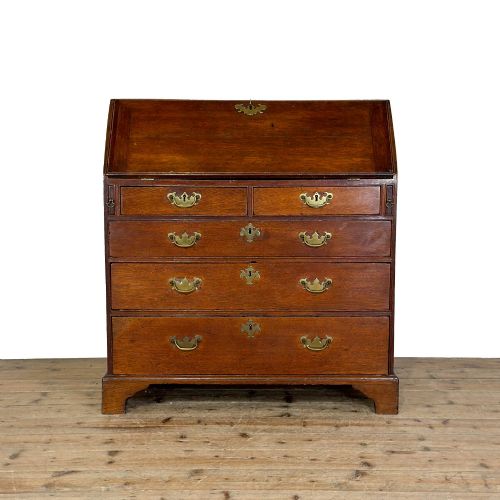
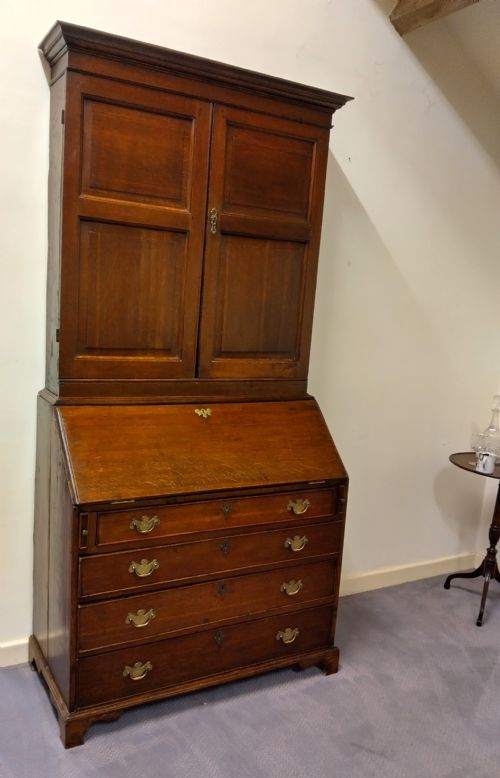
- A writing cabinet featuring a sloping flap that opens to reveal a fitted interior of small drawers and pigeonholes. This form provides a compact writing surface while concealing paperwork.
- Pedestal desk
- A large freestanding writing table supported by two banks of drawers or cupboards beneath the top surface. They offer substantial storage alongside a central writing area.
- Roll top desk
- A writing desk fitted with a flexible tambour shutter made of narrow slats of wood that slides vertically to cover the desk top. This mechanism secures the workspace while remaining operable.
- Partners desk
- A large double-sided pedestal desk designed for two people to work opposite one another. These pieces feature drawers and cupboards accessible from both sides.
- Bible box
- A small portable wooden box with a sloping lid, historically used for holding books or writing materials. They represent some of the earliest portable writing surfaces.
- Patina
- The lustrous surface sheen developed on wood and leather over years of handling, polishing, and exposure to light. Collectors value this visual evidence of age.
Antique Oak Desk Top: Frequently Asked Questions
How do I date an oak desk top?
Dating relies on examining the construction methods, such as hand-cut dovetails versus machine-made joints, alongside the style of handles and locks. Secondary woods used in drawer linings also offer clues to the period.
Changes in timber preparation and decorative motifs from Georgian to Edwardian eras help narrow down the decade of manufacture.
What is burr oak?
Burr oak refers to a growth deformity on the tree that produces intricate, swirling grain patterns highly prized by cabinet makers. It is sliced into veneers to adorn prominent surfaces.
This decorative wood appears on finer Victorian and Regency writing furniture.
How do I care for leather writing surfaces?
Historic leather inserts require gentle cleaning with a slightly damp cloth followed by specialised leather balms to prevent cracking. Avoid harsh chemical cleaners that strip the original dye.
Keeping the surface protected from direct sunlight preserves the colour and suppleness of the hide.
Were these tops separated from larger desks?
Some listings represent surviving upper sections or replacement surfaces from dismantled furniture, while others are complete standalone desk tops. Examining the underside reveals whether it fastened to a base or functioned independently.
Both formats offer practical writing surfaces with distinct historical context.