

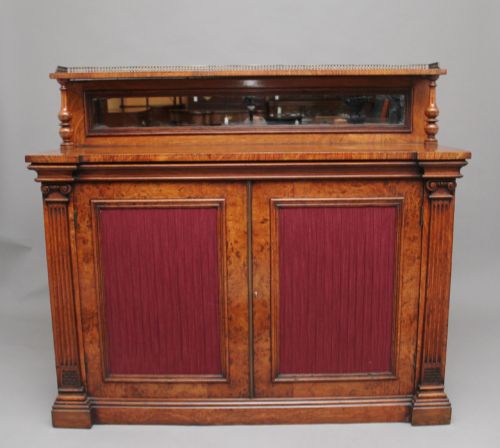


Antique Oak Credenza Mirror
An antique oak credenza mirror brings deep timber and reflecting glass together, offering functional storage and a grand focal point for a dining room.
Antique Oak Credenza Mirror
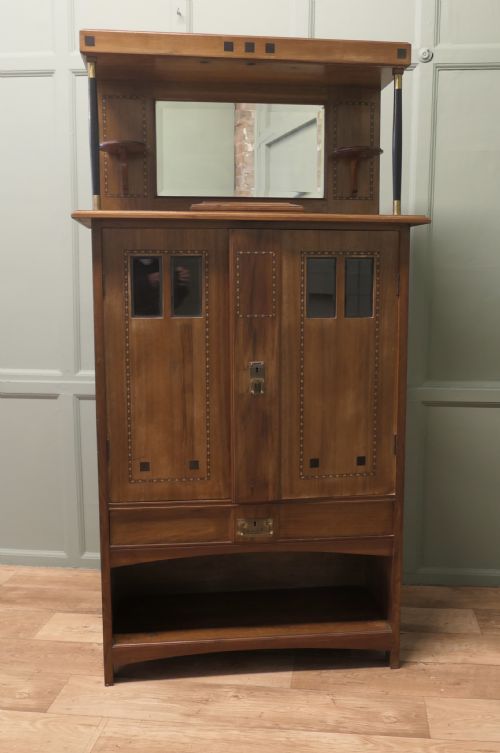
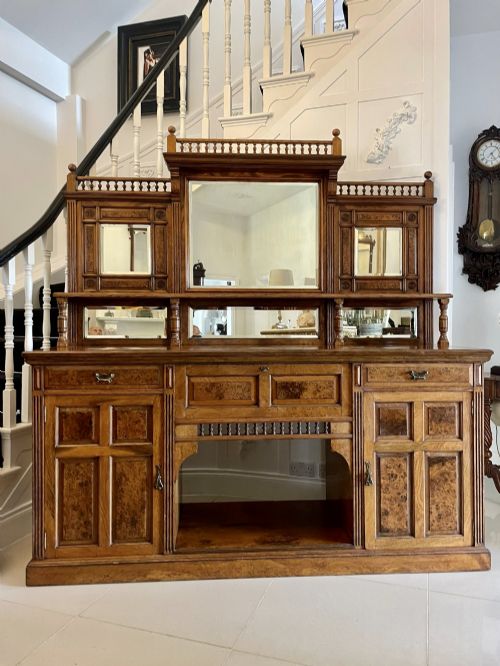
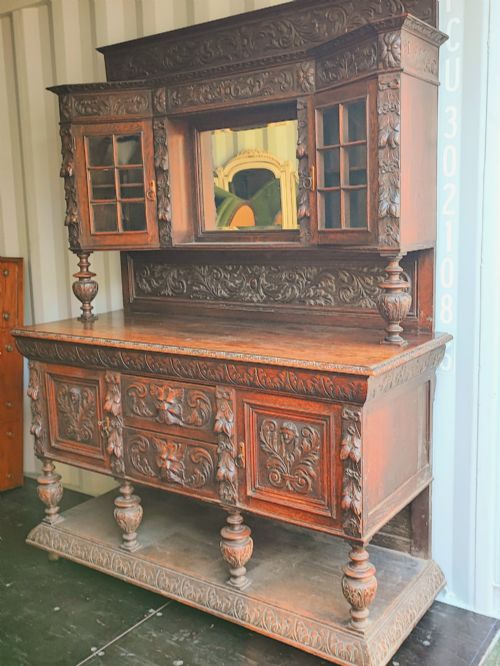
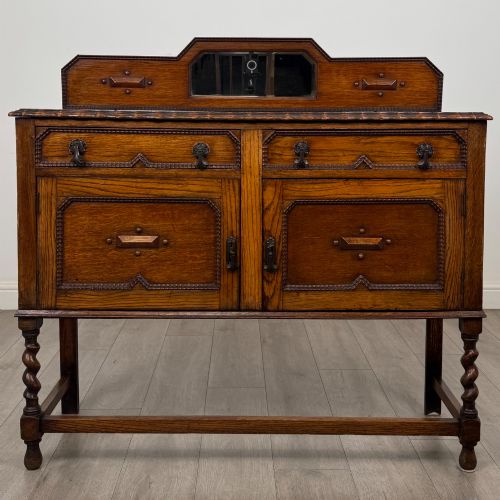
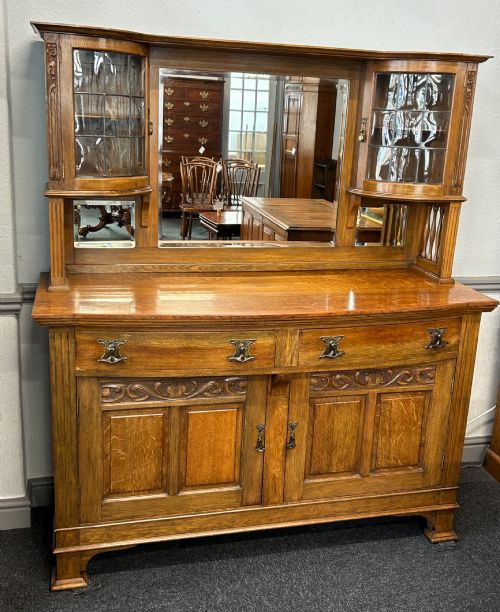
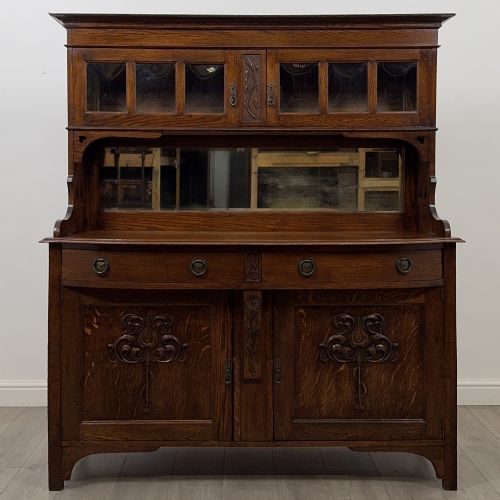
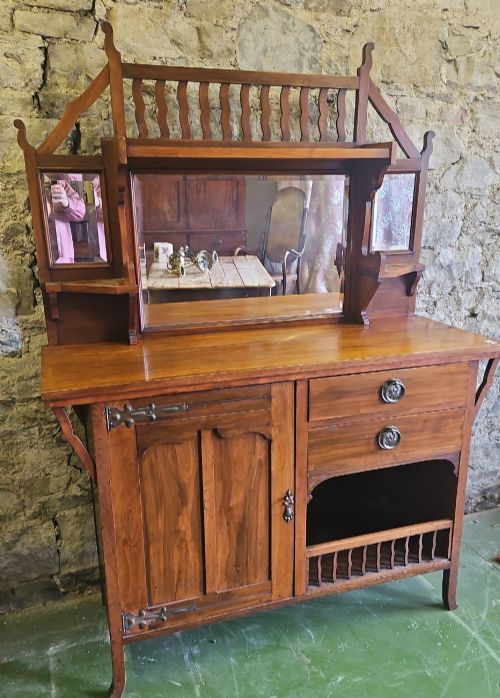
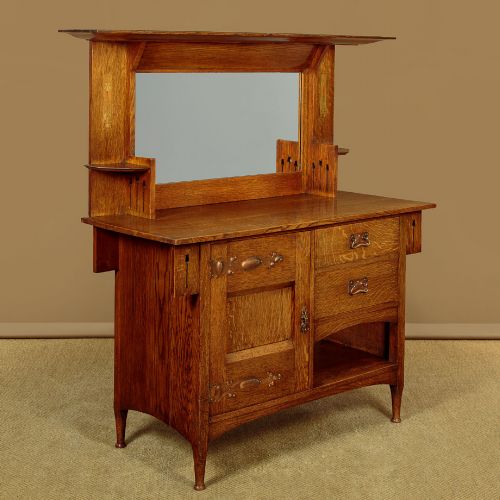
When buyers search for an antique oak credenza mirror, they typically encounter large case pieces from the Victorian and Edwardian eras. These domestic items combine a low cabinet or sideboard base with an integrated mirror back, often referred to as mirrorback sideboards or chiffoniers. The forms range from simple golden oak examples to ornate Gothic Revival and Arts and Crafts creations.
Most pieces date from the nineteenth century through the early twentieth century, incorporating diverse regional British craftsmanship alongside continental influences. The primary function involves surface display, enclosed storage behind panelled doors, and the light-reflecting qualities of a large mirror plate. Buyers find these items built to anchor principal reception rooms and dining spaces.
Materials and construction methods
Makers utilised solid oak and pollard oak veneers over secondary timbers like pine, often selecting figured grain for principal visual impact. Brass and copper hardware appear as strap hinges, drop handles, and decorative backplates, complementing the warm tones of the wood. Glass and mirror glass form the reflective surfaces inset into timber frames above the main sideboard body.
Joinery techniques rely on traditional mortise and tenon frames, hand-cut dovetails for drawer boxes, and applied mouldings for architectural depth. Carving is executed by hand directly into the solid timber or applied panels, depicting natural motifs, foliage, and figural elements such as the Green Man. Surface finishes involve traditional polishing methods that enhance the natural figure of the oak and pollard oak.
Listings feature oak, pollard oak, brass, and copper across Victorian, Edwardian, and Art Deco periods.
Assessing quality in construction and design
Quality reveals itself in the selection of timber, particularly the choice of highly figured pollard oak or carefully matched golden oak boards across the front elevation. Superior examples display crisp, deep hand-carving rather than shallow machine work, alongside heavy brass or copper mounts that integrate securely with the structure.
The integrity of the mirror glass and the weight of the supporting superstructure distinguish finer pieces from standard utility items. Structural proportions remain balanced even on grand scales, and internal drawer construction utilises solid secondary woods with precise dovetail joints.
Garnett and Sons·T Simpson and Son
The Antique Oak Credenza Mirror Glossary
- Pollard oak
- Timber taken from trees that have been pollarded, producing tightly clustered, swirling grain patterns highly valued for cabinet fronts. This decorative wood forms the primary visual draw on many high-status Victorian pieces.
- Mirrorback sideboard
- A large base cabinet surmounted by a wooden superstructure framing a mirror plate. These items dominated Victorian and Edwardian dining rooms to display silver and reflect candle or gas light.
- Arts and Crafts
- A design movement prioritising honest construction, simplified forms, and visible hand craftsmanship over industrial ornamentation. Pieces in this style often feature exposed joinery and subtle metal hardware.
- Gothic Revival
- An architectural and decorative style drawing inspiration from medieval forms, featuring pointed arches, heavy linenfold panels, and solemn carved details. This aesthetic frequently manifests in grand oak furniture.
- Barley twist
- A decorative turning technique producing a spiral rope motif along table legs, supports, or mirror frames. This turned detail adds vertical movement to substantial case pieces.
Antique Oak Credenza Mirror: Frequently Asked Questions
What is an antique oak credenza mirror?
An antique oak credenza mirror refers to large Victorian and Edwardian sideboard furniture featuring an integrated mirror back above a timber storage base.
These pieces combine display surfaces, cupboards, and drawers with tall mirror plates designed to brighten nineteenth-century dining rooms.
How do I date an antique oak sideboard?
Dating relies on identifying stylistic markers, construction methods, and timber choices recorded across different decorative periods.
Victorian pieces often display heavy carving and Gothic elements, while Edwardian and Arts and Crafts examples favour lighter oak tones and simplified lines.
How were these mirrors used historically?
Historically, these combination pieces served in dining rooms for storing silver, linen, and glassware while presenting decorative plates on the top surface.
The large mirror plate reflected ambient light and created an illusion of greater space in formal reception rooms.
What is pollard oak?
Pollard oak is a decorative timber harvested from trees that had their upper branches cut back, creating dense circular growth rings.
Cabinetmakers prized this wood for its mottled, highly figured appearance on drawer fronts and primary panels.
How do I care for antique oak furniture?
Caring for these pieces involves placing them away from direct heat sources and sudden humidity changes that affect timber and veneer.
Regular dusting with a dry cloth and occasional application of appropriate wax preserves the traditional polished finish.