


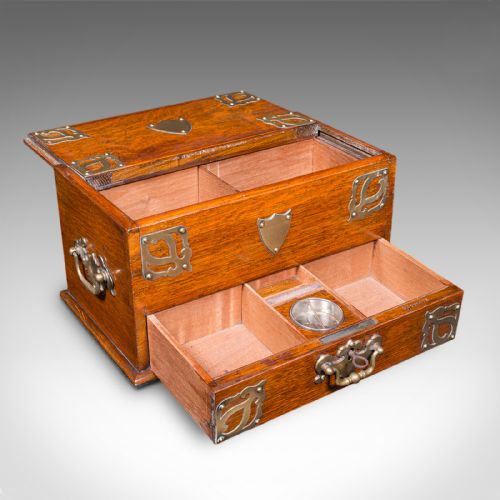


Antique Oak Caddy
An antique oak caddy is a sturdy timber storage vessel holding tea, letters or spirits, prized for its honest grain and lasting utility.
Antique Oak Caddy
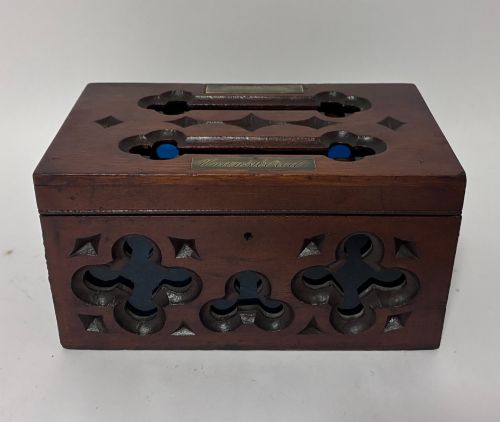
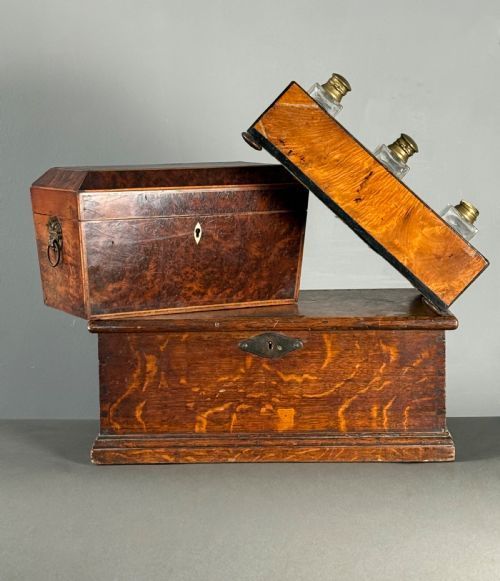
When searching for an antique oak caddy, buyers encounter domestic vessels spanning the Georgian, Victorian and Edwardian eras. These pieces range from small tea containers to larger stationery holders and drinks units.
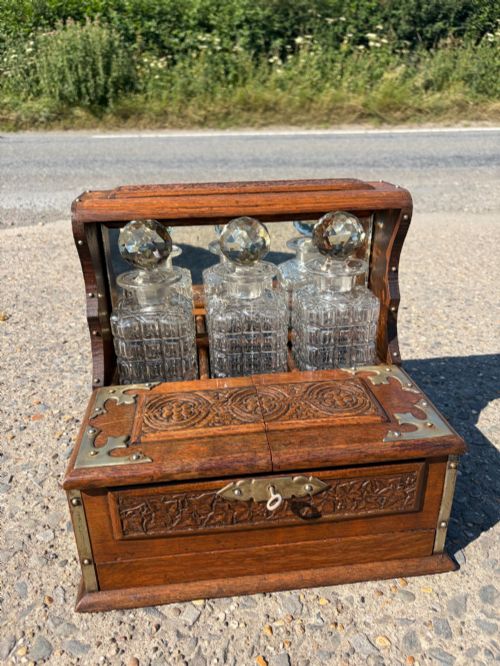
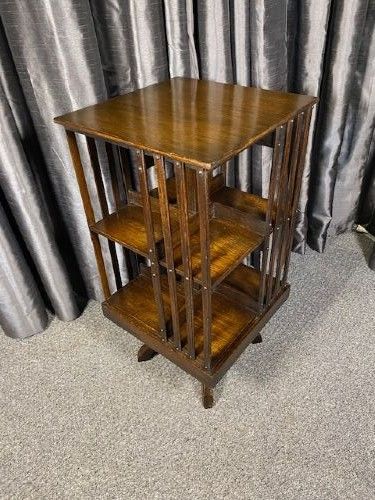
The selection frequently includes tea storage boxes, correspondence cases and silver-plated tantalus decanter sets. Examples appear alongside revolving bookcases, biscuit barrels and desk accessories within the broader category.
Origins stretch from English workshops to French and German makers, utilising regional timbers like pollard oak and Welsh timber. Each format reflects the specific storage needs of its period of manufacture.
Materials and construction methods
Makers constructed these vessels primarily from solid oak or pollard oak, utilising the prominent grain as the main decorative feature. Brass mounts, hinges and campaign handles provide structural reinforcement and contrast against the dark timber.
Many items incorporate silver-plated mounts, cut glass inserts and iron fastenings to secure contents. Interiors often feature fitted compartments, glass bottles or metal linings suited to tea leaves, tobacco or correspondence.
Materials recorded across the archive include solid oak, pollard oak, brass, cut glass, silver plate and iron.
Distinctions in craftsmanship
Quality rests upon the selection of the oak timber, particularly where figured grain or pollard sections are employed. Superior examples display precise joinery, well-fitted internal partitions and robust brass or silver-plated hardware that remains original to the piece.
Makers marked by known firms or silversmiths command higher regard through documented provenance and refined mounts. The integrity of the interior fittings and the smooth operation of locks and hinges separate standard utility pieces from finer presentation items.
Tahan of Paris·John Grinsell And Sons·Henry Bourne
The Antique Oak Caddy Glossary
- Tantalus
- A locked drinks cabinet holding decanters securely while displaying their contents through an oak and metal frame.
- Pollard oak
- Timber taken from trees that were pollarded, producing a dense, highly figured grain pattern prized for decorative boxes.
- Teapoy
- A small stand or large box mounted on a pillar or legs, designed specifically for holding multiple varieties of tea.
- Trug
- A shallow basket or container traditionally utilised for gathering garden produce or local items.
- Correspondence box
- A desk accessory fitted for storing stationery, envelopes and postcards in an organised upright manner.
Antique Oak Caddy: Frequently Asked Questions
What was an antique oak caddy originally used for?
These vessels served to store precious dry goods like tea leaves, keeping them secure and dry in domestic settings. Later variations adapted the format to hold correspondence, postcards or bottled spirits.
Over time, the terminology expanded to describe various tabletop storage boxes featuring timber bodies and metal mounts. Each design responded to the changing organizational demands of the household.
How do I date an antique oak caddy?
Dating relies on combining the construction style, the type of hardware and the prevailing aesthetic movement of the period. Georgian examples often show simpler hand-cut joinery, while Victorian and Edwardian pieces frequently incorporate elaborate brass mounts or silver plate.
Maker marks, registration diamonds and patent stamps also provide precise manufacturing dates. Comparing the timber preparation and internal lining materials helps confirm the era of origin.
Where should I place an oak caddy at home?
These compact boxes suit placement on sideboards, desks, coffee tables or bookshelves where their timber grain adds warmth. Their enclosed storage makes them practical for holding small everyday items out of sight.
Keeping them away from direct sunlight and strong heat sources protects the oak timber and prevents the brass or silver-plated mounts from tarnishing rapidly.
How do I care for antique oak timber?
Maintenance requires occasional dusting with a soft, dry cloth to prevent dirt accumulation within the grain and carved details. Avoid applying modern silicone sprays or heavy waxes that can build up and dull the original finish.
Stable room humidity prevents the solid oak panels and internal partitions from expanding or cracking over time. Gentle handling of hinges, locks and drop handles preserves the functional integrity of the box.