




Antique Oak and Elm Table
An antique oak and elm table brings honest country craftsmanship and rich timber grain into a room, offering both daily utility and enduring character.
Antique Oak and Elm Table
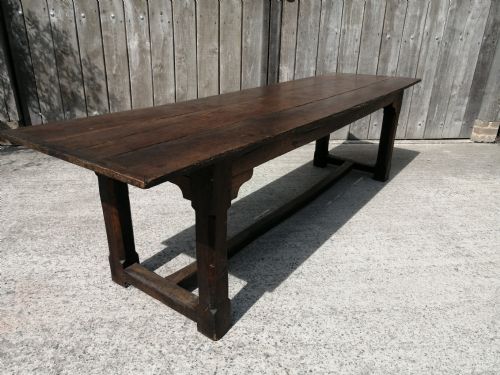
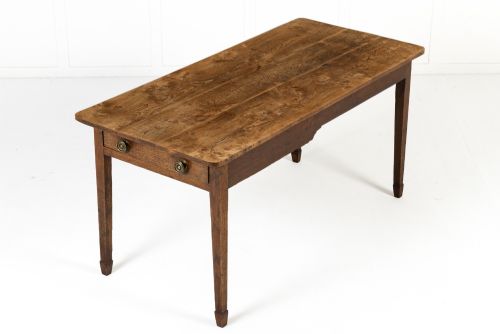
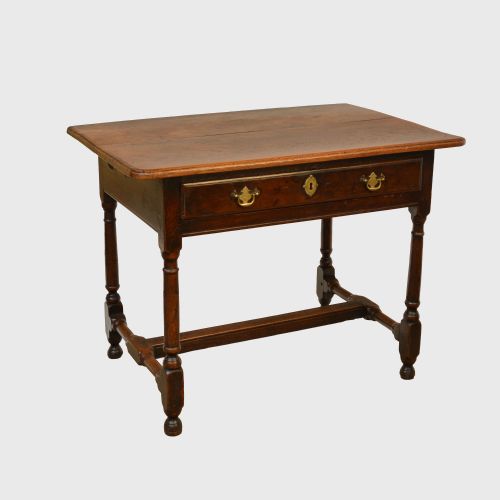
The search for an antique oak and elm table leads directly to robust country furniture shaped by centuries of domestic use. These pieces range from Georgian refectory tables and tavern boards to compact tripod occasional tables and side pieces.
Most examples encountered here date from the seventeenth, eighteenth, and nineteenth centuries, reflecting the practical traditions of English country workshops. Oak provides the structural framing, whilst elm supplies durable boards with distinctive figuration.
Makers utilised timber combinations purposefully, employing tough elm for table tops and resilient oak for legs and stretchers. Such domestic forms served central roles in farmhouses, taverns, and cottages before entering the modern home.
How they were made
Joiners constructed these tables using solid native hardwoods, pairing sturdy oak framing with thick elm panels. Single plank elm tops appear on significant refectory forms, showing the broad girth of trees felled in earlier centuries.
Makers relied on traditional joinery methods such as mortise and tenon joints secured with wooden pins. Secondary timbers like sycamore, beech, and yew occasionally support structural elements in country pieces.
Antique Oak and Elm Table Retail Price Guide 2026
Typical asking prices for oak and elm table among the pieces listed under this phrase on Sellingantiques today, from the lower quarter to the upper quarter. They describe what is for sale here now, not the wider market.
What varies in quality
Quality rests in the proportion of the frame and the depth of the timber surface. Tables retaining original tops and uncompromised structural stretchers demonstrate greater integrity than heavily altered examples.
The graduation between simple vernacular work and refined Georgian production shows in the shaping of legs and the tightness of joints. Natural wear and unpolished surfaces distinguish superior pieces from later restorations.
Heals Of London
The Antique Oak and Elm Table Glossary
- Refectory table
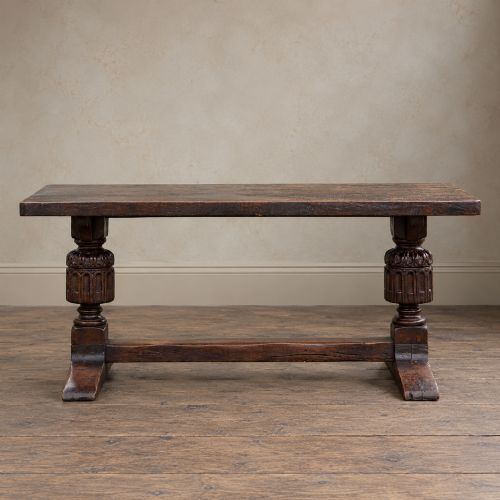
- A long dining table traditionally used in communal halls and later adapted for country houses. These forms feature substantial oak stretchers supporting thick timber tops.
- Cricket table
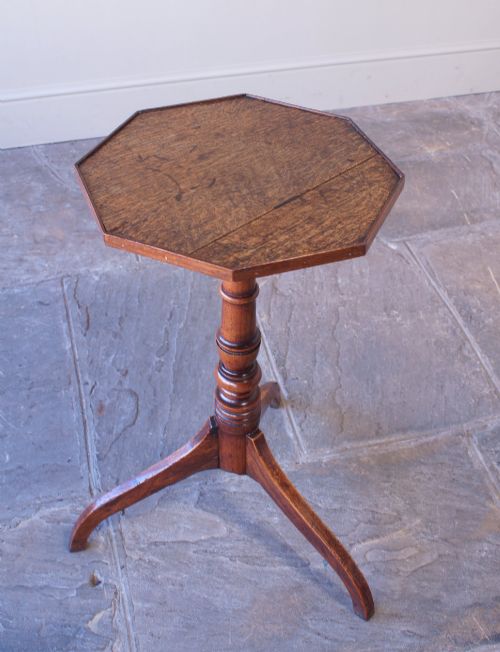
- A small three-legged occasional table designed to stand steady on uneven flagstone floors. The three-legged construction prevents rocking.
- Joint stool
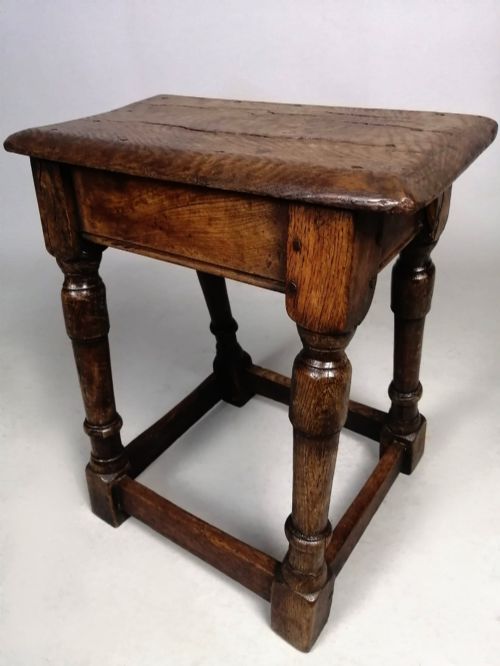
- A low wooden stool built with pegged mortise and tenon joints rather than turned construction. These items served as seating or small surface tables.
- Dresser base
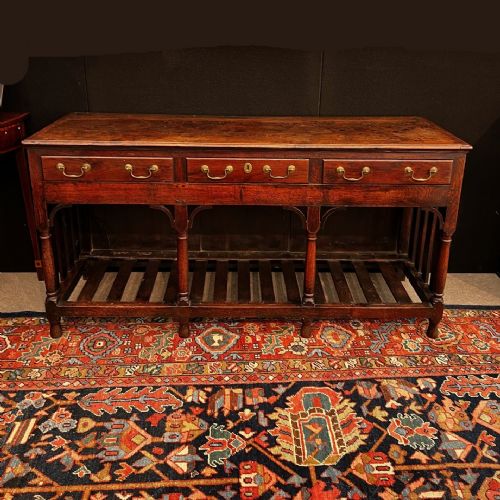
- A low cabinetry piece fitted with drawers and open lower boards for kitchen storage. They provide broad rectangular surfaces akin to serving tables.
Antique Oak and Elm Table: Frequently Asked Questions
How do I identify an elm top?
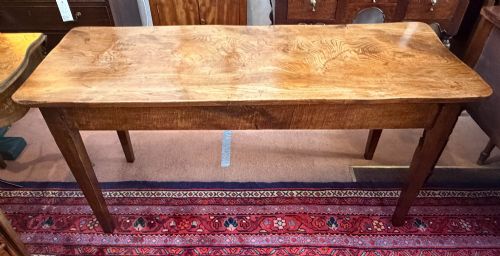
Elm timber displays a wild, interlocking grain pattern with distinct swirling figures that differ from straight oak lines. This makes the wood resilient against splitting when used for large table surfaces.
Run your hand across the board to feel the subtle undulations in the grain. Over centuries, elm develops a rich warmth that polished oak complements perfectly.
Can I use a refectory table daily?
These tables were built for rigorous daily tasks in farmhouses and taverns, making them well suited for modern dining. Solid hardwood construction provides the strength required for everyday use.
Protect the historic timber surface with placemats rather than heavy synthetic coverings. Allowing the wood to breathe preserves its natural patina.
What is a cricket table used for?
A cricket table served as a versatile moveable surface for eating, writing, or holding small household items beside a hearth. Its three legs ensured stability on irregular floors.
Today, these compact tables fit neatly beside armchairs or in hallways as lamp stands. Their clever geometric design makes them exceptionally easy to place in smaller rooms.
How do I date an oak and elm table?
Dating relies on examining construction marks, tool signatures, and the wear patterns on the feet and stretchers. Hand-cut peg joints and boarded top construction indicate earlier periods.
Look for the shrinkage and colour shifts that occur in unheated historic workshops. These natural signs of age separate eighteenth-century work from later reproductions.