


Antique Oak Accessory
An antique oak accessory brings functional domestic and desk utility from the eighteenth, nineteenth, and early twentieth centuries into a modern interior.
Antique Oak Accessory
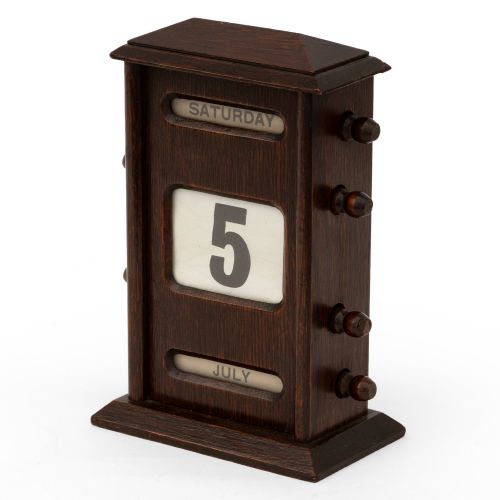
An antique oak accessory encompasses a diverse group of practical items built primarily for the desk and the fireside during the Georgian, Victorian, and Edwardian eras. Buyers searching this phrase encounter practical objects ranging from perpetual desk calendars, inkstands, and stationery boxes to coal buckets, fire bellows, and foot warmers.
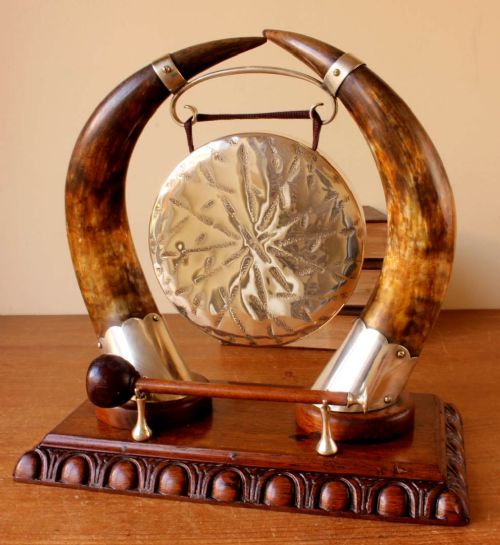
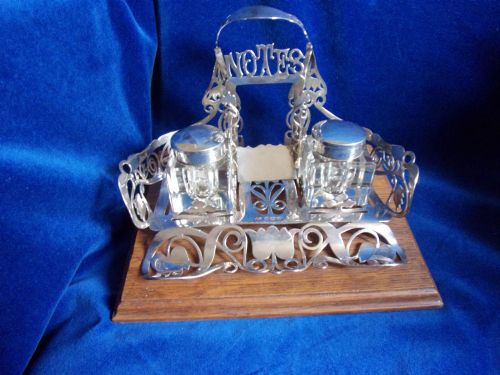
Desk accessories dominate the selection, frequently combining solid oak timber with brass mounts, glass inserts, or silver-plated details. Fireside equipment forms the other major category, utilising heavy oak staves and copper bands for daily domestic service.
Materials and Technique
Makers utilised dense native oak as the primary structural timber, frequently pairing it with cast brass handles, hinges, and barrels to withstand daily handling. Copper banding, silver-plated mountings, and hand-cut glass liners added structural reinforcement and decorative contrast to functional pieces.
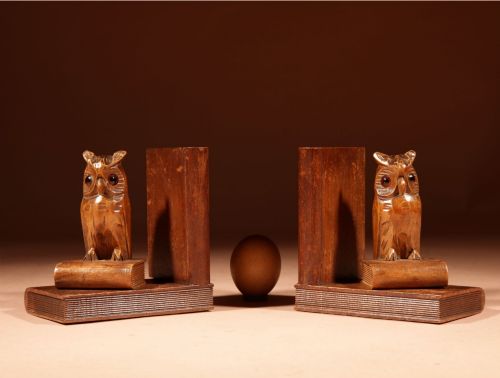
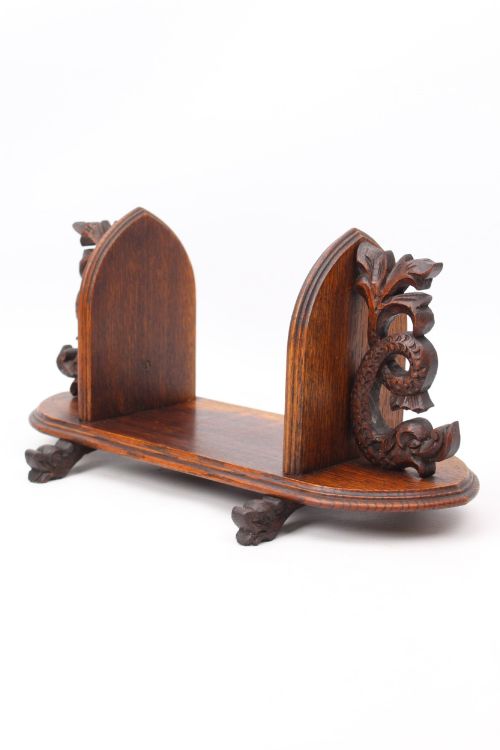
Joinery methods include traditional dovetailing for boxes, cooperage for buckets, and chip carving or relief work for decorative bookends and foot stoves. Leather linings, horn mounts, and hand-fretted silver elements appear on higher-status desk stands.
Antique Oak Accessory Retail Price Guide 2026
Typical asking prices for oak accessory among the pieces listed under this phrase on Sellingantiques today, from the lower quarter to the upper quarter. They describe what is for sale here now, not the wider market.
Listings feature items spanning the Georgian, Victorian, and Edwardian periods, constructed from oak combined with brass, copper, glass, and silver.
Craftsmanship and Proportion
Quality rests in the crispness of the hand-carved detail, the integrity of the original metal mounts, and the preservation of fitted interiors. Pieces displaying robust copper banding or precise mechanical actions for calendars and book slides sit at the upper end of the range.
Utility items executed with vernacular chip carving or Folk Art flourishes show individual artisan character, whereas factory-produced desk tidies rely on standard turned brass feet and fitted glass inkwells.
Liberty & Co·James Purdey & Sons·Thornton Smith Co
The Antique Oak Accessory Glossary
- Standish
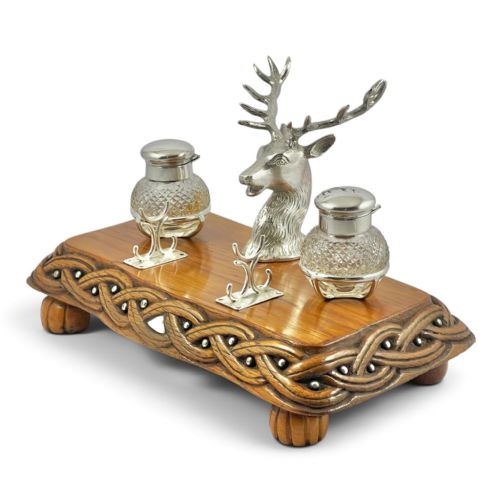
- A heavy desk tray or stand fitted with inkwells, pen holders, and sanders for writing materials. These portable writing centres sat on library tables throughout the Georgian and Victorian periods.
- Tantalus
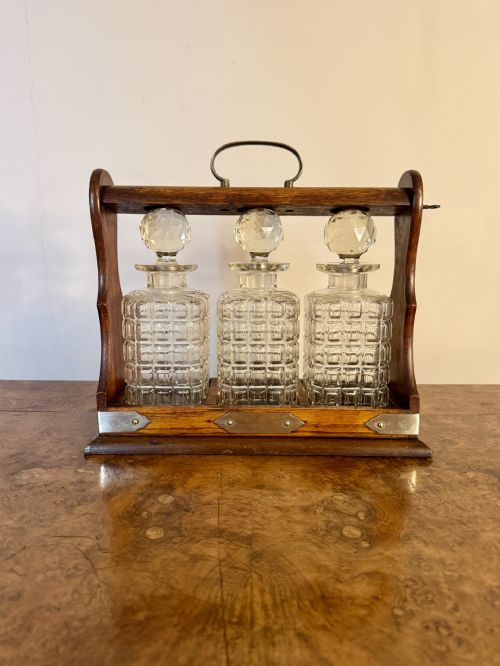
- A locking wooden frame holding decanters that prevents guests or servants from accessing the contents without a key. Oak versions typically secure glass bottles behind a metal locking bar.
- Treen
- Small domestic wooden artefacts created by turning or carving. This category includes nineteenth-century coasters, bookends, and small desk accessories.
- Coopered
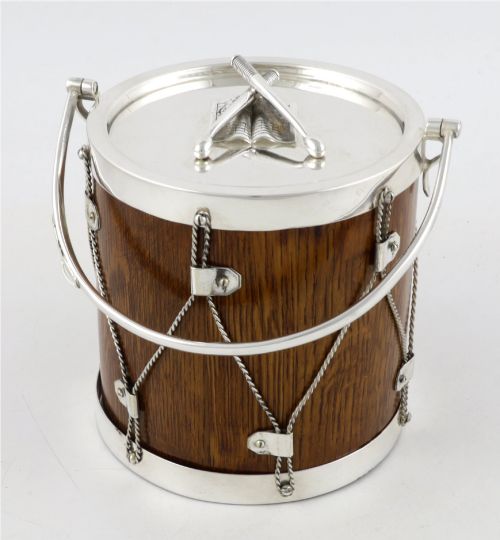
- Constructed from vertical wooden staves bound tightly by metal hoops, following the method used for barrels. This technique provided the durability required for coal buckets and fire bins.
- Foot Stove
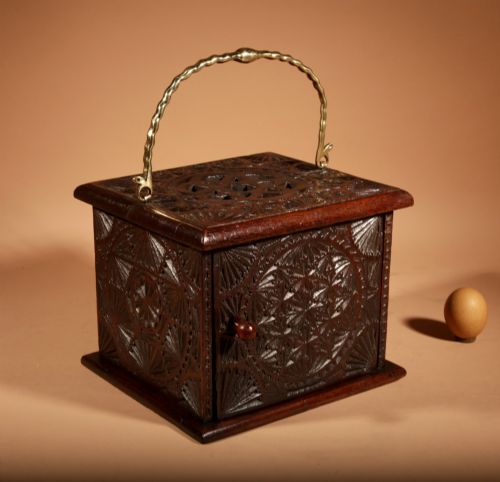
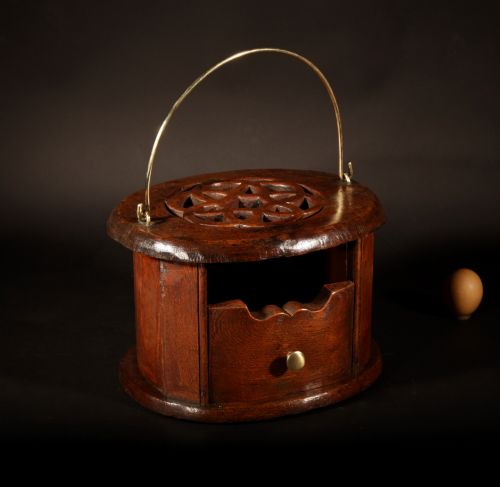
- A small wooden box perforated on top and containing a metal pan for hot embers. These portable heaters kept feet warm in unheated rooms and carriages.
Antique Oak Accessory: Frequently Asked Questions
What is an antique oak accessory?
These pieces comprise practical wooden items made for writing desks and fireplaces during the eighteenth, nineteenth, and early twentieth centuries. They combine sturdy oak construction with functional metal fittings.
Common examples include inkstands, perpetual calendars, coal buckets, and book slides designed for daily domestic use.
How do I date an oak accessory?
Dating relies on combining the construction methods, fastener types, and stylistic hints of the period. Georgian items often display heavy brass banding and simpler hand-joined box construction.
Victorian and Edwardian examples introduce mechanical elements like perpetual calendar drums, patent hinges, and more complex silver-plated or glass mounts.
Were these items meant for daily use?
Every piece served a strictly practical function in period homes, offices, or country estates. Desk tidies organised correspondence, while fireside buckets stored coal or peat.
Their robust timber construction ensured they survived decades of heavy household service without losing structural integrity.
How should I care for antique oak?
Keep wooden pieces away from direct heat sources and drastic humidity shifts to prevent the oak from splitting. Regular dusting and occasional application of appropriate wax maintain the finish.
Metal mounts benefit from careful cleaning without abrasive polishes that might damage the surrounding wood grain.