





Antique Nursery Rocking Crib
An antique nursery rocking crib brings warmth and history to a home, offering a gentle way to soothe an infant.
Antique Nursery Rocking Crib
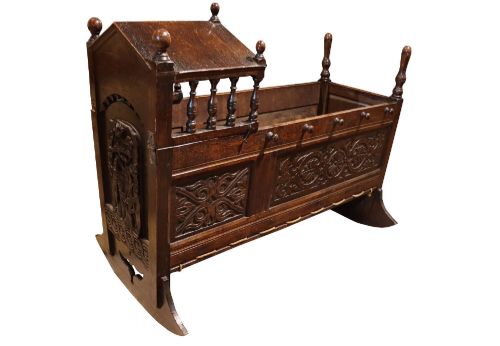
An antique nursery rocking crib is a traditional infant bed designed to move on rockers, rails or suspension to lull a baby to sleep. When you search for this phrase, you find pieces spanning several centuries from the sixteenth century onwards, encompassing periods such as Victorian, Edwardian, Georgian, William IV and Elizabethan.
The versions you are most likely to meet on this page are nineteenth century pieces, particularly Victorian mahogany and pine examples, alongside Edwardian designs in iron or wood. These range from simple country pine cradles to sophisticated mahogany or caned models.
Makers and retailers varied from provincial joiners producing rustic country items to major establishments like Heals and Son retailing caned rattan pieces. Forms include hooded cribs, canopy tops, metamorphic cots and simple panelled boxes on rockers.
How they were made
Cabinet makers and joiners constructed these cribs using solid timbers such as mahogany, oak and pine, frequently employing panelled techniques for strength and stability. Caning and rattan work provided lighter sides in select pieces.
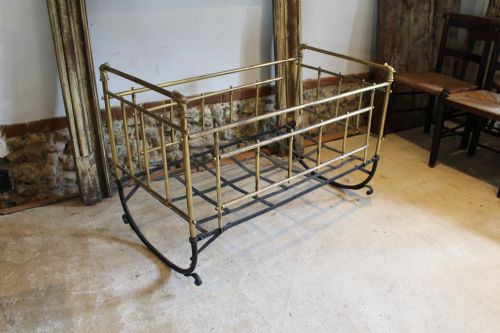
Metalwork appears in wrought iron and brass frameworks, whilst painted finishes transformed simpler pine bodies. Upholstery and hoods added comfort and shelter for the infant.
Antique Nursery Rocking Crib Retail Price Guide 2026
Typical asking prices for nursery rocking crib among the pieces listed under this phrase on Sellingantiques today, from the lower quarter to the upper quarter. They describe what is for sale here now, not the wider market.
Some infants slept beneath tiny canopies while their rocking cribs were retailed by high street names like Heals and Son.
What varies in quality
The distinction between standard utility items and finer pieces lies in the choice of timber and the sophistication of the joinery. Mahogany and panelled oak examples demonstrate greater cabinet-making skill than basic country pine construction.
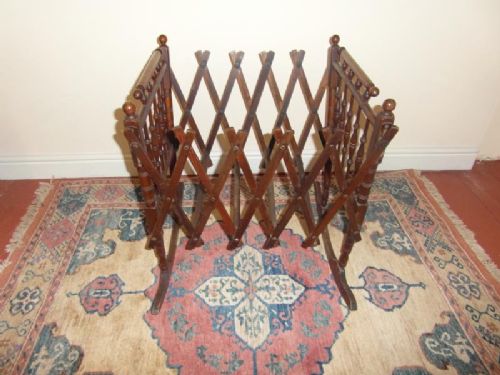
Decorative elements such as canopies, turned wooden spindles, brass mounts and branded retail provenance elevate a piece beyond a purely functional nursery bed.
Heals and Son
The Antique Nursery Rocking Crib Glossary
- Crib
- A small bed with high sides designed for an infant or young child. In older pieces, the terms crib and cradle often overlap.
- Canopy
- An overhead covering suspended above or attached to the bed structure. In nursery furniture, these occasionally included fabric drapery for shelter.
- Rattan
- A slender climbing palm used in woven form for furniture panels. It provides a lightweight, breathable alternative to solid wood.
- Metamorphic
- Furniture designed to transform into another object or function. In this context, it describes a crib that adapts as the child grows.
Antique Nursery Rocking Crib: Frequently Asked Questions
How do I date an antique rocking crib?
Dating involves examining the timber, construction methods, hardware and overall style. Pieces from the sixteenth and seventeenth centuries typically feature heavy panelled oak, whilst Victorian examples often utilise mahogany or painted pine.
Secondary clues include the presence of brass fittings, cane work, or retail labels that point towards specific nineteenth or early twentieth century eras.
Can I use an antique crib for a baby?
Antique cribs were built to historical standards and dimensions which differ significantly from modern safety regulations and mattress sizes. Most modern buyers acquire them for decorative display, historical collection or alternative nursery storage.
Using one for a sleeping infant requires careful professional adaptation to meet current safety guidelines regarding slat spacing and structural stability.
What woods were used for rocking cribs?
Makers utilised whatever local or fashionable timber was available for the commission. Oak and pine predominated in earlier and country pieces, whilst mahogany became popular during the Georgian and Victorian periods.
Secondary materials such as cane, rattan, brass and wrought iron also appear across different styles and regions.
How do I care for an antique wooden crib?
Preservation requires stable indoor humidity and avoidance of direct sunlight to prevent the timber from warping or splitting. Gentle dusting with a dry or slightly damp cloth maintains the finish without stripping historical wax or patina.
Leather, fabric and upholstery elements need specialist attention depending on their condition and age.