



Antique Novelty Pendant
An antique novelty pendant brings clever mechanical ingenuity and miniature wit to a chain, capturing Victorian and Edwardian humour.
Antique Novelty Pendant
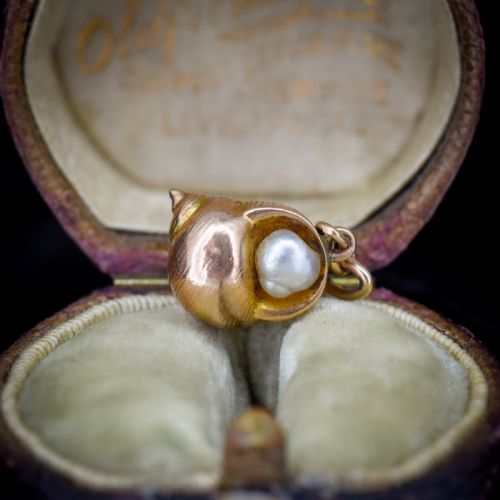
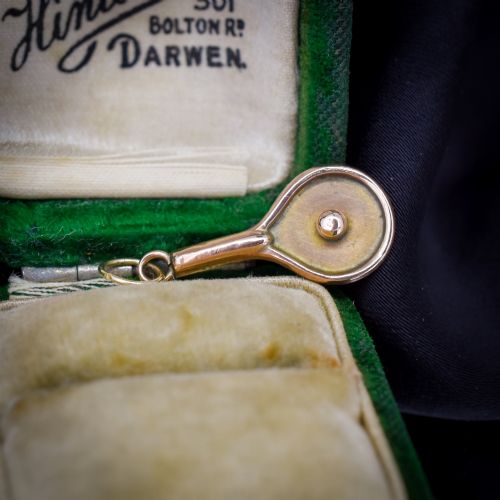
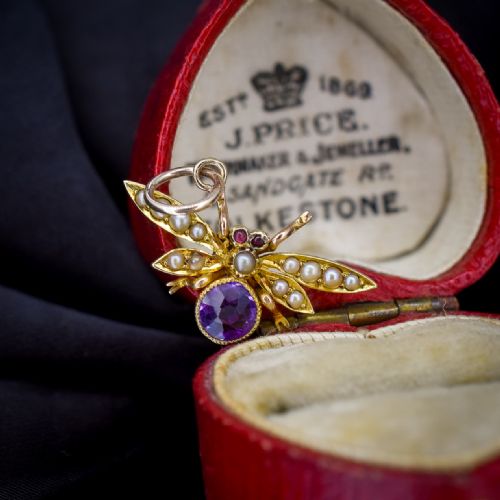
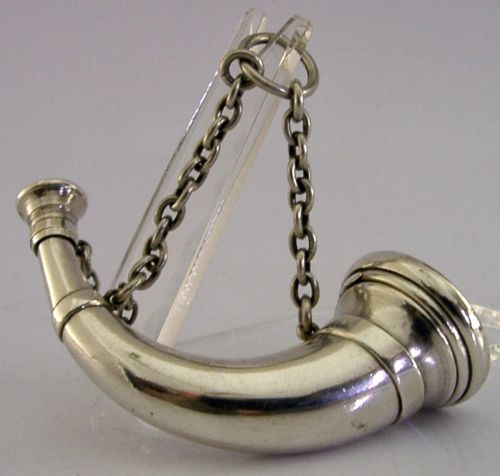
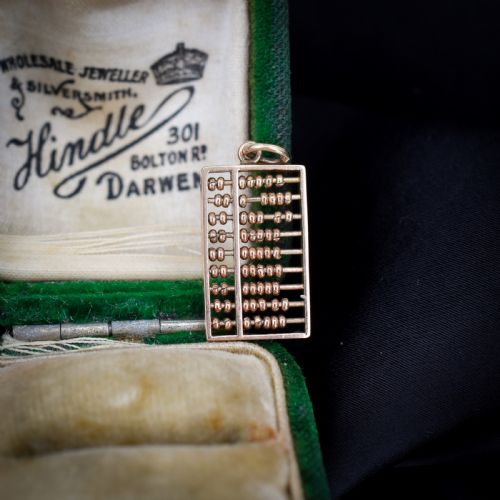
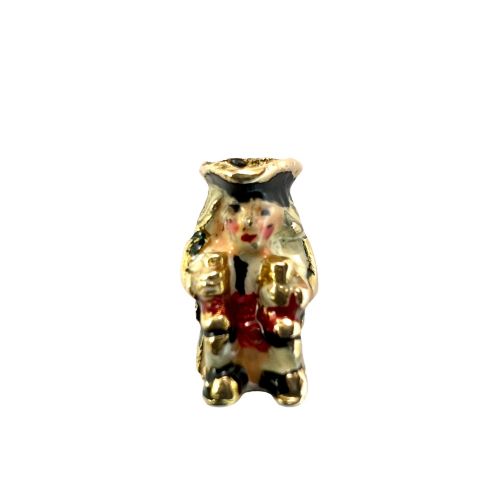
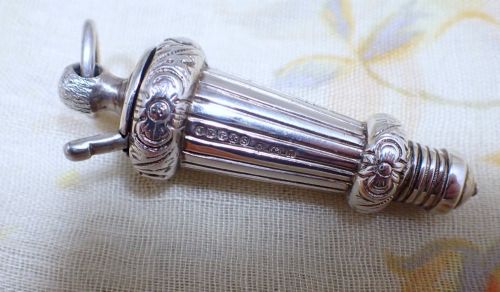
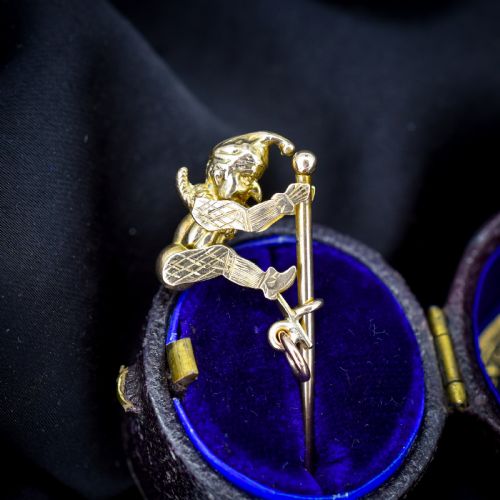
When you search for an antique novelty pendant, you encounter miniature sculptures, functional whistles, opening sarcophagi, and sliding charms made to amuse. These pieces range from Victorian silver hunting horns and gold animal figures to Edwardian whistles and Art Deco propelling pencils.
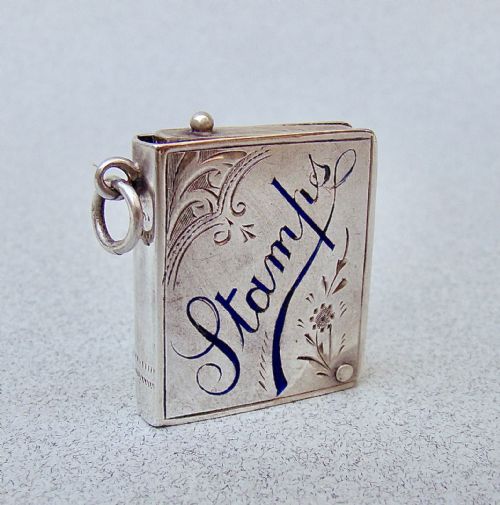
The most common versions on this page are whimsical charms and pendants fashioned from sterling silver or 9ct gold. Many incorporate enamel, pearls, or gemstones to depict insects, animals, sports gear, and miniature books or cottages.
Origins stretch across the Victorian, Edwardian, and later periods, including specific pieces from the 1880s up through the 1930s. Makers and workshops span British silversmiths like Sampson Mordan and Crisford & Norris alongside international houses such as Hamilton & Co.
How they were made
Craftsmen utilised sterling silver, 9ct gold, and 15ct gold as the primary structural metals for casting and shaping these miniatures. Gilt metal and mother-of-pearl also appear among the material choices.
Techniques relied on fine metalwork, hand-applied enamel colour, and articulated joints that allowed components like fish tails or sliding mechanisms to move. Gemstones including diamonds, rubies, amethysts, and peridots were flush-set or bezel-set into the gold and silver bodies.
Someone spent Victorian times carrying miniature gold pigs and silver boars around their neck just for luck.
What varies in quality
Quality rests upon the precision of the mechanical action and the crispness of the miniature casting. Pieces featuring smooth sliding parts, fully articulated hinges, or detailed hand-engraving represent higher standards of bench work.
The choice of materials and the preservation of original enamel dictate distinction across the range. Intricate gem-setting with diamonds and emeralds elevates a piece above standard silver or plain gold castings.
Sampson Mordan·Crisford & Norris·Hamilton & Co
The Antique Novelty Pendant Glossary
- Vinaigrette
- A small ornamental box or pendant designed to hold a sponge soaked in aromatic vinegar. These containers often featured hinged pierced grilles.
- Propelling pencil
- A mechanical pencil that advances or retracts its lead via a sliding or twisting mechanism. Miniature versions frequently served as pendants or watch fobs.
- Stamp case
- A small receptacle designed to store postage stamps safely. Silver examples often took the shape of miniature books or envelopes.
- Articulated
- Built with movable joints connecting different sections of the body. This technique allowed fish or animal pendants to flex realistically.
- Sarcophagus
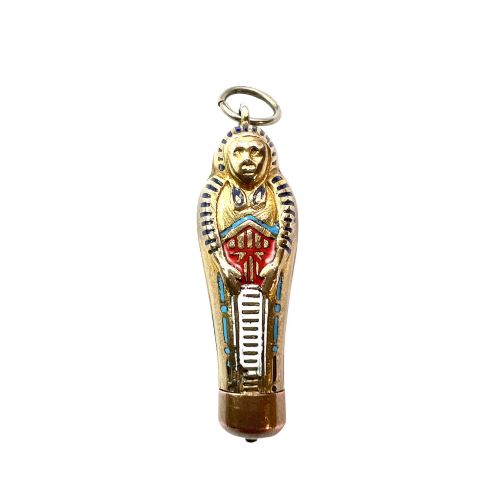
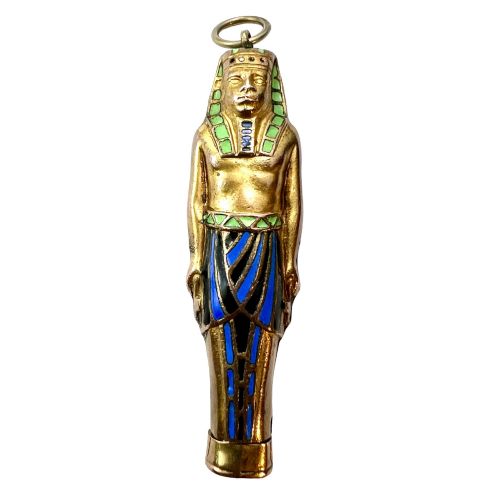
- A stone or metal coffin shape used as a motif for Egyptian Revival pendants and pencil cases. These pieces frequently featured opening lids with enamel pharaohs inside.
Antique Novelty Pendant: Frequently Asked Questions
How were novelty pendants worn?
Owners typically suspended them from chatelaines, watch chains, or neck chains alongside other charms. Their small scale allowed several pieces to be grouped together on a single split ring.
Many designs served a dual purpose, functioning as a working whistle, a vinaigrette, or a propelling pencil while being worn.
How do I date an antique novelty pendant?
Dating relies on hallmarks stamped into the metal, the style of the design, and the specific materials used. Victorian pieces often show distinct hallmarks for British assay offices.
Stylistic cues such as Egyptian Revival motifs or Art Deco geometric lines help narrow the decade of production when hallmarks are absent.
Are these pendants fragile?
While made of durable metals like gold and silver, many feature delicate hinges, sliding components, or glass enamel. Moving parts require gentle handling to preserve the internal mechanism.
Enamelled details and set gemstones also benefit from careful wear to avoid chipping or loss.