

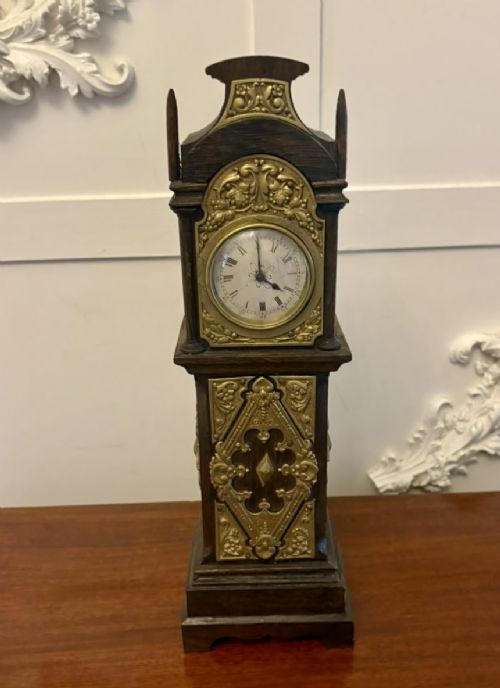


Antique Novelty Clock
An antique novelty clock turns timekeeping into a witty game, offering ingenious mechanical amusements crafted to catch the eye.
Antique Novelty Clock
When you search for an antique novelty clock, you meet miniature machinery and everyday objects transformed into working timepieces. These pieces range from Victorian gothic revivals and French industrial engines to Art Deco alarms and swinging cherubs.
The version you are most likely to find on this page is a desk or mantel clock shaped as a lighthouse, lamp post, prayer book, or beam engine. Makers drew inspiration from engineering, postal boxes, and cricket equipment to house their clockwork movements.
Origins stretch from the eighteenth century through the Victorian era and into the twentieth century, including later twentieth-century interpretations. Each piece relies on novelty to disguise its true function as a clock.
Materials and construction
Brass, bronze, and gilt bronze provide the robust structural framework for these mechanical desktop and mantel pieces. Artisans combined these metals with glass panels, steel components, and slate bases to achieve weight and stability.
Enamel dials display the numbers, while champlevé enamel work adds decorative colour to the metal surfaces. Nickel plating and sterling silver appear on later sporting and postal designs to create bright finishes.
Antique Novelty Clock Retail Price Guide 2026
Typical asking prices for novelty clock among the pieces listed under this phrase on Sellingantiques today, from the lower quarter to the upper quarter. They describe what is for sale here now, not the wider market.
Desk compendiums in this selection mimic industrial equipment such as Davy lamps and beam engines.
Judging the work
The ambition of the mechanics dictates the standard of the piece, moving from simple dial placement inside a shaped case to complex automation like swinging pendulums and rolling balls. Pieces designed by known makers demonstrate superior mechanical execution.
The crispness of the casting in bronze or brass separates standard production from finer work. Hand-painted enamel details and heavy bevelled glass reveal the time and attention invested during manufacture.
Guilmet·Hessen Paris·Barwise London·Thwaites & Reed·Farcot·Jaeger Le Coultre·Jaeger
The Antique Novelty Clock Glossary
- Compendium
- A desk accessory combining a clock with other instruments such as barometers or thermometers. These multi-function pieces often took architectural or industrial shapes.
- Automaton
- A mechanical figure or machine that performs independent movements while the clock operates. Beam engines and lighthouse lamps utilise these moving parts.
- Champlevé
- An enamelling technique where troughs are dug into the metal surface and filled with vitreous paste before firing. This technique decorates the bezels and cases of brass desk clocks.
- Mystery clock
- A timekeeper where the movement's connection to the hands is concealed, making the dial appear to float. Globe clocks often employ this optical trick.
- Regency
- A style period spanning the early nineteenth century defined by classical restraint and rich bronze casting. Poodle dog and animal figures frequently date from this aesthetic.
Antique Novelty Clock: Frequently Asked Questions
Where should I place a novelty clock?
Place them on desks, mantelpieces, or tables where viewers can appreciate the small mechanical details close up. Their unusual silhouettes demand a spot away from visual clutter.
Keep them out of direct sunlight and away from damp areas to protect the delicate enamel dials and exposed metal surfaces.
How do I wind an antique clock?
Use the correct key for the winding squares and turn gently until you feel resistance. Do not overwind, as this damages the mainspring.
Check whether the piece requires daily or weekly attention depending on the size of the movement housed within the novelty case.
Are these clocks accurate?
Mechanical timepieces from the nineteenth and twentieth centuries keep reasonable time when serviced properly, though they may gain or lose a few minutes weekly. Rolling ball and mystery clocks rely on precise gravity escapements.
Regular cleaning by a horologist ensures the intricate gear trains continue to mesh smoothly.