
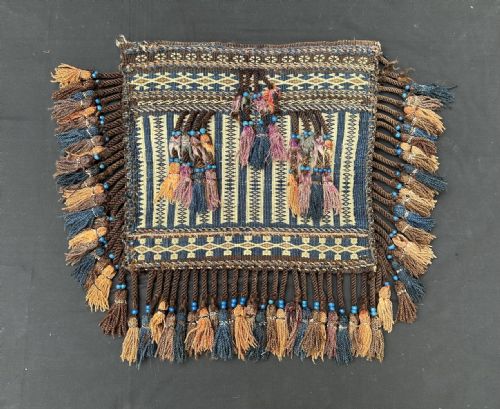
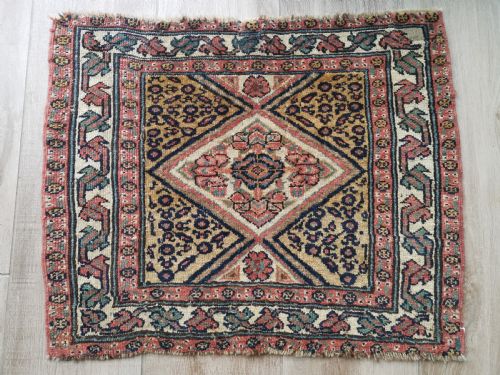
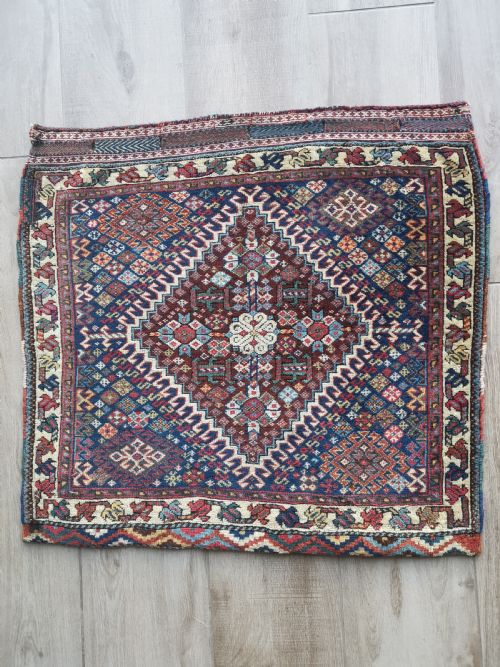
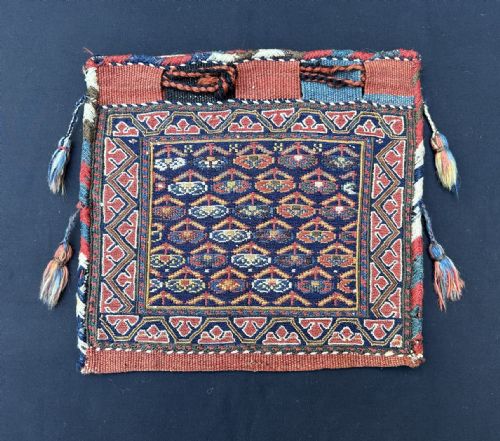


Antique Nomadic Khorjin Face
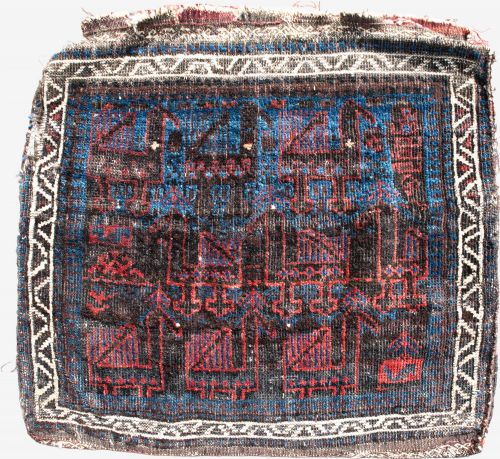
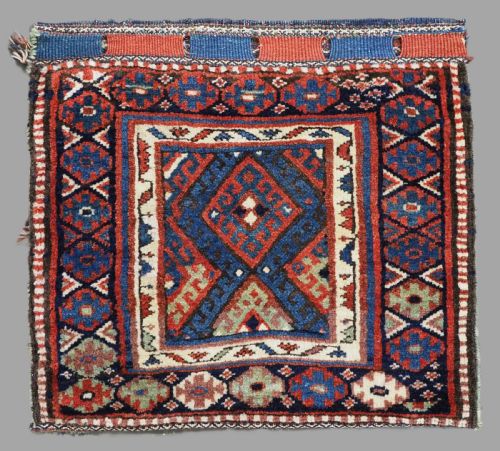
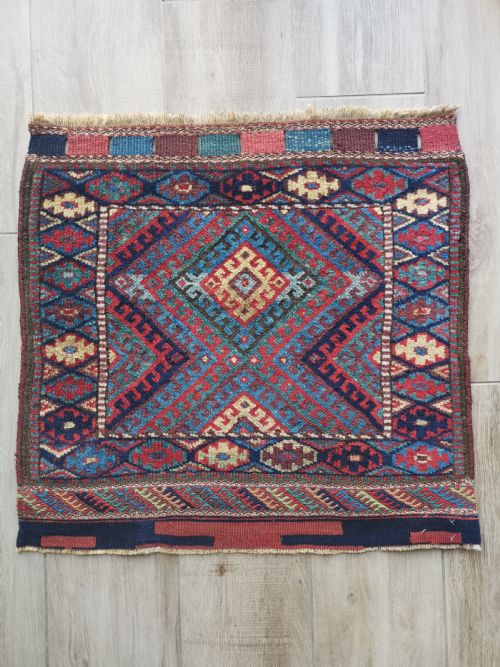
When you search for an antique nomadic khorjin face, you are looking at the surviving front panel of a tribal horse or camel storage bag.
Antique Nomadic Khorjin Face
An antique nomadic khorjin face represents the front panel of a utilitarian double saddlebag woven by pastoral tribal groups in Persia. These items were originally made to transport personal belongings, household goods, or provisions during seasonal migrations across the region.
On this page, you will most frequently encounter single bag faces that have been separated from their original paired halves, though complete bags with plain weave backs also appear. The formats range from square storage bag fronts to smaller personal vanity bags known as chantehs.
The provenance spans various tribal confederations and nomadic groups, including the Qashqai, Afshar, Baluch, Shahsavan, and Kurdish tribes. Each group brought distinct regional weaving traditions and tribal iconography to their saddlebags.
How they were made
These textiles were constructed primarily using hand-spun wool for both the pile and the foundation, often combined with cotton for structural support in later pieces. Natural dyes provided the deep reds, blues, and browns that ground the tribal colour palettes.
Weaving techniques vary between symmetrical pile knots and intricate flatweaves such as sumac work, depending on the tribe and the intended function of the bag. Some examples incorporate supplementary materials like glass beads to embellish the surface design.
Listings span the nineteenth and early twentieth centuries, featuring wool, cotton, and natural dyes across tribal regions of Persia.
What varies in quality
The distinction between standard and superior pieces rests heavily on the handling of the wool and the depth of the natural dyes. Lustre and suppleness in the fleece indicate careful material selection and washing during production.
Structural integrity and precision in the geometric or figurative motifs also separate the output of individual weavers. Tighter knot counts and crisper execution of traditional symbols point to greater expertise at the loom.
The Antique Nomadic Khorjin Face Glossary
- Khorjin
- A traditional Persian double saddlebag used by nomadic tribes for transport and storage. These bags were thrown across the backs of pack animals during seasonal migrations.
- Bag face
- The decorative front panel of a saddlebag or storage pouch that remains after the plain back has worn away or been cut off. Collectors often frame or mount these panels as independent textiles.
- Sumac
- A warp-wrapping flatweave technique where pattern wefts are wrapped around the warp threads to create a textured, durable surface. This method is frequently seen on Shahsavan work.
- Chanteh
- A small personal bag or vanity pouch woven by nomadic women for carrying personal items. These pieces are typically intimate in scale compared to large transport sacks.
- Boteh
- An ancient Persian motif resembling a almond or curved pear shape, widely interpreted as a stylized floral or cypress tree symbol. It appears frequently in Afshar and tribal designs.
- Natural dyes
- Colourants derived from plants, insects, and minerals before the widespread adoption of synthetic dyes in the late nineteenth century. These materials yield rich, complex tones that age gracefully.
Antique Nomadic Khorjin Face: Frequently Asked Questions
What is a khorjin face?
A khorjin face is the decorated front section of a nomadic double saddlebag. These panels were preserved when the utilitarian backs wore out from constant friction against pack animals.
Today, they are collected and displayed as independent flatweave or piled textile art. They offer a direct window into the domestic arts of nineteenth-century tribal groups.
How were these bags used?
Nomadic families used saddlebags to pack clothing, utensils, and personal belongings during annual migrations. They were loaded onto horses, donkeys, or camels while moving between winter and summer pastures.
When stationary, the bags served as containers inside tribal tents. They functioned as both practical storage and decorative furnishings within the household.
How do I live with a bag face?
Bag faces adapt well to modern interiors when mounted on a wall or displayed on low surfaces. Their modest dimensions make them suitable for spaces where a full-sized rug would prove too large.
Protecting the textile from direct sunlight preserves the natural dyes. Gentle vacuuming without a rotating brush keeps the wool clean without stressing the historic foundation.
How do I identify tribal origins?
Tribal attribution relies on specific combinations of palette, iconography, and weaving structure. For instance, Afshar pieces often feature large boteh motifs or stepped medallions, while Shahsavan items frequently display precise sumac work.
Regional characteristics in the border designs and secondary colours help experienced collectors separate Qashqai work from Kurdish or Baluch production.