




Antique Night Chest
An antique night chest brings quiet utility and proportion to the bedroom, holding lamps and books close at hand.
Antique Night Chest
An antique night chest encompasses bedside tables, cabinets, commodes, and cupboards designed to stand beside a bed or in small spaces. Buyers seek these forms to provide surface space and enclosed storage within period interiors.
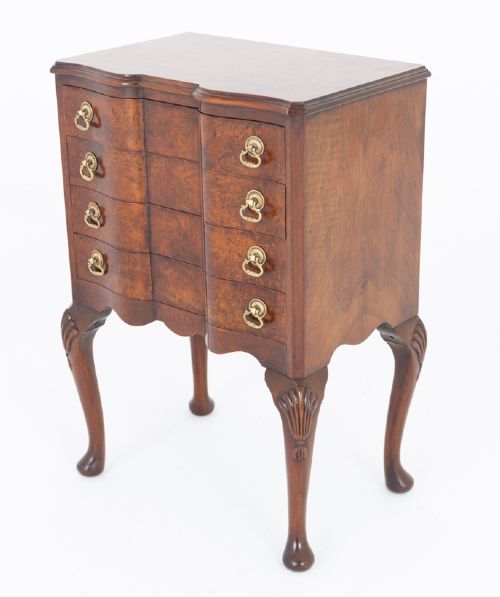
The selection here draws primarily from Georgian, Victorian, and early twentieth-century periods, alongside French Provincial, Art Deco, and Regency styles. Mahogany, walnut, and burr walnut predominate among the woods, often paired with marble tops or marquetry.
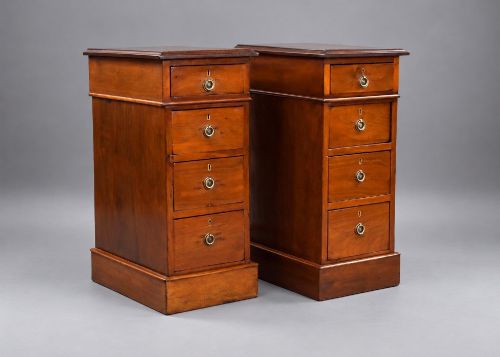
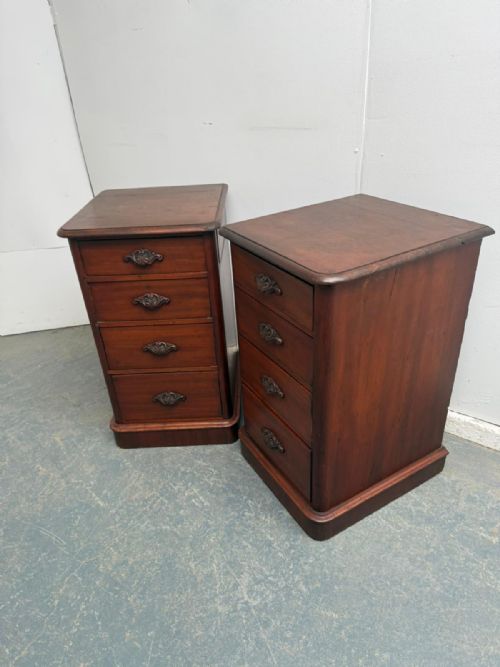
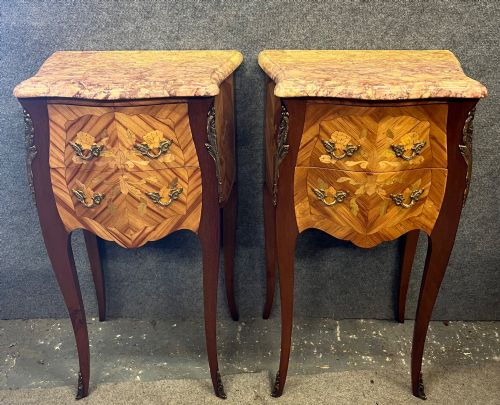
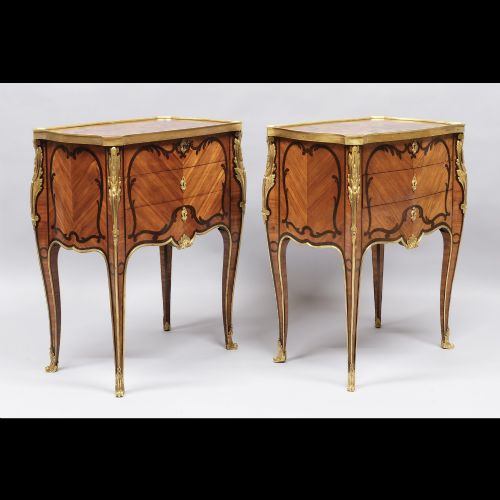
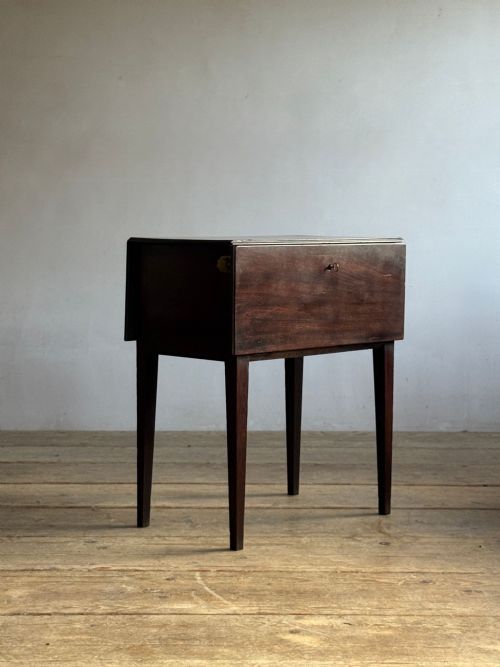
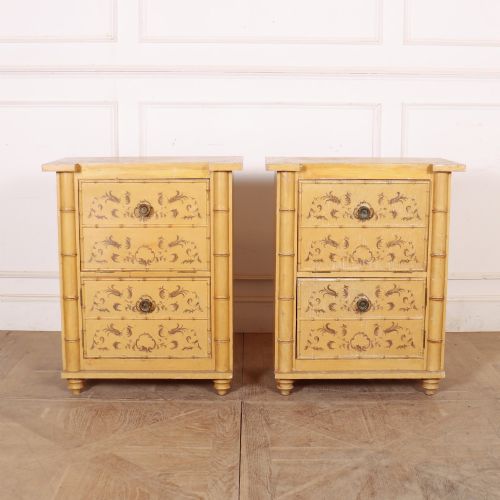
Visitors regularly encounter matched pairs or individual bedside chests dating from around nineteen hundred through to the nineteen thirties. These range from simple mahogany cupboards to inlaid French marquetry commodes and faux bamboo cabinets.
How they were made
Cabinetmakers utilised dense hardwoods such as mahogany, walnut, and rosewood, frequently applying burr walnut or satinwood veneers to create patterned surfaces. Marquetry and parquetry inlay introduced geometric or floral motifs using contrasting timbers.
Structural elements incorporated brass handles, hinges, and occasional marble tops to protect the wooden surfaces from water or lamp oil. Some Georgian and Regency examples utilised pull-out steps or clever compartmentalisation within compact proportions.
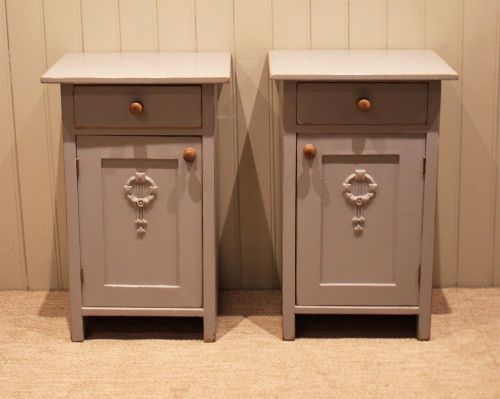
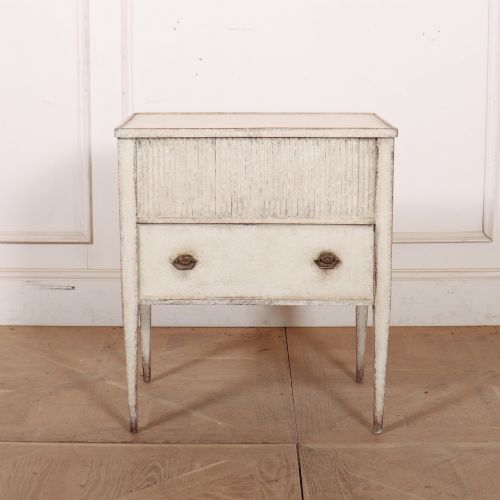
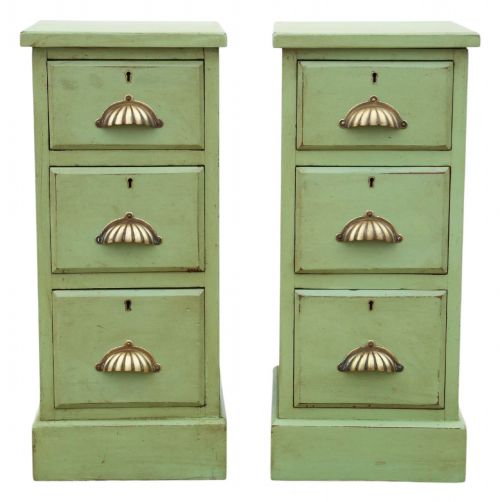
Painted finishes appear on select green and Dutch provincial pieces, showing how workshops adapted timber furniture with decorative coatings.
Antique Night Chest Retail Price Guide 2026
Typical asking prices for night chest among the pieces listed under this phrase on Sellingantiques today, from the lower quarter to the upper quarter. They describe what is for sale here now, not the wider market.
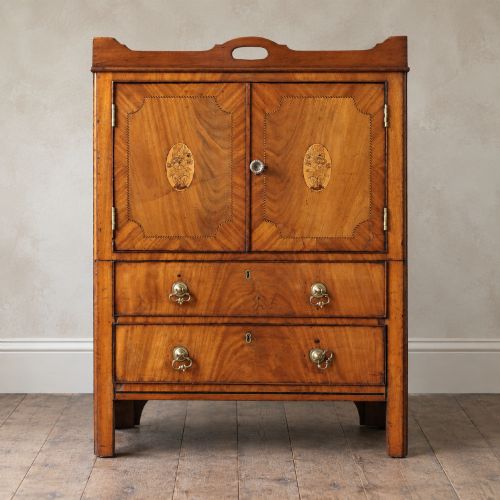
A clever Regency mahogany night cabinet hides a pull-out step inside, proving that early morning grogginess required engineering assistance.
What varies in quality
The standard of timber selection and veneer matching defines the visual appeal of an antique night chest. Superior examples display continuous grain patterns and precise parquetry, whereas simpler pieces rely on plain solid woods.
The refinement of hardware, such as cast brass mounts and drawer construction with dovetailed joints, marks the division between standard utility furniture and high-workshop production. Intricate marquetry and integrated marble tops further elevate the refinement of the piece.
Sormani
The Antique Night Chest Glossary
- Commode
- A low cabinet or chest of drawers, often adapted in earlier periods to enclose a chamber pot. These form a significant portion of bedside storage.
- Marquetry
- Decorative woodwork where pieces of veneer are fitted into a ground to form floral or geometric designs. This technique decorates many French and Georgian tabletops.
- Tray top
- A raised rim surrounding the upper surface of a bedside table or commode to prevent items from rolling off. This feature is common on eighteenth-century designs.
- Parquetry
- Geometric mosaic woodwork used to pattern surfaces on tables and cabinet doors. It provides visual texture through contrasting wood grains.
- Faux bamboo
- Wood turned and carved to imitate natural bamboo stalks, popular during the nineteenth century. This style appears on eclectic bedside cabinets.
Antique Night Chest: Frequently Asked Questions
What is an antique night chest used for?
An antique night chest provides a compact surface for a bedside lamp, books, and small personal items while offering concealed storage beneath. Cabinets and cupboards keep private belongings neatly tucked away out of sight.
Historically, many of these pieces evolved from commodes or enclosed washstands into the standard bedside tables recognised today. They suit smaller alcoves just as well as master bedrooms.
How do I distinguish between Georgian and Art Deco models?
Georgian models typically feature solid mahogany or walnut, clean architectural proportions, and subtle bracket feet or tray tops. Their construction emphasises classical joinery and understated elegance.
Art Deco pieces from the nineteen thirties lean towards figured walnut, satinwood, and streamlined geometric shapes. They often embrace contrasting wood veneers without traditional period carvings.
Are these pieces usually sold as pairs?
Many bedside chests and cabinets on this page appear as matched pairs, which proves particularly useful for placing on either side of a double bed. Sourcing identical antique pairs can otherwise present a challenge.
Single pieces also feature prominently for smaller rooms or eclectic interior arrangements where symmetry is less critical.
How do I care for marble-topped bedside chests?
Marble tops require gentle cleaning with a damp cloth and mild soap to preserve the polish and prevent staining from liquids. Avoid abrasive cleaners or acidic substances that might etch the stone surface.
Treat the wooden body with appropriate wax periodically to maintain the lustre of mahogany or walnut without building up heavy residue.